Why a Well-Stocked Pantry Changes How You Eat
One of the most reliable ways to eat more nutritiously on a daily basis isn't a new diet plan - it's knowing what's already in your kitchen. When your pantry contains versatile, shelf-stable staples, assembling a balanced meal becomes a matter of minutes rather than a last-minute scramble that ends with takeout.
Research consistently shows that home cooking is associated with better overall diet quality, largely because you control the ingredients. The challenge for most Americans isn't knowledge - it's friction. An empty or poorly organized pantry creates friction. A stocked one removes it.
This checklist is designed to help you audit what you have, identify gaps, and build a pantry that supports the kind of everyday cooking that actually happens - quick weeknight dinners, simple lunches, and meals that don't require a trip to a specialty store. For broader principles on how these ingredients come together, see our guide on building a balanced plate.
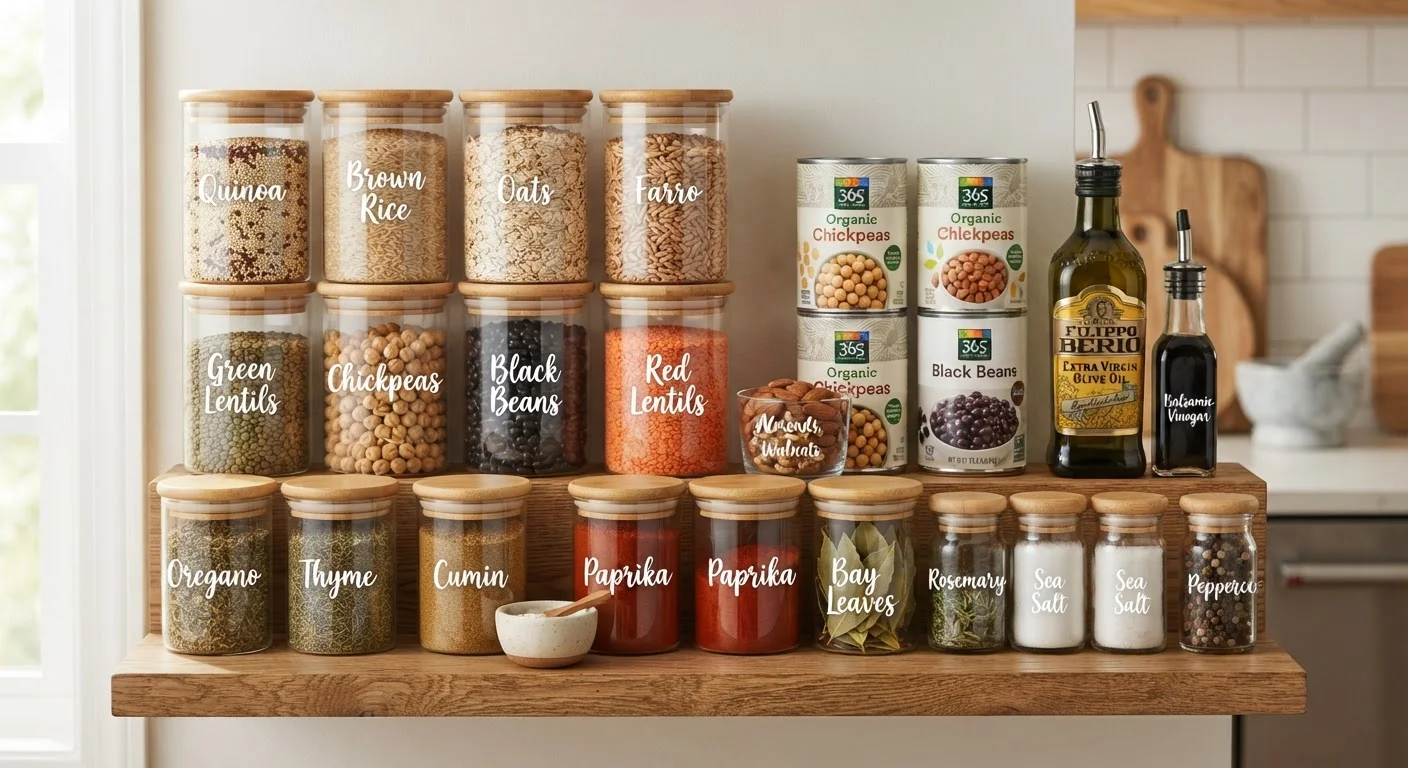
Airtight glass jars or canisters
Store dried grains, legumes, and nuts to extend shelf life and make quantities easy to see at a glance.
Pantry inventory list (paper or app)
Track what you have and what's running low so grocery trips are efficient and nothing gets forgotten.
Fine-mesh strainer or colander
Rinse canned beans and grains to reduce sodium and remove any residue before cooking.
Marker and masking tape
Label bulk containers with the item name and date purchased to support proper rotation.
Your Nutritious Pantry Checklist
Work through each category below. Check off what you already have, note quantities that are running low, and add missing items to your next grocery list. Aim to keep at least one or two options from each group on hand at all times.
Whole Grains
Legumes
Canned and Jarred Goods
Cooking Oils and Fats
Nuts, Seeds, and Dried Fruit
Seasonings and Flavor Builders
Check Expiration Dates When Restocking
Shelf-stable doesn't mean indefinite. Canned goods generally maintain quality for one to three years, while whole grains and nuts can go rancid sooner - especially once opened. Before adding new stock, move older items to the front and use them first. Discard any cans that are bulging, rusted, or deeply dented along the seam, as these may pose a food-safety risk.
If you're working with a tighter grocery budget, prioritize dried legumes and whole grains first - they deliver the most nutritional value per dollar. Our companion guide on eating well on a budget offers practical strategies for making these staples stretch further.
For readers exploring more plant-forward cooking, many of these pantry staples are central to plant-based diets - though it's worth understanding the nutritional trade-offs and planning considerations involved. And to understand what specific vitamins and minerals these ingredients supply, our plain-language guide to micronutrients is a useful reference.
This article is for general informational and educational purposes only. It is not a substitute for personalized nutrition advice from a registered dietitian or qualified healthcare professional.