
The Appeal - and the Problem - with Elimination Diets
Cutting out an entire food group feels decisive. It removes ambiguity: no carbs, no dairy, no fat - the rule is simple and the commitment feels clean. That clarity is part of why elimination-style diets remain popular across American households despite decades of evolving nutrition science.
The problem is that simplicity in a rule does not translate to simplicity in your body's response. Human metabolism is not designed around categories invented by diet culture. Most major food groups - carbohydrates, fats, proteins, dairy - exist in dietary guidance because they supply nutrients your body actually uses. Removing one wholesale tends to create gaps, compensatory behaviors, and often the opposite of the intended outcome.
This is not to say all foods within a group are equal. The quality and form of what you eat within a category matters enormously. But there is a significant difference between reducing low-nutrient versions of a food and eliminating the entire category. Evidence-based approaches to building a balanced plate consistently point toward inclusion and proportion rather than elimination as the durable path forward.
This Is Education, Not Medical Advice
The information in this article is general nutritional education and is not a substitute for personalized medical or dietary advice. Individual nutritional needs vary significantly based on health status, age, medications, and other factors. Always consult a qualified healthcare provider or registered dietitian before making significant changes to your diet.
Common Mistakes When Cutting Food Groups - and How to Avoid Them
Most food group eliminations follow recognizable patterns: a compelling premise, an initial result, and then a plateau or reversal that leaves people frustrated. Understanding the specific errors involved makes it easier to step off that cycle.
Eliminating all carbohydrates based on the belief that carbs inherently cause weight gain.
Why it happens: Low-carb diets are widely publicized, and many people associate all carbohydrates equally with sugar and weight gain without distinguishing refined from complex carbs.
Cutting out all dietary fat under the assumption that fat in food becomes body fat.
Why it happens: The low-fat diet movement of the 1980s and 1990s left a lasting impression that fat is inherently harmful, even though the science has substantially evolved since then.
Removing all dairy products without a medical reason such as lactose intolerance or a documented allergy.
Why it happens: Dairy has become culturally associated with inflammation or weight gain in popular wellness spaces, often without individualized clinical evidence to support full elimination for most people.
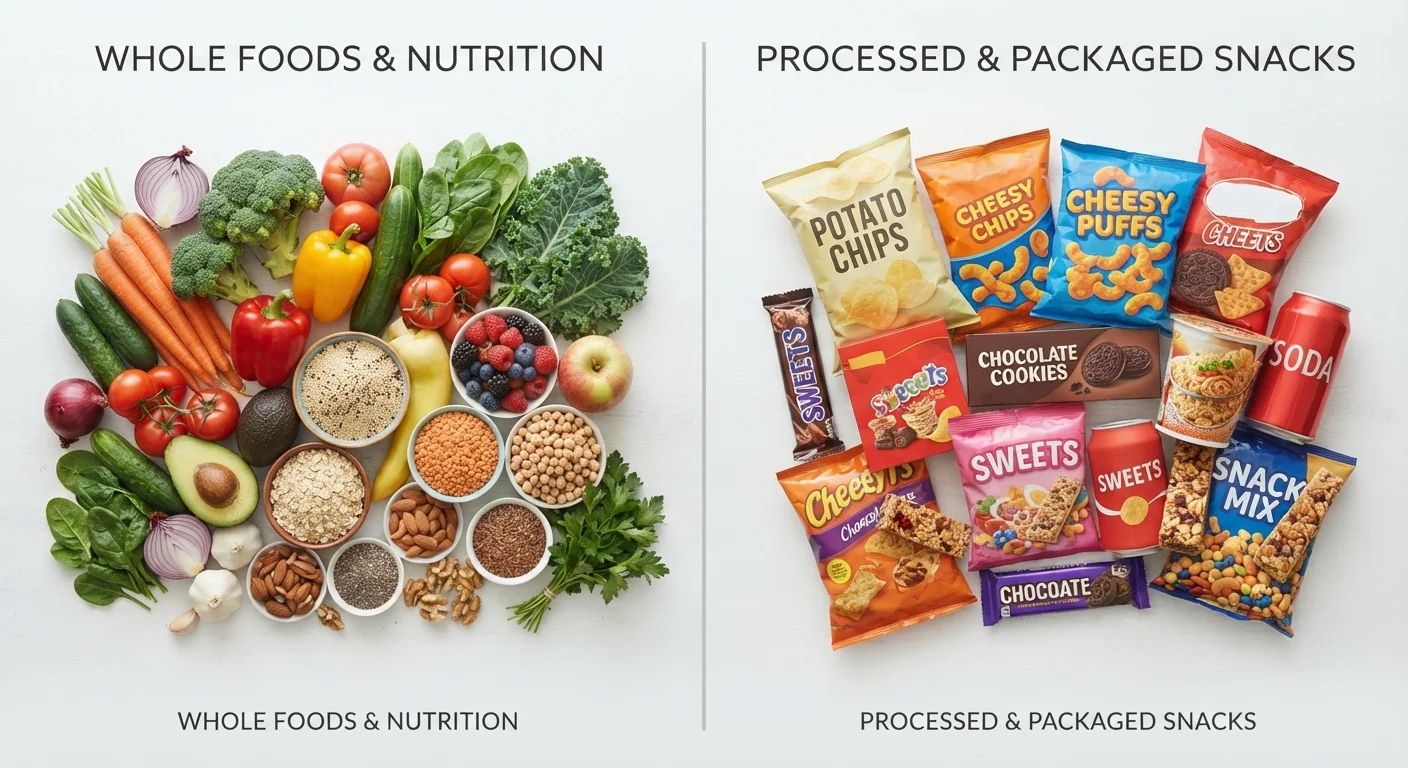
Declaring all processed foods off-limits and treating 'processed' as a single, uniformly harmful category.
Why it happens: The term 'processed' gets applied to everything from canned beans to ultra-processed snack foods, creating a false equivalence that makes practical eating unnecessarily complicated.
Following a food group elimination plan without accounting for the nutrients that food group was supplying.
Why it happens: Most people focus on what they are removing rather than what those foods were contributing, leaving gaps that quietly accumulate over weeks or months.
Eating well does not need to be expensive or complicated. Building a nutritious diet on a realistic budget is achievable when variety - rather than restriction - is the organizing principle.
What to Do Instead
Rather than asking which food group to eliminate, a more productive question is: which foods within each group give you the most nutritional return? This reframes the goal from subtraction to optimization.
Practical steps include crowding out less nutritious choices by adding more whole foods rather than banning categories outright, and paying attention to how different foods make you feel over time - energy levels, digestion, satiety - rather than following rules abstracted from your individual experience.
If you have genuine concerns about food sensitivities, chronic conditions, or weight management, a registered dietitian can provide guidance that accounts for your actual health picture. General population dietary patterns rarely map cleanly onto individual needs, and that gap is exactly where professional support earns its value.
This article provides general nutritional information for educational purposes only. It is not a substitute for personalized medical or dietary advice. Consult a qualified healthcare professional or registered dietitian before making significant changes to your diet, especially if you have an existing health condition.