Why Room Order Actually Changes the Outcome
Most people approach smart home automation the same way they approach impulse shopping - they buy a gadget that catches their eye and figure out where it fits later. This works fine for a smart speaker, but it creates real friction when devices don't talk to each other, routines conflict, or you've spent your budget on a room you rarely use.
Thinking in terms of room priority isn't about following rigid rules. It's about matching investment to daily impact. If you're new to connected devices, a plain-language overview of how they work is a useful starting point before buying anything. Once you understand the basics, the sequencing below will help you avoid the most common missteps.
Map Your Day Before You Buy
Walk through your home mentally from the moment you wake up to when you go to sleep. Note every point where you flip a switch, unlock a door, adjust a temperature, or wish a task were easier. Those friction points are your automation priority list - more reliable than any generic recommendation.
A useful rule of thumb: rank rooms by how many times per day every household member passes through or actively uses them. Rooms that score highest almost always deliver the best return on your automation investment.
The Rooms to Prioritize - In Order
The Entryway and Front Door
Your front door is the highest-leverage point in the house. A smart lock eliminates the need to carry keys, allows temporary access codes for guests or service workers, and logs who comes and goes. Paired with a video doorbell, it also lets you see and speak to anyone at the door from anywhere - whether you're in the backyard or out of state.
This room gets automated first because the security and convenience benefits are immediate, visible, and used every single day. It also tends to be one of the simpler setups, making it a low-stress introduction to how smart devices behave in practice.
Your front door is the highest-leverage automation point in the entire house.
The Living Room
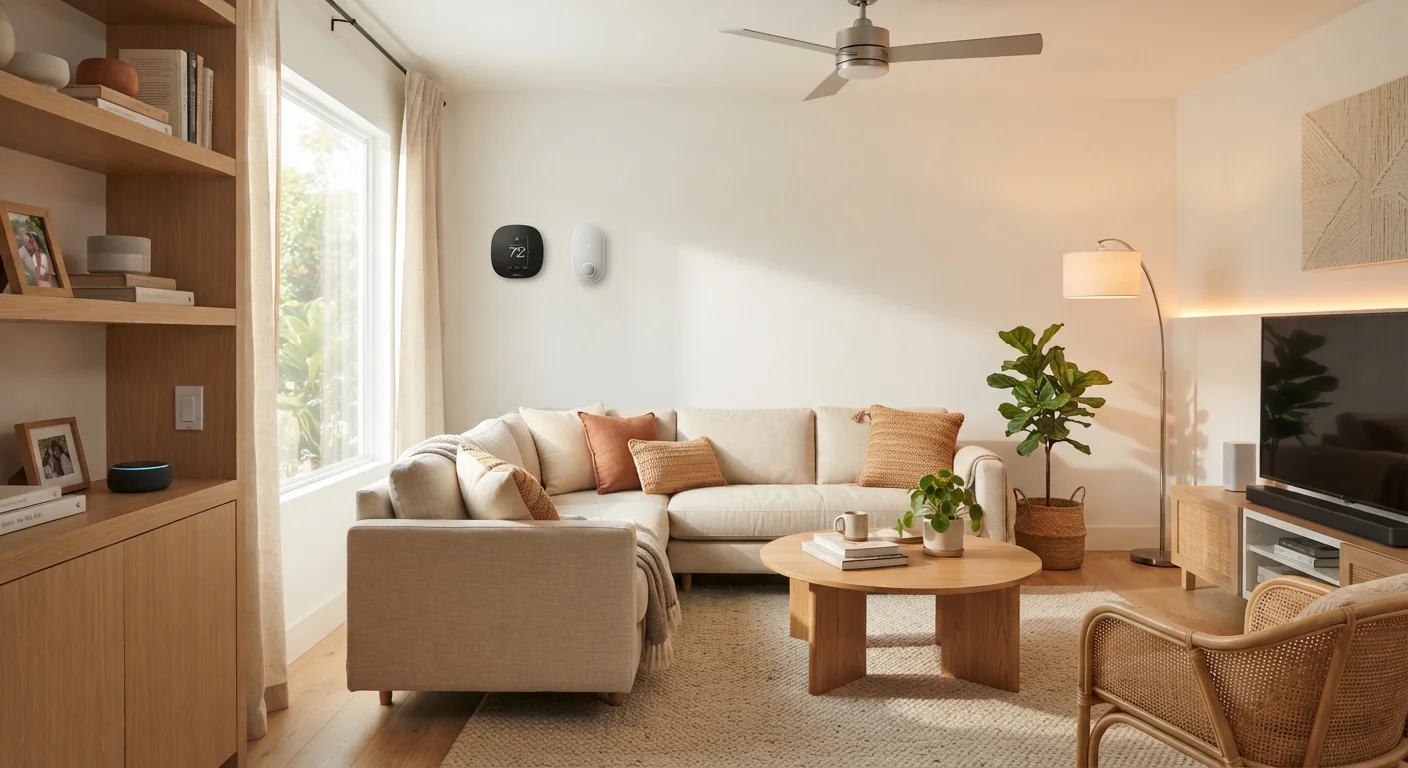
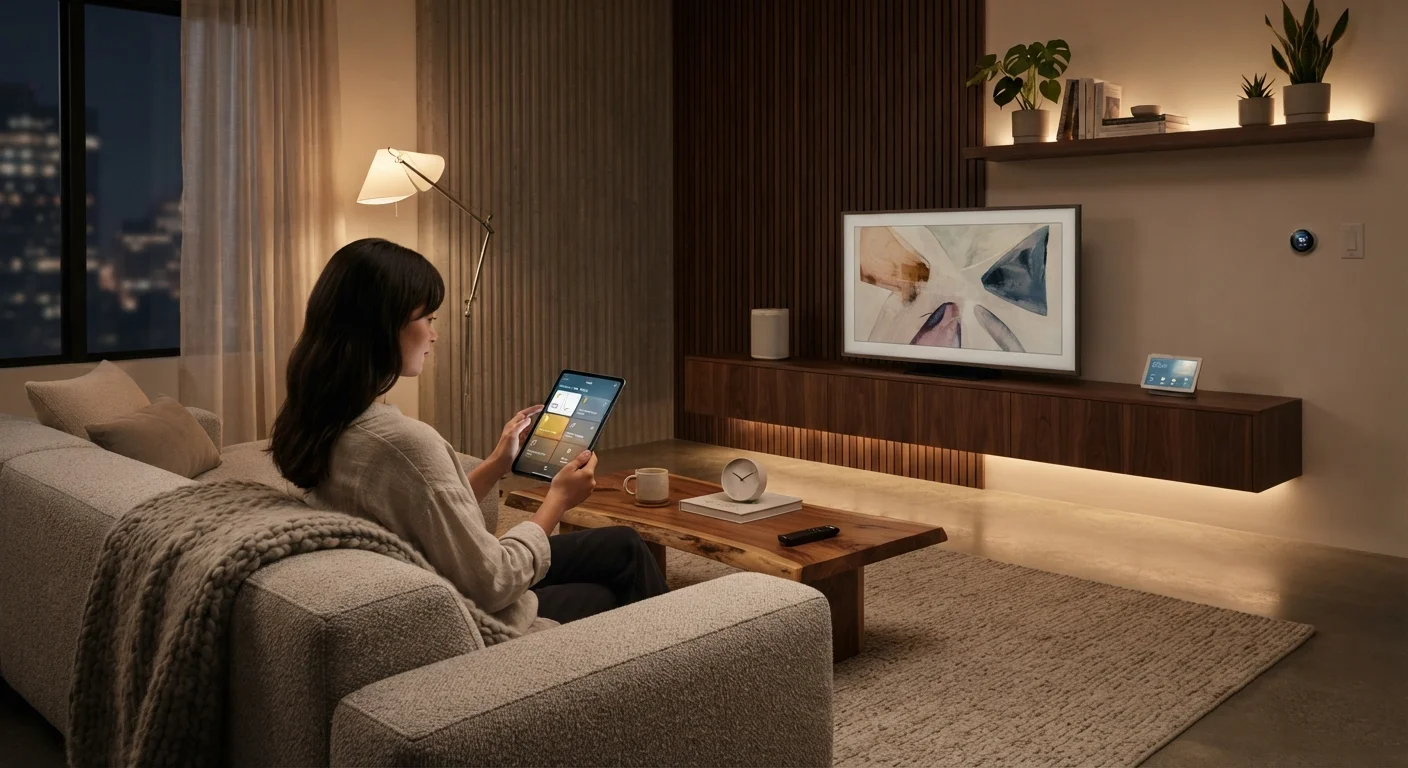
Living rooms are where households spend the most leisure time, which makes them the natural second stop. Smart lighting - bulbs or switches - is the anchor here. The ability to set scenes (dim for movies, bright for reading, off at bedtime) without walking to a switch pays off quickly in both comfort and habit-building.
A voice assistant hub or smart display fits well here too, giving you a central control point for the whole home. If you're also considering audio upgrades, understanding how different speaker setups actually differ will help you avoid buying more system than the room needs.
Smart lighting scenes in the living room are used daily by every member of the household.
The Thermostat (Whole-Home Impact)
A smart thermostat isn't confined to one room, but it belongs third on the list because it's where most households see measurable energy savings earliest. The device learns your schedule, adjusts automatically when the house is empty, and can be controlled remotely - all without requiring any other smart devices to function.
Heating and cooling typically account for the largest share of home energy costs. Automating temperature management is one of the few smart home investments where the long-term financial case is straightforward and well-documented by energy researchers. This aligns neatly with value-driven spending principles that prioritize durable returns over novelty.
Automating your thermostat is where most households find their clearest energy savings.
The Kitchen
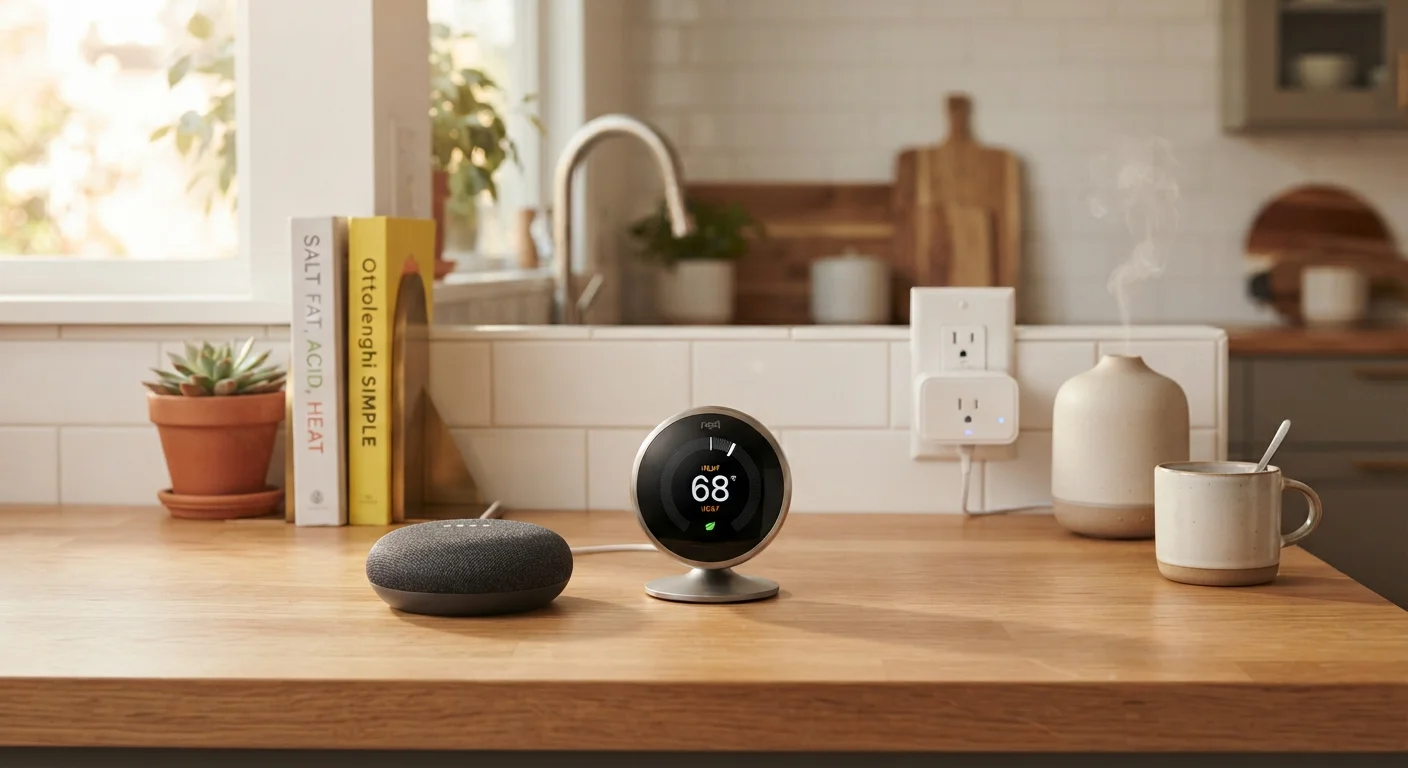
The kitchen doesn't need a full smart overhaul to benefit from automation. Smart plugs on countertop appliances let you cut power remotely - useful if you're never quite sure whether you left the coffee maker on. Under-cabinet lighting on a schedule adds both ambiance and practical visibility during early-morning or late-night use.
Voice control is especially valuable here, where your hands are often occupied. Being able to set timers, convert measurements, or add items to a shopping list without touching a device is a genuine daily convenience rather than a novelty.
Voice control shines in the kitchen precisely because your hands are always busy.
The Primary Bedroom
Bedroom automation works best when it's built around sleep and wake routines. Lights that gradually brighten in the morning instead of snapping on abruptly, or that dim automatically at a set hour, support better sleep hygiene in a way that's hard to replicate manually. Smart plugs can power down screens or lamps on a schedule without any extra effort.
The bedroom is placed fifth - not first - because its automation value is real but more personal and routine-dependent than the rooms above it. Once your daily schedule is well-established in a smart home system, bedroom routines slot in naturally. Building your setup in logical stages makes this integration smoother.
Bedroom lighting routines are most effective once your broader home schedule is already established.
Rooms to Approach Last - or Skip for Now
Guest bedrooms, formal dining rooms, and storage spaces rank low for a straightforward reason: they're used infrequently. Automating a guest room before you've covered your daily-use spaces is a common and avoidable mistake. The same logic applies to laundry rooms - smart appliances exist, but they require significant upfront cost for features most households use rarely enough that manual controls work just as well.
Bathrooms are sometimes cited as automation candidates, but privacy considerations and the limited practical upside of smart bathroom devices make them a low priority for most people. A smart exhaust fan with humidity sensing is the one exception worth considering once higher-impact rooms are handled. Common smart home misconceptions often overstate how much automation every room actually needs.
Automating rarely-used rooms before daily spaces is one of the most common smart home missteps.
Every Household Has a Different Map
The order below reflects typical American household patterns - but your home may differ. A household where someone works from home all day has different automation priorities than one that's empty from 8 a.m. to 6 p.m. Use the logic behind each choice, not just the ranking, to decide what fits your actual routine.
Build Out From What Works
Once you've worked through the highest-impact rooms, you'll have something more valuable than individual devices - you'll have a working system with routines, consistent connectivity, and a clear sense of which automations you actually use. That foundation makes every future addition easier to integrate and troubleshoot.
Before expanding, it's worth running through a structured evaluation of any device you're considering. A pre-purchase checklist covering compatibility, privacy settings, and app requirements can prevent regret. And if you're thinking about building more complex automations - scheduled scenes, multi-room routines, or integrations across device types - a guide to home automation routines can walk you through the next level without the tech overwhelm.
The goal isn't a fully automated house. It's a home that works better for the people who actually live in it.