
Why Insurance Myths Are a Financial Risk
Insurance is one of those topics most people prefer not to think about until something goes wrong. That gap between "I'll deal with it later" and "my claim was denied" is exactly where myths thrive. Believing the wrong thing about your coverage isn't just a minor misunderstanding - it can translate into out-of-pocket expenses that run into the thousands.
The misconceptions below cut across health, auto, home, and life insurance. Some lead people to skip coverage they genuinely need. Others create false confidence in policies that quietly leave major risks unaddressed. Understanding which beliefs are wrong - and why - is the first step toward making coverage decisions that actually protect you.
This article is general insurance information and education, not personalized advice. Coverage terms, exclusions, and regulations vary by provider and state. Always read your actual policy documents and consult a licensed insurance agent for guidance specific to your situation.
Myth
Red cars cost more to insure because insurers charge higher rates for them.
Fact
Auto insurers do not factor in vehicle color when calculating your premium.
This is one of the most persistent auto insurance myths in the US. Insurers base premiums on factors like your driving record, age, location, the vehicle's make, model, engine size, safety ratings, and claim history - not its color. You can confirm this by checking your own application: no insurer asks what color your car is. For a deeper look at what actually drives pricing, understanding how premiums are calculated is a good place to start.
Myth
My standard homeowners policy covers flood damage.
Fact
Flood damage is specifically excluded from virtually all standard homeowners insurance policies.
This distinction costs homeowners dearly every year. Standard homeowners policies cover many water-related losses - like a burst pipe - but not flooding caused by external water sources such as heavy rain, storm surge, or overflowing rivers. Flood coverage is a separate policy, typically purchased through the National Flood Insurance Program (NFIP) or a private insurer. Even homes outside high-risk flood zones can experience flooding, so the absence of this coverage is a significant and common blind spot. Many policyholders don't discover coverage gaps until a claim is denied.
Myth
Medicare covers all my healthcare costs once I turn 65.
Fact
Medicare has notable coverage gaps, including dental, vision, hearing, and long-term care.
Medicare is a federal health insurance program for people 65 and older, but it is not comprehensive. Original Medicare (Parts A and B) covers hospital stays, doctor visits, and some outpatient care - but it does not cover routine dental or vision care, hearing aids, or custodial long-term care (such as nursing home stays). Beneficiaries are also subject to premiums, deductibles, and coinsurance. Supplemental coverage options exist, but they come with their own costs and rules. Consult a licensed Medicare counselor or insurance agent to understand what your specific plan covers.
Myth
The minimum auto insurance required by my state is enough coverage.
Fact
State minimums set a legal floor - they rarely reflect the true cost of a serious accident.
Every state that requires auto insurance sets minimum liability limits, but those limits are often surprisingly low. A serious accident involving injuries, multiple vehicles, or property damage can generate costs well beyond what minimum coverage pays. When your policy limit is exhausted, you are personally liable for the remainder. Choosing coverage limits is a financial decision, not just a legal one. Carrying too little coverage can leave you paying out of pocket even after a successful claim.
Myth
My life insurance through work is all the coverage I need.
Fact
Employer-provided group life insurance typically ends when your employment does, and the benefit amount is often modest.
Group life insurance through an employer is a valuable benefit, but it comes with two important limitations. First, the coverage amount - commonly one to two times your annual salary - may not be enough to replace your income and cover long-term financial obligations for your dependents. Second, it is generally not portable: if you change jobs, are laid off, or retire, that coverage ends. Individuals with dependents or significant financial obligations may want to evaluate whether they also need an individual policy that stays with them regardless of employment status.
Where These Myths Lead: Real Coverage Gaps
Each myth above points to the same underlying problem: gaps between what you think you're covered for and what your policy actually pays. Those gaps show up at the worst possible moment - after an accident, a diagnosis, or a natural disaster.
Don't Assume Your Policy Covers It
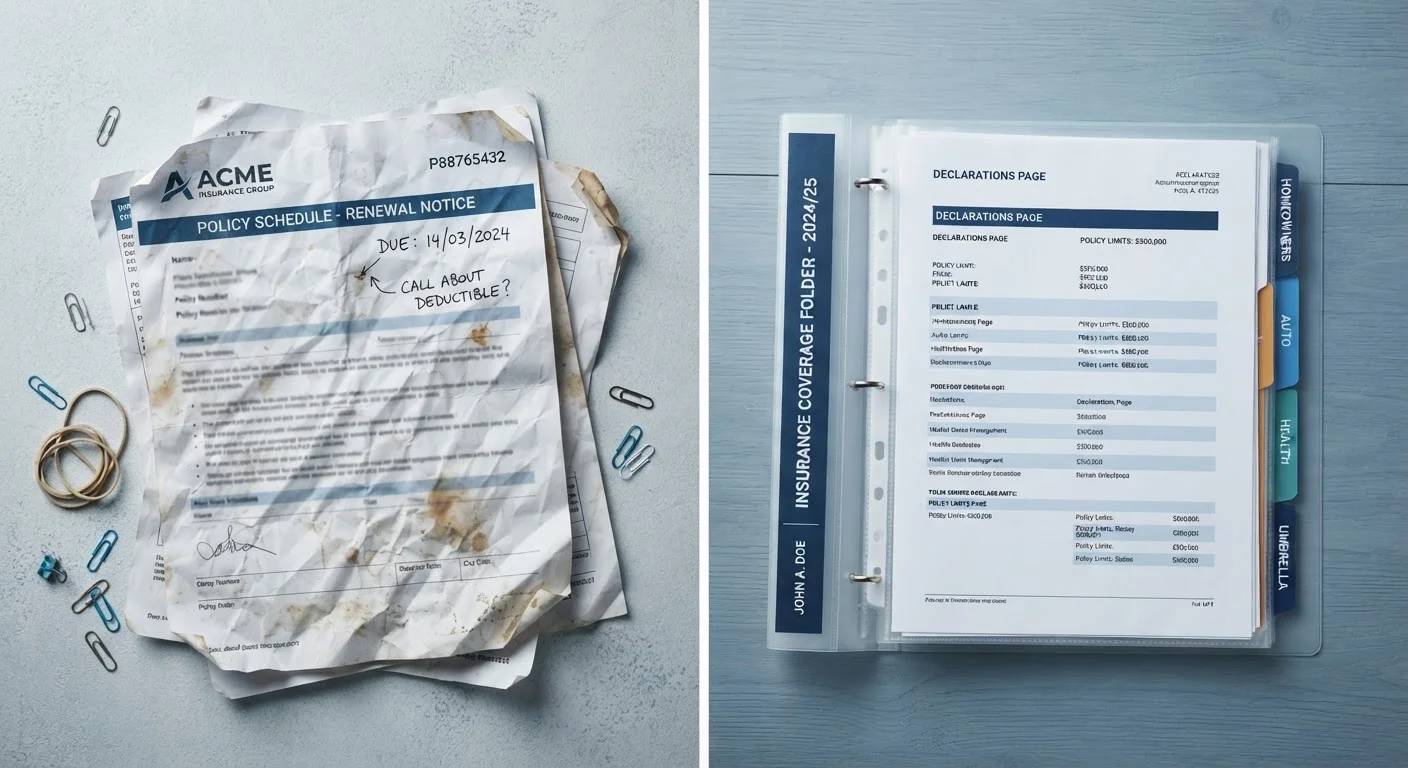
Insurance policies are defined by their exclusions as much as their inclusions. If you have not read your declarations page and exclusions section, you may be assuming coverage that does not exist. Review these documents annually and after any major life change - moving, marriage, a new vehicle, or a home renovation. When in doubt, ask your agent in writing.
Minimum-required coverage is a legal floor, not a financial safety net. A single at-fault accident with injuries can easily exceed state minimum liability limits, leaving you personally responsible for the difference. Similarly, assuming employer-provided life insurance is sufficient ignores the fact that group coverage typically ends when employment does. Underinsurance is more common than most people realize, and it can sting even after a claim is technically approved.
The solution isn't necessarily buying more of everything - it's understanding what you have. Review your declarations page (the summary sheet in your policy), note what's excluded, and ask your agent to walk you through scenarios where your current limits might fall short. For a broader look at where standard policies tend to leave people exposed, see common coverage blind spots many policyholders discover too late.
~40%
Homeowners in flood-prone areas without flood insurance
FEMA has noted that a large share of properties in moderate-to-high risk flood zones lack separate flood coverage, leaving owners exposed to uninsured losses.
1 in 8
Drivers on US roads are uninsured
The Insurance Research Council has estimated that roughly one in eight drivers carries no auto insurance, underscoring the value of uninsured motorist coverage.
Pricing myths compound the problem. Many consumers focus on finding the lowest monthly premium without examining what that premium actually buys - and end up underinsured without realizing it. Widespread beliefs about insurance pricing can quietly cost hundreds each year. Understanding how deductibles, coverage limits, and exclusions interact gives you far more control over your real costs than chasing a low premium number alone.