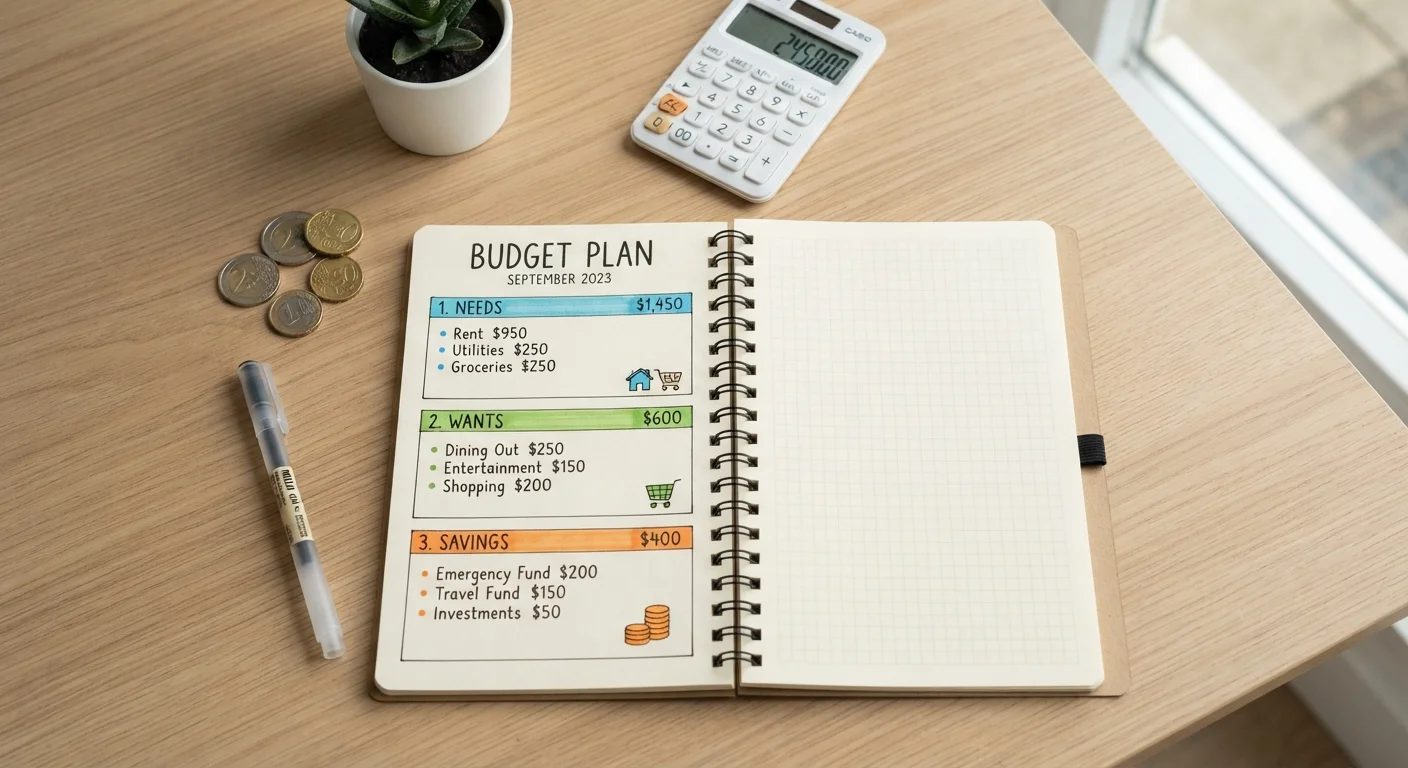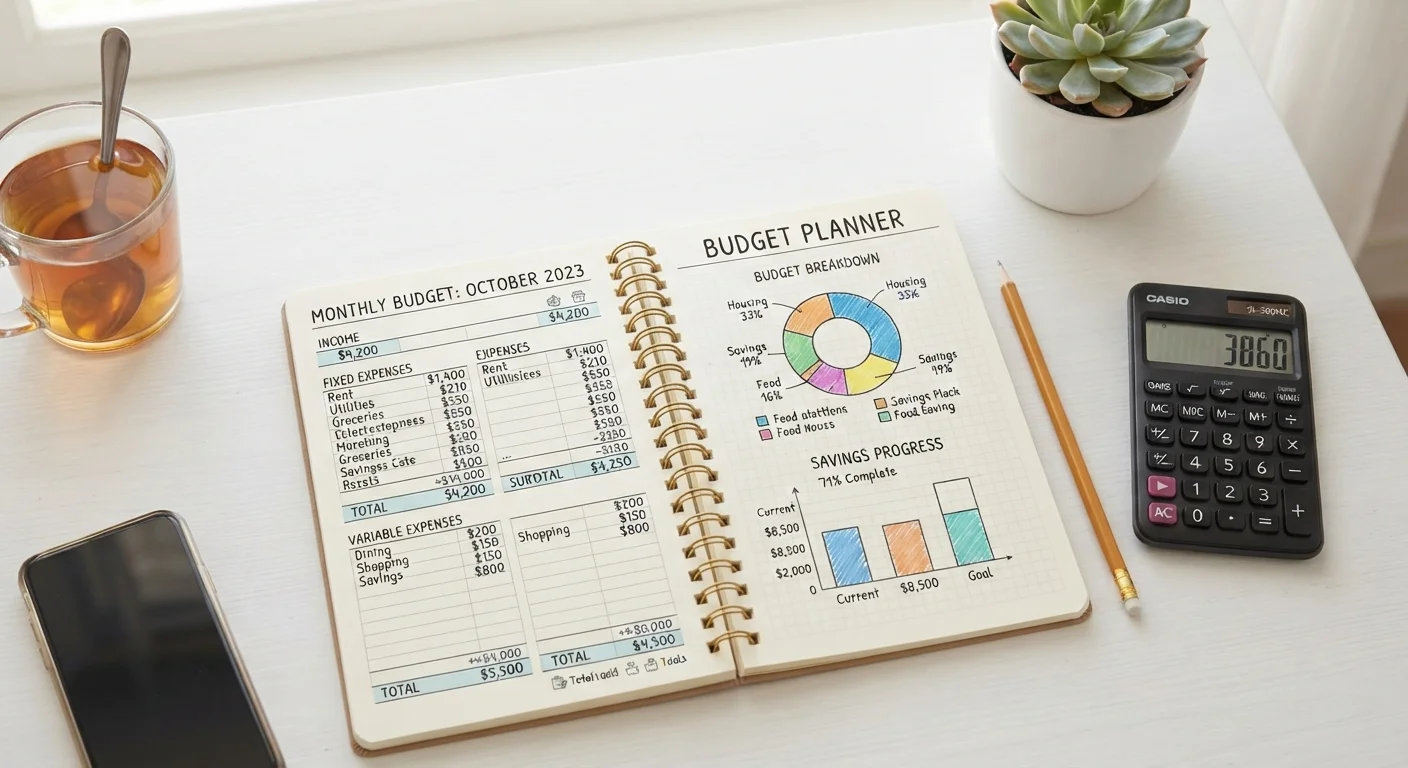

What a Budget Actually Is (and Isn't)
A budget is simply a plan for your money - a written record of what you expect to earn and what you plan to spend. That's it. It is not a punishment, a diet, or proof that you're bad with money. It's a tool, and like any tool, it only helps when you actually use it.
Many people avoid budgeting because they picture a rigid spreadsheet full of rules they'll inevitably break. In reality, a budget is just information organized in a useful way. Once you can see where your money comes from and where it goes, you're in a position to make deliberate choices instead of guessing. Unfamiliar with some of the terms you'll encounter along the way? The essential budgeting glossary covers the vocabulary in plain English.
Take-home income
The money you actually receive after taxes and other deductions are removed from your paycheck - the real amount available to spend or save.
Fixed expense
A cost that stays the same every month, like rent or a car loan payment, making it easy to predict and plan around.
Discretionary spending
Money spent on non-essential items you choose - dining out, entertainment, or hobbies - as opposed to necessities you must pay for.
Budget surplus
When your income is higher than your expenses, leaving leftover money you can direct toward savings, debt payoff, or other goals.
Zero-based budgeting
A method where you assign every dollar of income a specific purpose so that income minus all planned expenses equals zero - nothing unaccounted for.
Step 1: Know What's Coming In
Before you can plan your spending, you need one clear number: your monthly take-home income. This is the amount that actually lands in your account after taxes and any payroll deductions - not your salary before deductions.
Add up every source of income you reliably receive each month: your paycheck, a side job, freelance payments, or any regular support. If your income varies month to month, use a conservative estimate - the lower end of what you typically earn. Overestimating income is one of the most common reasons first budgets fall apart.
Use Your Most Recent Pay Stub
Your pay stub shows your actual take-home amount after all deductions are removed - it's more reliable than estimating from your salary. If you're paid bi-weekly, multiply one paycheck by 26 and divide by 12 to get your average monthly take-home. This one number anchors everything else in your budget.
Step 2: List What's Going Out
Now list every expense you pay. Grouping them into three categories makes the picture much clearer:
- Fixed expenses - the same amount every month: rent, car payment, insurance premiums, loan minimums.
- Variable necessities - costs that fluctuate but are non-negotiable: groceries, utilities, gas, prescription medications.
- Discretionary spending - the flexible extras: dining out, streaming subscriptions, clothing, entertainment.
Go through your last two or three bank or card statements to catch expenses you might forget - annual subscriptions that auto-renew, fees, or irregular bills. Small recurring charges add up quickly and are easy to overlook. If you own or plan to own a vehicle, don't forget maintenance costs - our vehicle maintenance guide for new drivers outlines what to budget for.
Don't Rely on Memory Alone
Most people underestimate what they spend each month by 20-30% when going from memory. Always check actual bank and card statements before finalizing your expense list. Missing even a few recurring charges can throw off your entire plan from the start.
Step 3: Give Every Dollar a Job
Subtract your total expenses from your total income. The result tells you one of three things:
- Income exceeds expenses - you have a surplus. Decide intentionally where that money goes: an emergency fund, a savings goal, or paying down debt faster.
- Expenses equal income - your budget is balanced, but there's no cushion. Look for small cuts in discretionary spending to create a buffer.
- Expenses exceed income - you're spending more than you earn. Start by trimming discretionary items, then look at variable necessities for savings.
You don't need to follow any particular system to do this well. Some people prefer a simple ratio like the 50/30/20 framework - our breakdown of whether the 50/30/20 rule actually works can help you decide if it fits your situation. Others prefer zero-based budgeting or a simple category list. The format matters far less than the habit of doing it consistently.
Making Your Budget Stick
The hardest part of budgeting isn't setting it up - it's returning to it each month. A budget you create once and never revisit is just a piece of paper. The real value comes from the monthly habit of checking in, comparing what you planned to what actually happened, and adjusting.
Build a simple routine: at the start of each month, take 20 minutes to review last month's spending and set your plan for the month ahead. The monthly budget reset walkthrough gives you a repeatable process to make this easier. And if your budget has already hit some bumps, it helps to know the patterns - why budgets commonly fail in the first 90 days covers the most predictable pitfalls and how to avoid them.
From here, you can apply the same intentional mindset to specific spending areas. For example, smarter spending habits for beginners helps you stretch every dollar further once your budget is in place.
This article is for general informational and educational purposes only. It is not personalized financial, tax, or legal advice. For guidance specific to your financial situation, please consult a qualified financial professional.