Where the Capsule Wardrobe Idea Came From
The phrase "capsule wardrobe" was coined by Susie Faux, owner of a London boutique called Wardrobe, in the 1970s. Faux used it to describe a core set of timeless, high-quality pieces that a woman could build a full wardrobe around - pieces that wouldn't go out of style and would serve her across seasons and occasions.
The concept gained much wider traction in 1985 when American designer Donna Karan launched her "Seven Easy Pieces" campaign, presenting a handful of coordinated wardrobe essentials that could take a woman from boardroom to evening. That campaign crystallized the idea for a mainstream audience: you don't need a lot of clothes if the clothes you have actually work together.
Decades later, the concept has been reinterpreted countless times - but the core logic remains the same. If you've ever felt frustrated staring at a full closet with "nothing to wear," the capsule approach directly addresses why that happens. Why your outfits never seem to come together is often less about having too few clothes, and more about having too many that don't connect.
What Makes a Wardrobe a "Capsule"
A capsule wardrobe isn't defined by a magic number of items or a strict color palette - it's defined by a principle: every piece should be able to work with multiple other pieces you own. That quality is called versatility, and it's the engine that makes a smaller wardrobe feel surprisingly full of options.
~20%
Clothes worn regularly from the average closet
Research and wardrobe studies frequently cite a commonly observed pattern that most people regularly wear only about 20% of the clothing they own.
33
Items in a popular capsule wardrobe challenge
The "Project 333" minimalist fashion challenge, created by Courtney Carver, popularized the idea of dressing with only 33 items for 3 months at a time.
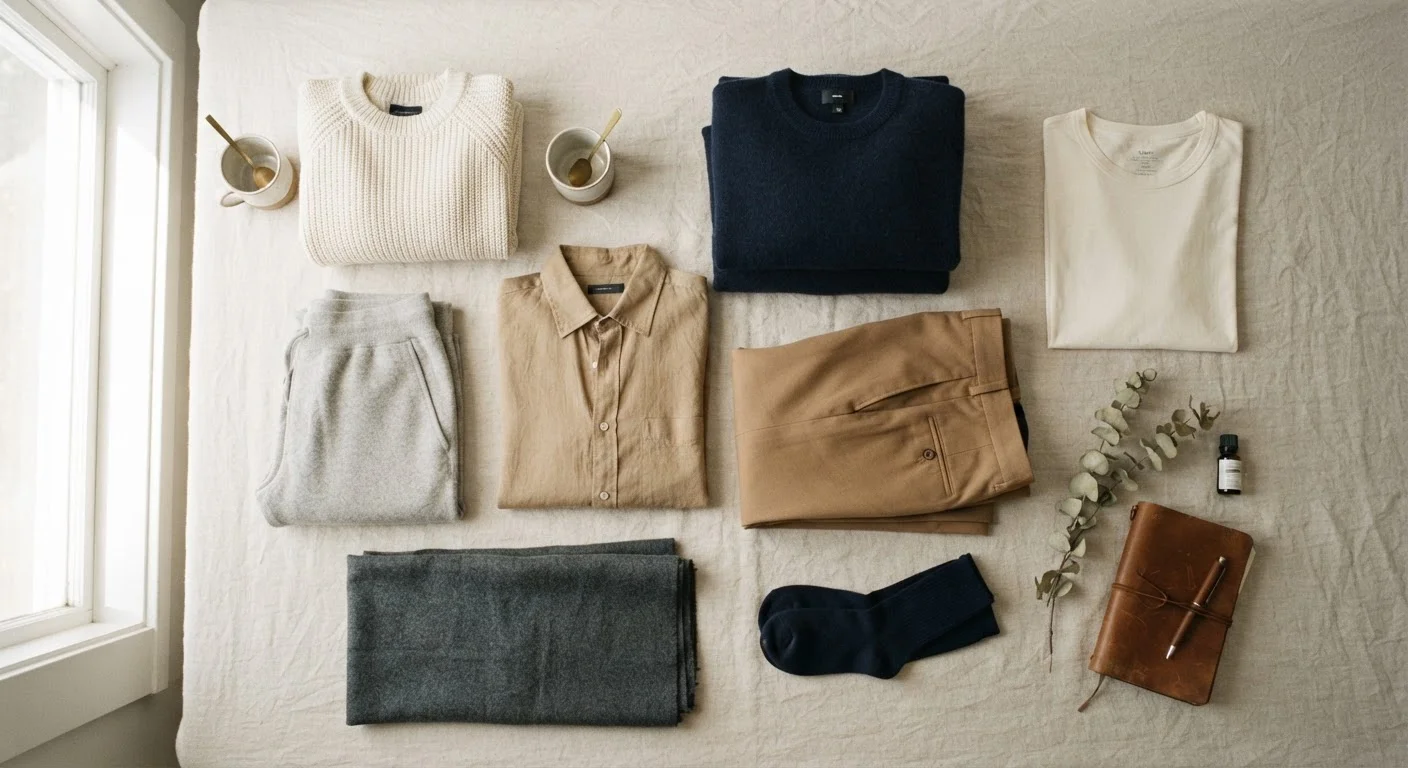
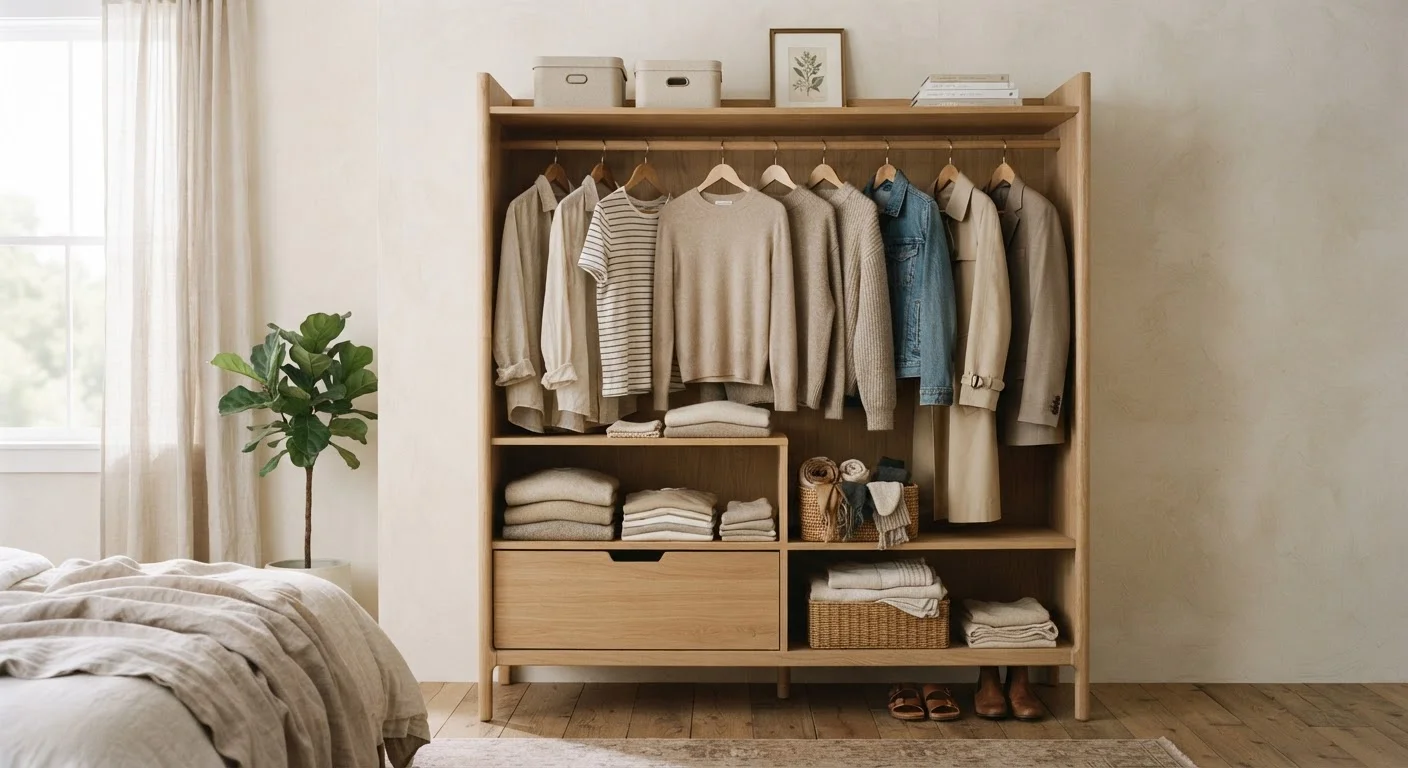
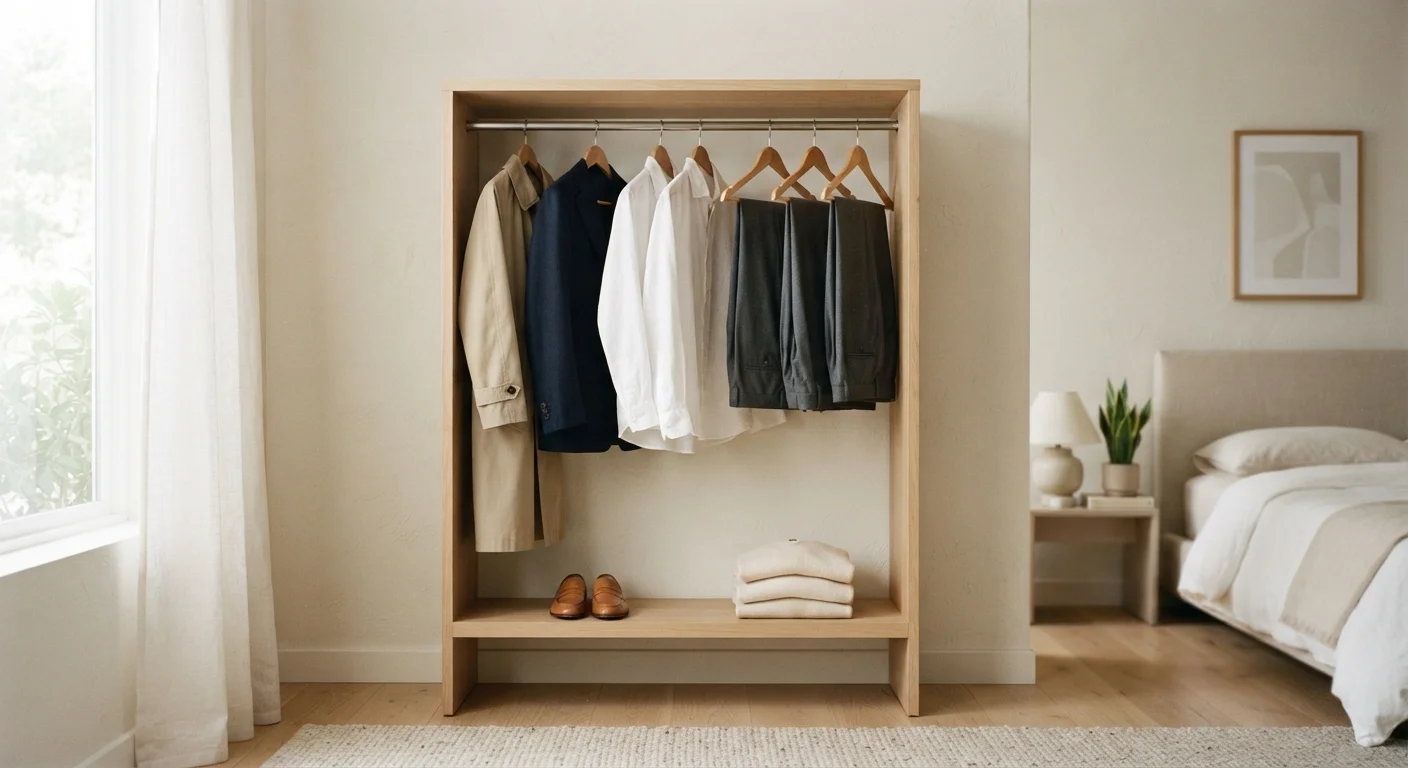
In practice, a capsule typically includes foundational categories: a few well-fitted tops, one or two pairs of pants or skirts in neutral tones, a layering piece like a cardigan or blazer, practical footwear, and outerwear suited to your climate. Neutral colors - think navy, white, gray, beige, and black - tend to anchor most capsules because they pair easily with almost anything.
What a capsule wardrobe is not: a rigid, joyless uniform. Personal style still matters. The distinction is that you're choosing pieces you genuinely love and wear, rather than accumulating items impulsively.
Start With What You Already Reach For
Before buying anything new, spend one week noting which pieces you naturally gravitate toward. Those are the foundation of your capsule. Building outward from items you already love is more effective - and less expensive - than starting fresh.
Why It Works: The Psychology and Practicality
Decision fatigue is real. Research in behavioral psychology consistently shows that making many small decisions throughout the day depletes mental energy - and choosing an outfit is a decision most of us make before we've had coffee. A cohesive, smaller wardrobe reduces that friction dramatically because nearly everything works with nearly everything else.
There's also a financial logic to the approach. Buying fewer, more considered pieces tends to result in less impulse spending over time. When your wardrobe has a clear internal logic, random purchases that don't fit the palette or purpose stand out immediately - making it easier to pass them by. For more on making value-driven clothing decisions, the principles in smarter spending apply directly to how you approach your closet.
Finally, a capsule wardrobe is easier to maintain across seasons. Rather than a full wardrobe overhaul every few months, you're making smaller, targeted swaps. Transitioning your wardrobe between seasons becomes much simpler when your baseline pieces are already versatile.
Getting Started Without Starting From Scratch
Building a capsule wardrobe doesn't require throwing everything out and starting over - that approach tends to be wasteful and expensive. A smarter starting point is an honest inventory of what you already own. A wardrobe audit helps you identify which pieces already function like capsule staples and which are quietly taking up space without earning their place.
From there, you fill specific gaps rather than shopping broadly. If you have three blazers but no reliable casual top that pairs with them, that's your next purchase - not another blazer. This methodical approach is exactly what building a versatile wardrobe from the ground up covers in detail, including the color logic and foundational pieces that make a wardrobe genuinely functional.
There's No Official Capsule Wardrobe Standard
You'll find plenty of prescriptive lists online claiming the "correct" capsule formula - 10 pieces, 37 pieces, only neutrals, no prints. These are starting frameworks, not rules. The right capsule wardrobe is the one that fits your real life, reflects your personal style, and actually gets worn. Treat any specific list as inspiration, not instruction.
The capsule wardrobe is ultimately a framework, not a rulebook. Adapt it to your actual life - your job, your climate, your personal style - and it becomes one of the most practical tools for dressing with confidence every single day.