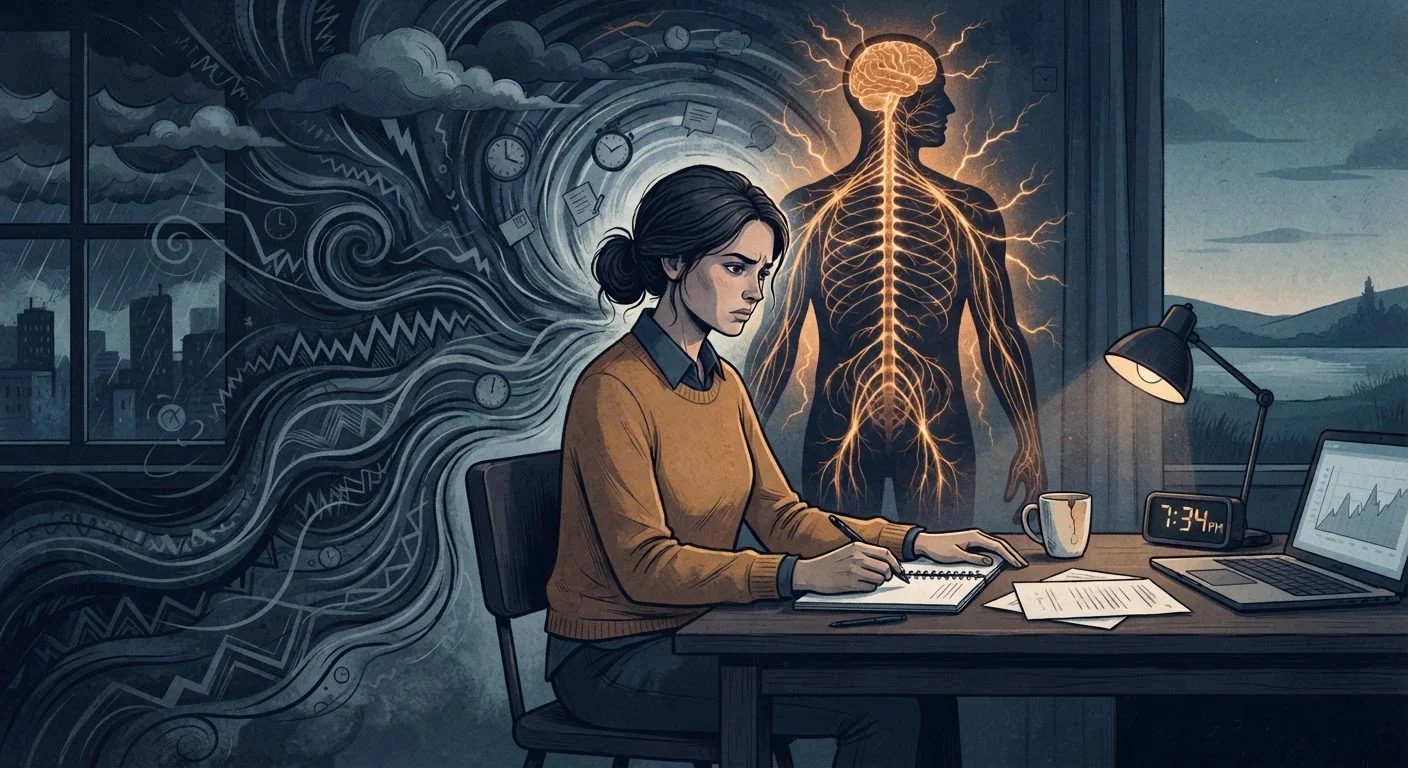

When Stress Becomes More Than Stress
Stress is a normal part of life. Deadlines, financial pressure, relationship friction - these trigger a biological response your body is designed to handle in short bursts. But when that response doesn't switch off, or when stress begins reshaping how you function day to day, it deserves a closer look.
This article isn't meant to diagnose anything. Rather, it's a reference guide to help you recognize patterns that go beyond ordinary stress - and understand when reaching out to a mental health professional is a reasonable, responsible next step.
To understand the physical side of what's happening, see our article on what stress actually does to your body and mind.
| Most common mental health concern in the U.S. | Anxiety disorders (National Institute of Mental Health (NIMH)) |
| Adults affected by anxiety disorders annually | ~19% of U.S. adults (NIMH, general population data) |
| Average delay before seeking mental health care | 11 years from symptom onset (American Psychiatric Association, general statistics) |
| Crisis support line (U.S.) | Call or text 988 (Suicide and Crisis Lifeline) |
| Sleep disruption threshold worth noting | More than 3-4 weeks of consistent difficulty (General clinical guidance; consult your provider for personal evaluation) |
Key Warning Signs to Know
The following indicators suggest stress may have shifted into something that warrants professional attention. None of these signs - alone - confirm a diagnosis. They are signals worth taking seriously.
Acute stress
A short-term stress response triggered by a specific event or perceived threat. The body returns to baseline once the stressor passes. It is the most common form of stress.
Chronic stress
Prolonged or ongoing stress that persists over weeks or months. Unlike acute stress, chronic stress does not resolve on its own and is associated with a range of physical and mental health effects.
Anxiety disorder
A group of mental health conditions characterized by persistent, excessive worry or fear that interferes with daily functioning. Anxiety disorders are among the most common mental health conditions in the United States and are treatable.
Nervous system dysregulation
A state in which the autonomic nervous system has difficulty shifting between its alert and rest modes. It is often associated with prolonged stress exposure and can manifest as emotional volatility, fatigue, or physical symptoms.
Avoidant coping
A coping style in which a person withdraws from stressors rather than addressing them. While temporarily relieving, avoidant coping tends to maintain or worsen stress and anxiety over time.
Physical symptoms with no clear medical cause
Persistent headaches, digestive problems, muscle tension, or fatigue that your doctor cannot attribute to a physical condition may reflect chronic stress or an anxiety-related disorder. The mind-body connection is well established in clinical research.
Sleep disruption lasting more than a few weeks
Difficulty falling asleep, staying asleep, or waking early - and feeling unrested regardless of how long you sleep - can be both a symptom and a driver of worsening mental health.
Withdrawal from people and activities you once valued
Pulling back from relationships, hobbies, or social commitments is a meaningful change. Occasional solitude is healthy; sustained withdrawal often isn't.
Difficulty managing emotions proportionate to the situation
Disproportionate irritability, tearfulness, or emotional numbness - especially when these feel outside your control - can signal that your nervous system is overwhelmed beyond typical stress levels.
Trouble concentrating or making ordinary decisions
Chronic stress impairs working memory and executive function. If this is affecting your work, relationships, or daily tasks over an extended period, it's worth discussing with a professional.
Using substances to cope
Increased reliance on alcohol, cannabis, or other substances to unwind or feel normal is a pattern that often signals underlying distress - and one that can compound it.
This content is for general informational purposes only and is not a substitute for professional mental health evaluation or treatment. If you are in crisis or experiencing an emergency, contact a qualified healthcare provider or call 988 (Suicide and Crisis Lifeline) immediately.
Stress in Context: It Spreads and Compounds
Stress rarely stays contained to one person or one domain of life. It moves through households, affects sleep and physical health, and tends to compound when left unaddressed. If you've noticed these warning signs showing up in people around you, our piece on stress in the household offers helpful context on how emotional climate affects the whole family.
Building a habit of regular self-reflection can also help you catch warning signs earlier. A structured weekly mental health check-in is a low-effort tool that supports awareness over time.
When to Seek Help Without Delay
If you are experiencing thoughts of self-harm, hopelessness that won't lift, or an inability to perform basic daily functions, please contact a mental health professional or crisis line as soon as possible. In the U.S., you can call or text 988 to reach the Suicide and Crisis Lifeline at any time. These are not signs of weakness - they are signals your mind and body need support.
Reaching out for support is not a sign that stress has beaten you - it's a sign that you're paying attention. Mental health care is health care.