Why Stress Doesn't Stay in One Room
Most of us picture stress as a personal experience - something happening inside one person. But inside a home, stress operates more like weather: it fills the space, and everyone inside feels it. A parent who arrives home tense from work doesn't just feel that tension privately. Their clipped answers, the speed at which they move through the kitchen, the absence of their usual warmth - all of it registers with the people around them.
This isn't a character flaw or a failure of emotional control. It's how human nervous systems work. We are wired to read the emotional states of the people close to us, and we respond to what we detect - often automatically. The term researchers use for this is emotional contagion: the tendency for emotions to transfer between individuals through behavioral and physiological cues.
To understand what chronic stress does at the body level - including how it affects the nervous system and hormones - see what stress actually does to your body and mind. That foundation helps explain why stress contagion isn't just psychological; it has measurable physical dimensions.
~75%
Adults reporting family as a significant stress source
According to the American Psychological Association's Stress in America surveys, family responsibilities are consistently among the top reported stressors for American adults.
2x
Elevated cortisol in children of high-stress parents
Research published in developmental psychology literature has found that children of parents with chronically high stress show measurably different cortisol patterns compared to those with lower-stress caregivers.
How the Emotional Climate of a Home Gets Set
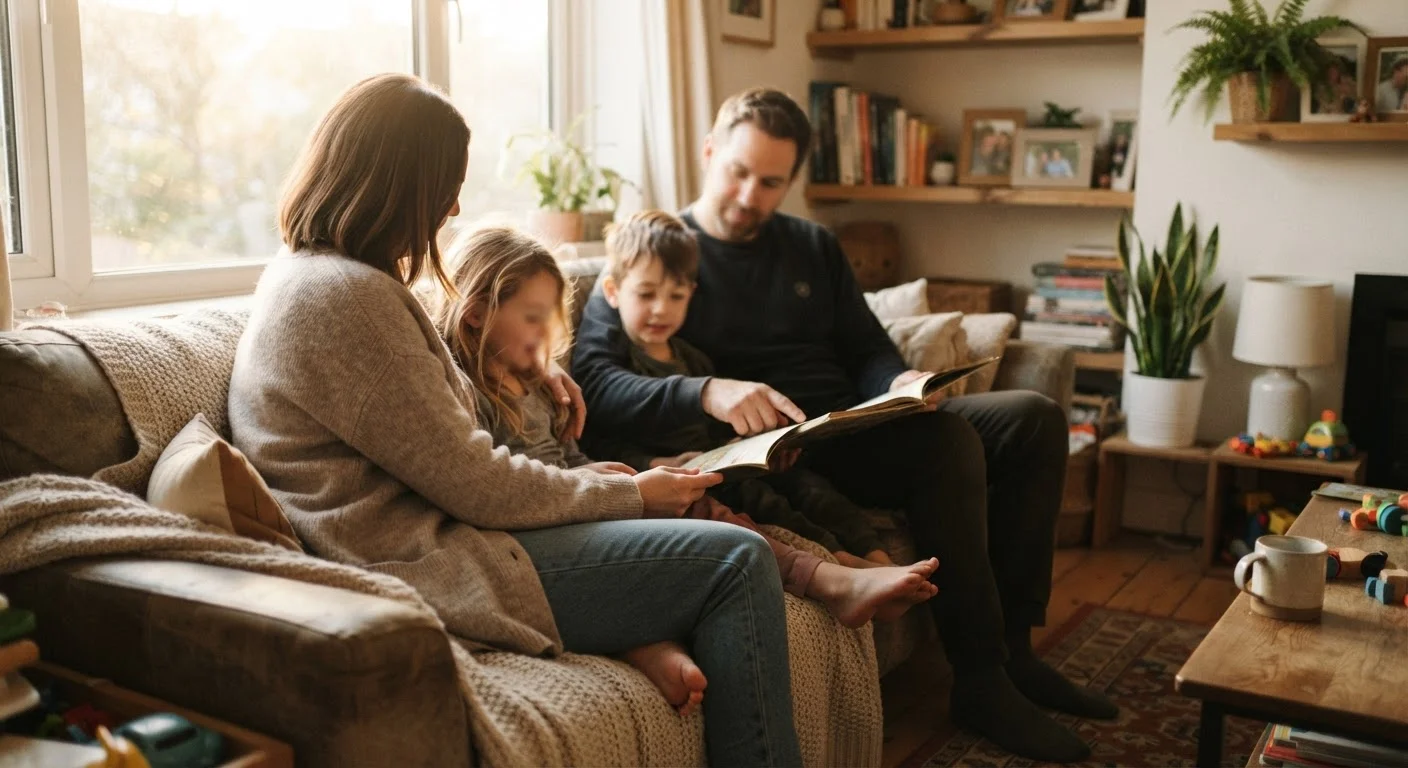
Every household has an ambient emotional tone - what it feels like to be in the space on a typical Tuesday. That climate is shaped by the cumulative effect of interactions: how conflicts get handled, whether there's regular laughter, how much silence is tense versus comfortable. Children are especially sensitive to this climate, often detecting caregiver distress even when adults believe they've successfully masked it.
Several factors influence how quickly or intensely stress spreads within a home:
- Communication style: Homes where conflict escalates quickly or where frustration is expressed through dismissal tend to amplify stress signals.
- Predictability: Irregular routines heighten uncertainty, which raises baseline anxiety for children in particular.
- Modeling: How adults visibly respond to their own stress teaches household members - especially children - what stress responses look like and whether they're manageable.
- Physical environment: Clutter, noise, and lack of personal space can heighten sensory load and make emotional regulation harder for everyone.
Understanding these dynamics is not about assigning blame to whoever is stressed. It's about recognizing that the household functions as a system, and that shifts anywhere in the system ripple outward. For more on recognizing patterns that quietly erode emotional balance, habits that quietly undermine emotional balance offers useful framing.
Practical Habits That Dampen Stress Spread
Reducing stress contagion in a household doesn't require eliminating stress - that's not realistic, and it isn't the goal. The aim is to lower the amplification: to keep one person's hard day from becoming the whole household's hard day, and to build enough resilience in the shared environment that stress is processed rather than recycled.
Start Small, Stay Consistent
You don't need a whole new routine to shift the emotional climate at home. Picking one habit - like a ten-minute wind-down before re-engaging with family - and doing it consistently tends to produce more durable results than sporadic large efforts. Consistency signals safety to everyone in the household.
A few evidence-informed habits make a consistent difference:
- Transition rituals: A brief buffer between coming home and engaging fully with family - even ten minutes of quiet - gives stressed individuals a chance to decompress before interacting. This isn't withdrawal; it's preparation.
- Named emotions, lower volume: Saying "I'm frustrated right now, not angry at you" reduces the interpretive burden on family members who might otherwise assume the worst.
- Shared predictable routines: Regular mealtimes, consistent bedtime rhythms, and scheduled downtime anchor the household in structure that stress tends to erode.
- Physical movement: Even brief shared physical activity - a walk, a bike ride, shooting hoops - helps discharge stress hormones and shifts mood for participants.
- Moments of genuine connection: Brief, low-pressure interactions that aren't problem-focused (a short game, a joke, a check-in question) signal safety to other household members.
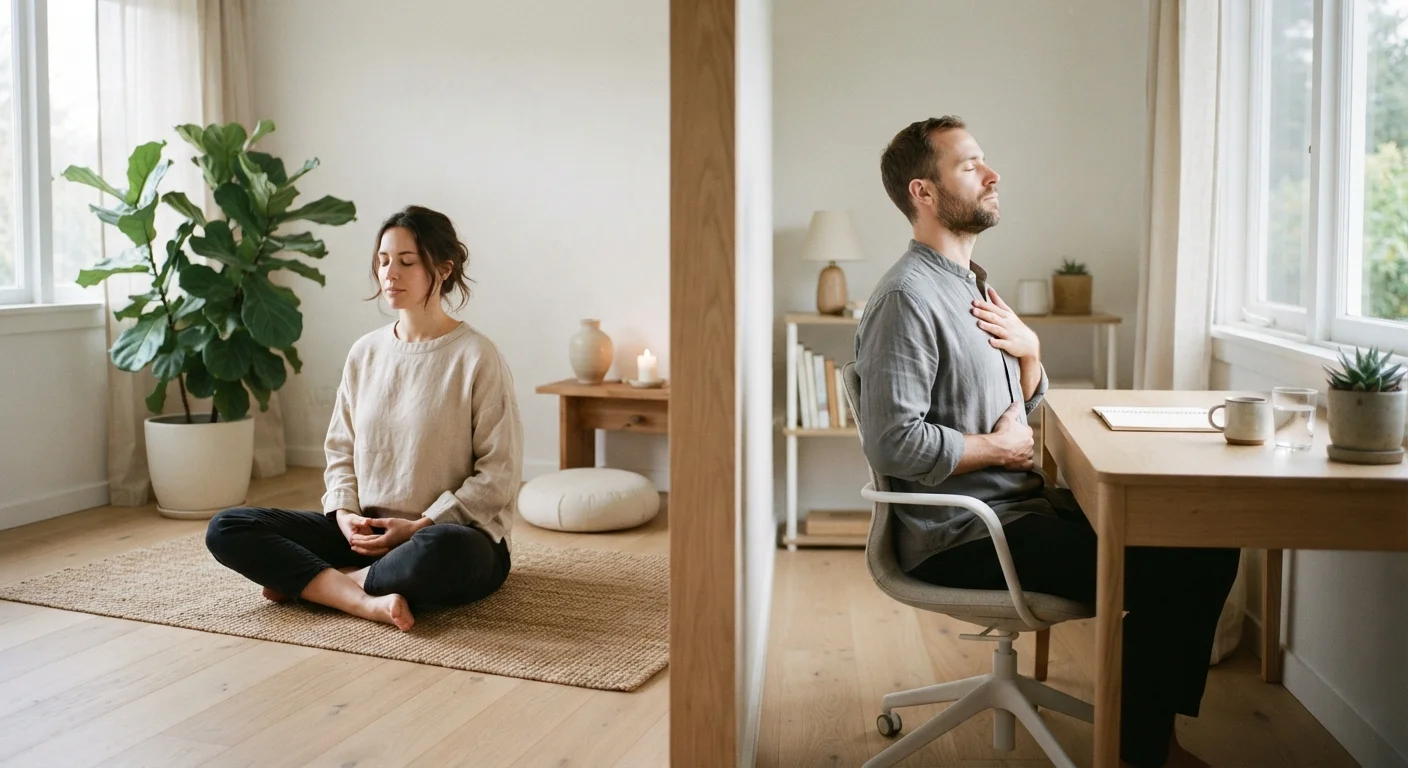
For families interested in calming practices at the individual level, meditation vs. deep breathing breaks down two accessible options with honest comparisons.
When to Talk About It - and When to Get Help
Making stress a topic that can be named openly inside the home is one of the most powerful things a family can do. When stress is treated as something to hide or push through silently, it tends to leak out in more disruptive ways. Starting the mental health conversation at home doesn't require a formal sit-down; it often starts with small, consistent acknowledgments that hard feelings are normal and speakable.
That said, there are situations where household stress patterns signal a need for outside support. If stress feels persistent rather than episodic, if it's affecting sleep, relationships, or daily functioning, or if any family member shows signs of withdrawal, prolonged irritability, or changes in behavior, those are reasonable indicators that professional guidance would help. Signs that stress has shifted into something that deserves attention outlines what to watch for.
A licensed therapist, family counselor, or your primary care provider can help identify what's driving the pattern and what tools are most suited to your household's specific situation. This article is for general educational purposes and is not a substitute for professional advice.
Stress Patterns Vary by Household
Every family's dynamic is different - what amplifies stress in one home may be negligible in another. The habits described here are general, research-informed starting points, not prescriptions. A licensed family therapist or counselor can help identify the specific patterns at work in your household and suggest targeted strategies.
This article is for informational purposes only and is not a substitute for professional mental health or medical advice. If you or a family member is struggling, please consult a qualified healthcare professional.