
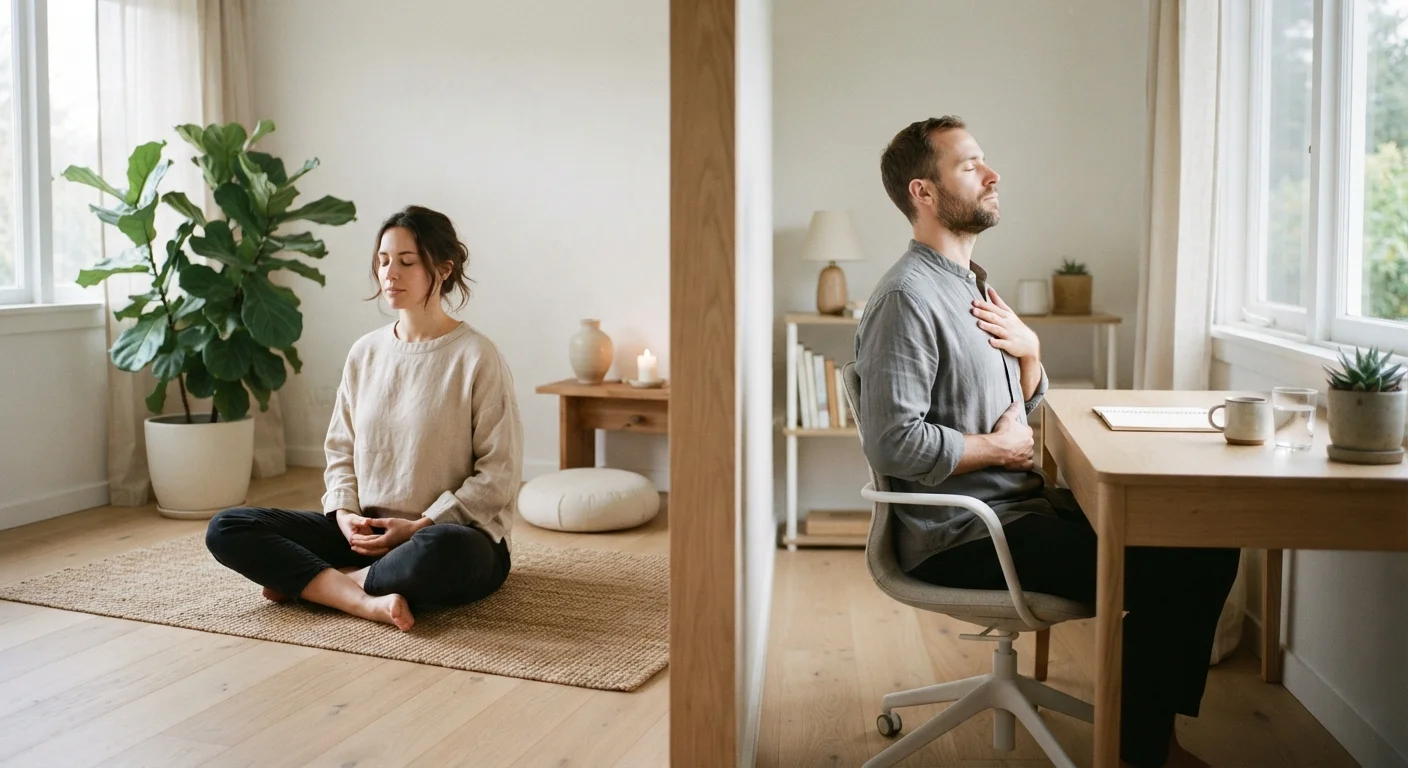
How Each Practice Actually Works
Meditation and deep breathing both calm the mind, but they operate through different mechanisms. Understanding those differences helps you choose the right tool - or combine both effectively.
Deep breathing works primarily through the body. Slow, deliberate breaths stimulate the vagus nerve, which signals the parasympathetic nervous system - often called the "rest and digest" system - to dial down the stress response. This is why a few slow exhales can reduce a racing heart within moments. Common techniques include diaphragmatic breathing, box breathing (inhaling, holding, exhaling, and pausing for equal counts), and the 4-7-8 pattern.
Meditation targets the mind's relationship with thought. Rather than reacting automatically to mental noise, practiced meditators learn to observe thoughts without being pulled into them. This skill - sometimes called metacognitive awareness - builds gradually over weeks and months. Mindfulness-based approaches, which are among the most studied, train attention on present-moment experience, such as breath, body sensation, or sound.
To understand why managing either matters, it helps to know what chronic stress does to your body and mind - the nervous system effects are the very pathways these practices aim to interrupt.
| Criterion | Meditation | Deep Breathing |
|---|---|---|
| Time to first effect | Weeks of regular practice | Within minutes |
| Learning curve | Moderate - guidance helps | Minimal - intuitive |
| Equipment needed | None (apps optional) | None |
| Session length | Typically 8-20 minutes | 1-5 minutes |
| Primary benefit | Long-term emotional regulation | Immediate stress relief |
| Use during stressful moment | Less practical mid-crisis | Highly effective |
| Sleep quality support | Well-supported by research | Helpful as a wind-down tool |
| Requires quiet environment | Ideally yes | No |
Effort, Time, and Accessibility
Practicality matters. A calming technique only helps if you actually use it.
Deep breathing wins on accessibility by nearly every measure. It requires no equipment, no quiet room, no app, and no prior experience. A 60-second breathing exercise done at a desk, in a car, or before a difficult conversation can meaningfully shift your physiological state. The learning curve is gentle - most people feel some effect from their very first attempt.
Meditation asks more upfront. Beginners often find sitting quietly with their thoughts surprisingly uncomfortable. Many people report their minds feel busier when they first try meditating - this is normal, not failure. Research generally suggests that noticeable benefits from meditation accumulate with regular practice of at least 8-10 minutes daily over several weeks. Guided apps or classes can make the onboarding far more manageable.
8 weeks
Typical MBSR program duration showing measurable results
Mindfulness-Based Stress Reduction programs, developed by Jon Kabat-Zinn at UMass Medical School, consistently use an 8-week structure in research settings.
~5-6 breaths/min
Optimal breathing rate for nervous system calming
Multiple studies identify this paced breathing rate as effective for increasing heart rate variability, a key marker of stress resilience.
36%
Reduction in perceived stress in MBSR trials
A frequently cited meta-analysis of mindfulness-based interventions found meaningful reductions in self-reported stress across diverse adult populations.
This doesn't make meditation superior - it simply means the investment is different. If your household is already carrying shared stress, exploring both tools together with family members can be especially worthwhile. See how stress spreads through a household and what helps reduce it for more context.
What the Research Shows
Both practices have meaningful scientific support, though the depth and scope of evidence differs.
Deep breathing has a well-established physiological basis. Studies consistently show that slow-paced breathing - typically around five to six breaths per minute - increases heart rate variability, a marker of healthy nervous system flexibility. These effects are acute and measurable, making breathing techniques among the most validated rapid-relief strategies in stress research.
Meditation has been studied more broadly across longer timeframes. Meta-analyses of mindfulness-based stress reduction programs - structured 8-week courses developed in clinical settings - have found statistically significant reductions in self-reported anxiety, depression symptoms, and perceived stress. Some neuroimaging research also suggests structural changes in brain regions associated with emotional regulation after sustained practice, though this area is still developing.
It's worth noting that most meditation research relies on self-report measures, and study quality varies. The general consensus among health researchers supports meditation as a useful complementary wellness tool, not a standalone treatment for clinical conditions. For anyone noticing patterns that go beyond everyday tension, it's worth reading about signs your stress has shifted into something that deserves professional attention.
These Practices Are Not Medical Treatment
Meditation and deep breathing are general wellness tools supported by research for everyday stress and mild anxiety. They are not substitutes for professional mental health care. If you are experiencing persistent anxiety, depression, trauma responses, or other clinical concerns, please consult a licensed mental health professional. This article provides general health information and is not intended as personal medical advice.