The Core Difference: Depreciation
When you file a property insurance claim, the dollar amount your insurer pays depends almost entirely on one thing: which valuation method your policy uses. The two most common are Actual Cash Value (ACV) and Replacement Cost Value (RCV). They sound similar, but they can produce dramatically different settlement checks.
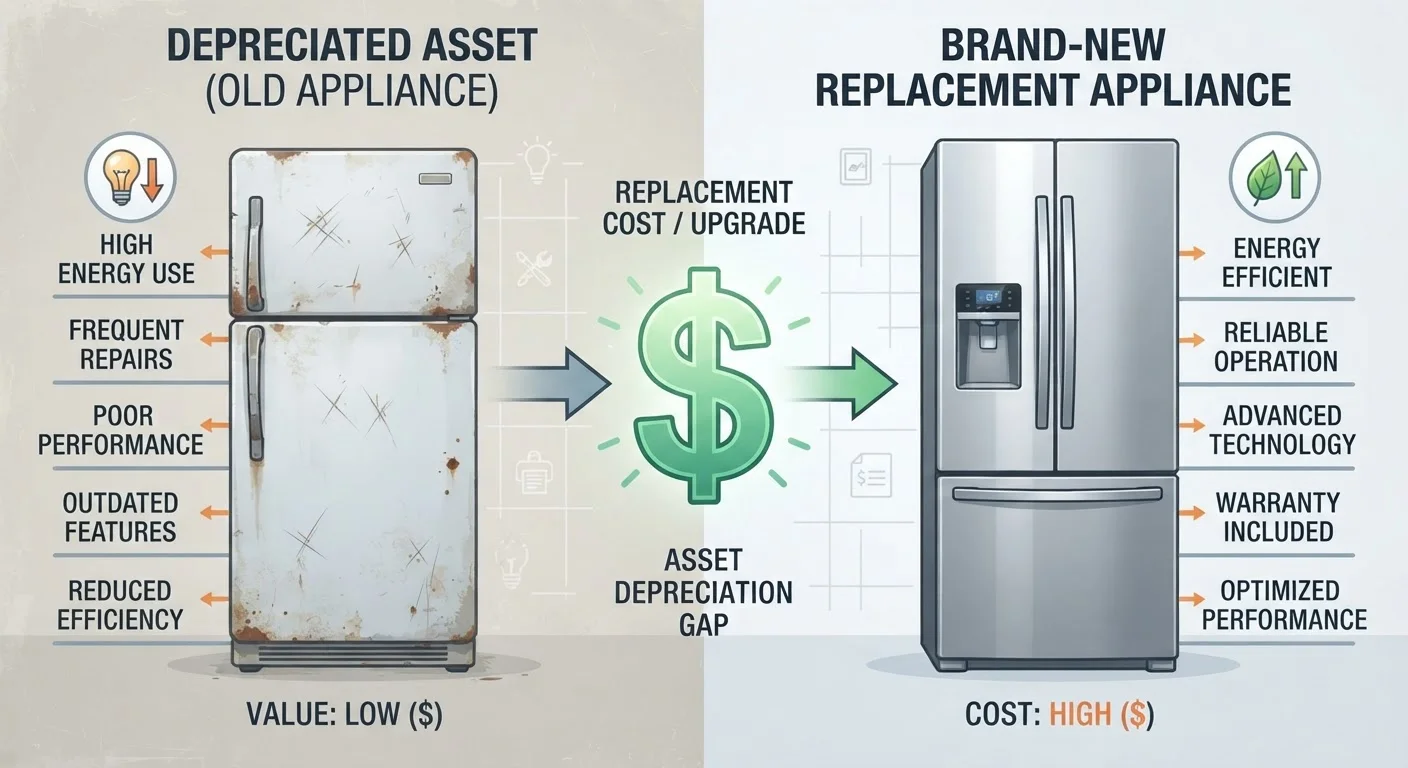
Actual Cash Value is essentially the market value of your property at the time of the loss - meaning the insurer subtracts depreciation based on the item's age and condition. A five-year-old refrigerator that costs $1,200 to replace today might only be worth $600 on an ACV basis after depreciation is applied. That's your payout.
Replacement Cost Value, by contrast, pays what it costs to buy a comparable new item at today's prices, without any depreciation deduction. The same refrigerator would generate a $1,200 payout, covering the full cost of replacement.
That $600 gap on a single appliance is significant. Scale the same math across a kitchen fire that damages multiple appliances, cabinets, and flooring, and the out-of-pocket difference between ACV and RCV can reach tens of thousands of dollars.
| Criterion | Actual Cash Value (ACV) | Replacement Cost Value (RCV) |
|---|---|---|
| Depreciation applied | Yes - reduces payout | No - full value paid |
| Typical premium cost | Lower | Higher |
| Payout on older items | Significantly reduced | Based on new replacement cost |
| Out-of-pocket gap after claim | Potentially large | Minimal to none |
| Payment timing | Single lump sum | Often two-step: ACV first, remainder after repair |
| Best fit | Older property, budget-conscious | Newer property, full recovery priority |
How Each Method Works in Practice
Insurers calculate ACV using a formula that weighs the item's original cost, its expected useful life, and how much of that life has already elapsed. Different insurers use different depreciation schedules, so two policies covering the same item can produce different ACV payouts. This is one reason why policy language matters - and why reading the actual policy document is essential, not just the summary page.
RCV policies often involve a two-step process. Insurers typically issue an initial payment equal to the ACV, then release the remaining "recoverable depreciation" only after you have actually completed the repair or replacement and submitted receipts. That means you may need to front the cost before receiving the full amount. Understanding this timing detail helps you plan financially after a claim. For more on how claim decisions can affect your long-term costs, see Filing a Claim Without Tanking Your Premiums.
Roof Coverage Is Often a Special Case
Many homeowners policies use ACV specifically for roof claims, even when the rest of the policy operates on an RCV basis. This distinction is often buried in endorsements or exclusions sections. Because roofs are expensive to replace and depreciate quickly, the financial impact of ACV on a roof claim can be especially large. Ask your insurer or agent explicitly how your roof is valued before you need to file a claim.
It's also worth knowing that some policies apply ACV to certain property categories (like roofing) even when the rest of the policy uses RCV. These hybrid structures are common and easy to miss. Always ask your agent specifically which method applies to each category of property in your policy.
What This Means for Your Coverage Decisions
Choosing between ACV and RCV is fundamentally a trade-off between premium cost and claim payout. RCV coverage costs more each month, sometimes 10-20% more depending on the policy and insurer, but it substantially reduces the financial gap after a loss.
~15%
Typical RCV premium increase over ACV
Industry estimates generally place the added cost of replacement cost coverage at roughly 10-20% more than an equivalent ACV policy, though this varies by insurer and property type.
50%+
Depreciation possible on a 10-year-old roof
Roofing materials depreciate substantially over time; on an ACV basis, a decade-old roof could lose more than half its value, leaving homeowners with a significant gap on replacement costs.
For homeowners with newer construction or recently purchased contents, RCV coverage often makes strong financial sense. For landlords insuring older rental properties, or for policyholders who carry higher deductibles and self-insure smaller losses, ACV may be a reasonable fit. This is general information - the right answer for your situation depends on your property, your financial cushion, and your risk tolerance. A licensed insurance agent can help you model both options against your specific circumstances.
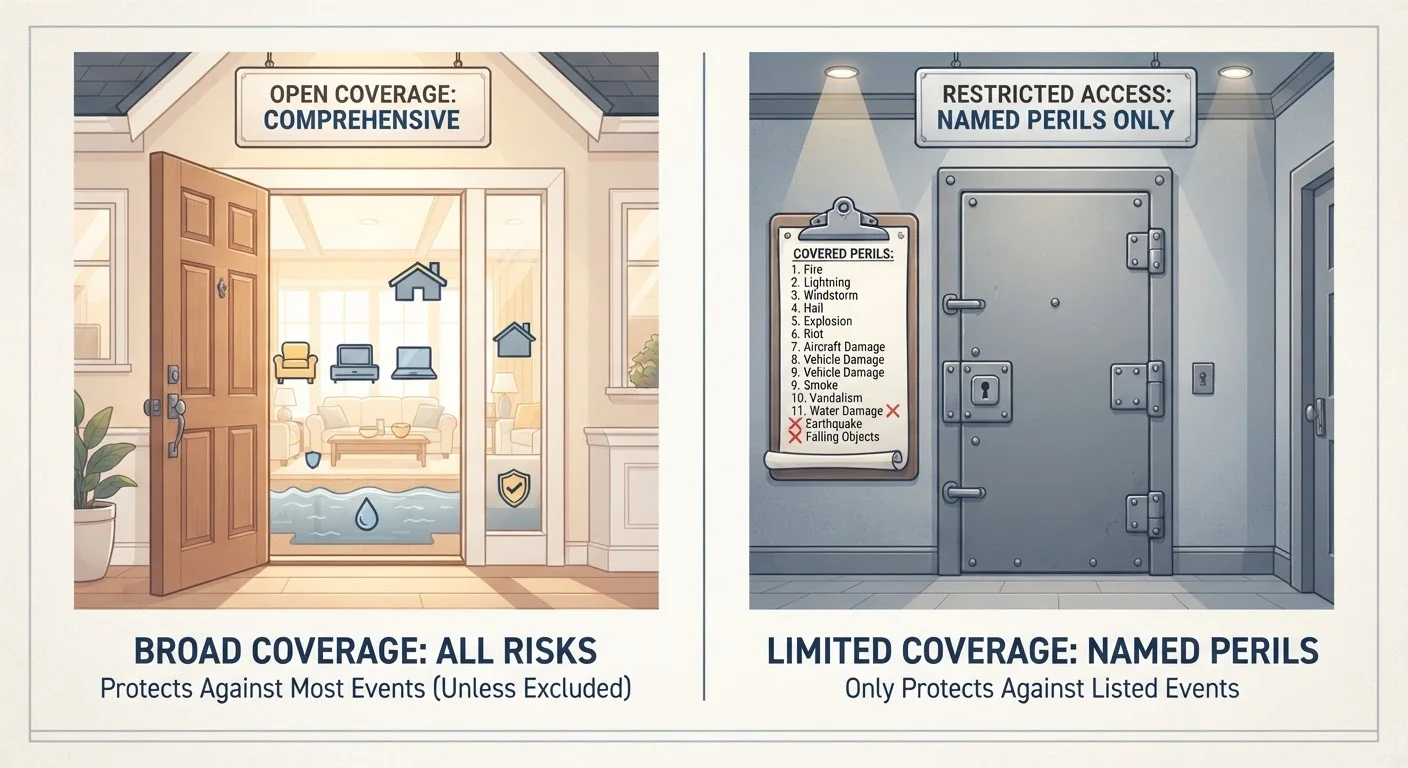
Also be aware that carrying ACV coverage can contribute to underinsurance - a situation where your payout falls short of what you actually need to recover. Underinsurance: When Your Policy Limit Falls Short of the Real Loss explains how this gap develops and what to watch for. And if you're exploring how your policy structure shapes what's covered in the first place, see Named Perils vs. Open Perils Policies.
This article is for general informational purposes only and does not constitute personalized insurance, financial, or legal advice. Coverage terms, valuation methods, and payout outcomes vary by insurer, policy, and state. Always read your full policy documents and consult a licensed insurance professional before making coverage decisions.