What These Terms Actually Mean
Two homeowners can have insurance cards that look nearly identical. But if one holds a named perils policy and the other holds an open perils policy - also called an "all-risk" policy - they are in fundamentally different positions when something goes wrong.
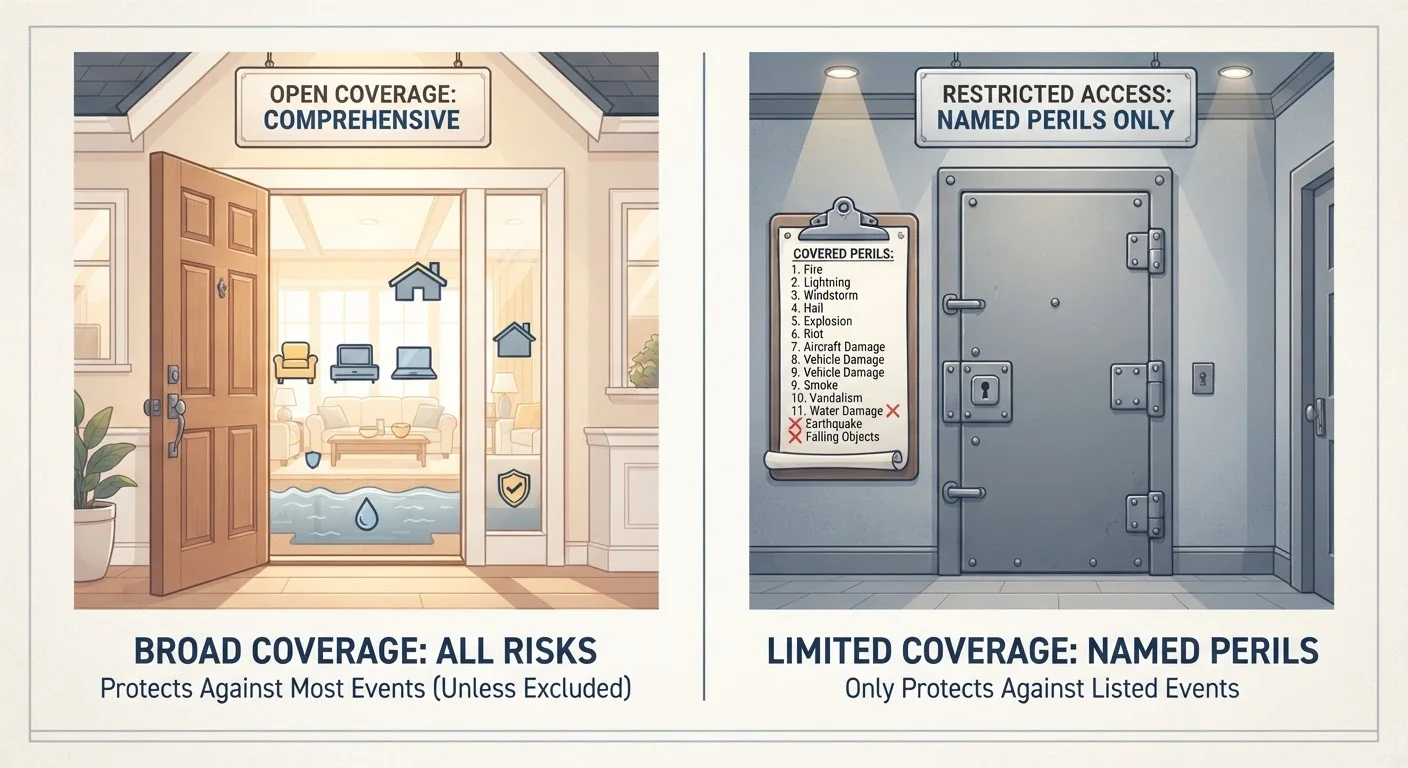
A named perils policy covers only the specific causes of loss listed inside the policy document. Common examples include fire, lightning, windstorm, hail, theft, and vandalism. If the event that damaged your property isn't on that list, the claim is denied. Full stop.
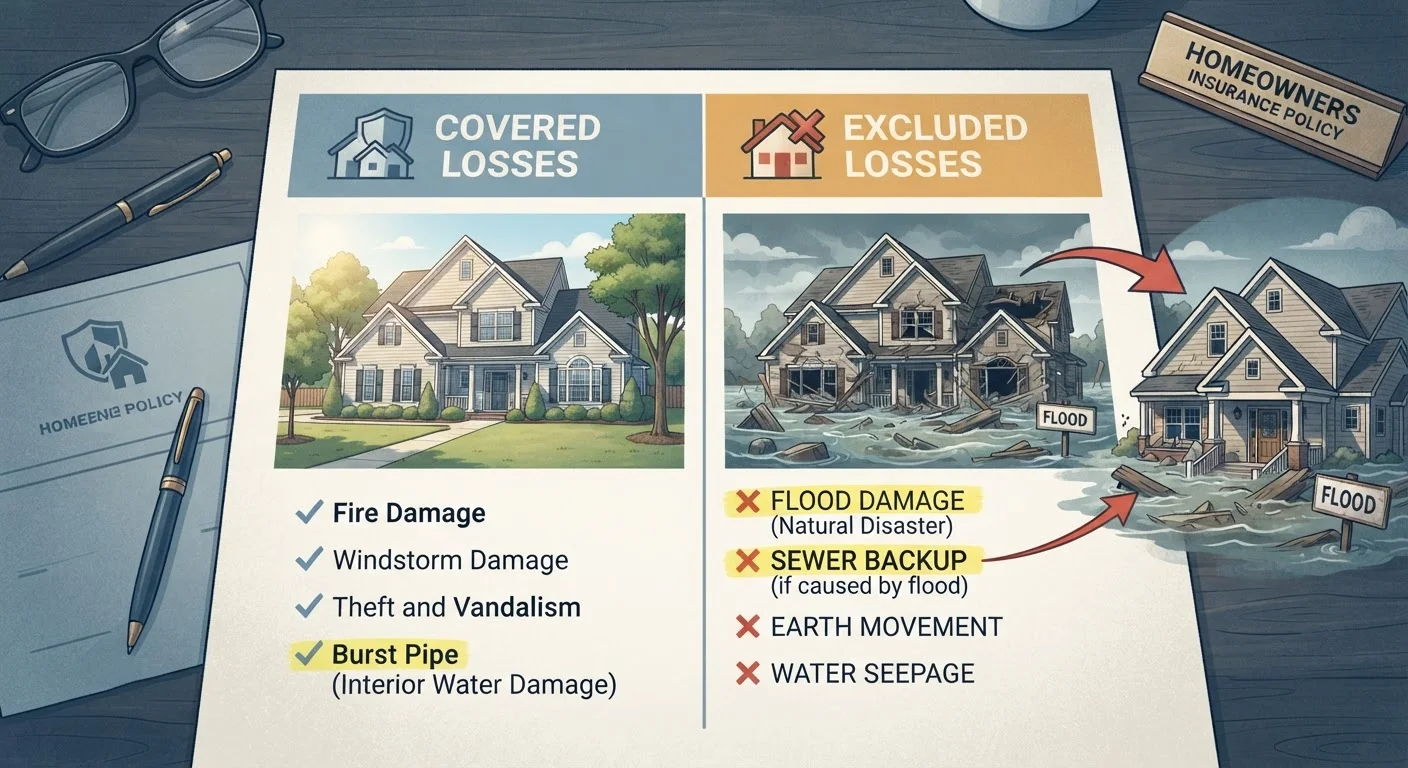
An open perils policy flips that logic. It covers every cause of loss except those the policy explicitly excludes. Flood, earthquake, and intentional damage are typical exclusions. Anything not on the exclusion list is, by default, covered.
This distinction sits at the core of understanding coverage types and shapes everything from how you file a claim to how much you pay in premiums.
How Burden of Proof Shifts Between the Two
One of the least-discussed differences between these structures is who has to prove what during a claim.
Under a named perils policy, the burden falls on you, the policyholder. You must demonstrate that the loss was caused by a peril that appears on the covered list. If the cause is unclear or disputed, the claim is likely to be denied until you can make that case. That puts you in a defensive position at an already stressful time.
Under an open perils policy, the burden shifts to the insurer. The default assumption is that a loss is covered. If the insurance company wants to deny a claim, it must point to a specific exclusion in the policy language that applies. That's a meaningful practical advantage for the policyholder.
Document Everything at the Scene
When a loss occurs, photograph and video the damage before any cleanup or repairs begin. Note the date, time, and any contributing conditions. For named perils policies especially, this documentation can be the difference between an approved and a denied claim - your insurer will need to confirm the cause matches a listed peril.
This burden-of-proof difference is one reason claim disputes are more common with named perils policies - especially when a loss involves an unusual or ambiguous cause. Documenting damage thoroughly and promptly matters regardless of which policy you hold.
Side-by-Side: Named Perils vs. Open Perils
The table below summarizes the key structural differences between these two policy types across criteria that matter most during a real claim.
| Named Perils | Open Perils | |
|---|---|---|
| Coverage logic | Only listed events are covered | Everything covered except listed exclusions |
| Burden of proof in a claim | Policyholder must prove covered cause | Insurer must prove an exclusion applies |
| Typical premium cost | Lower | Higher |
| Claim denial risk | Higher - ambiguous causes often denied | Lower - default is coverage |
| Common policy examples | HO-1, HO-2, renters (HO-4) | HO-3 (dwelling), HO-5 (full) |
| Best suited for | Budget-focused, lower-risk situations | Higher-value property, broader protection needs |
These distinctions directly affect real-world outcomes. For a deeper look at where coverage gaps appear in practice, see where the most dangerous blind spots tend to hide.
Where Each Type Shows Up in Common Policies
In practice, many standard policies are hybrids - they apply different coverage structures to different parts of your property.
A typical HO-3 homeowners policy (the most common form in the U.S.) uses open perils coverage for the dwelling itself but named perils for personal property inside the home. That means your roof and walls have broader protection than your furniture and electronics. An HO-5 policy extends open perils to both the structure and personal belongings - at a higher premium.
Renters insurance policies are commonly written on a named perils basis, which is one reason renters often discover coverage blind spots after a loss. If your apartment floods due to a burst pipe, whether that's covered depends on how the cause is classified and whether it's on your named list.
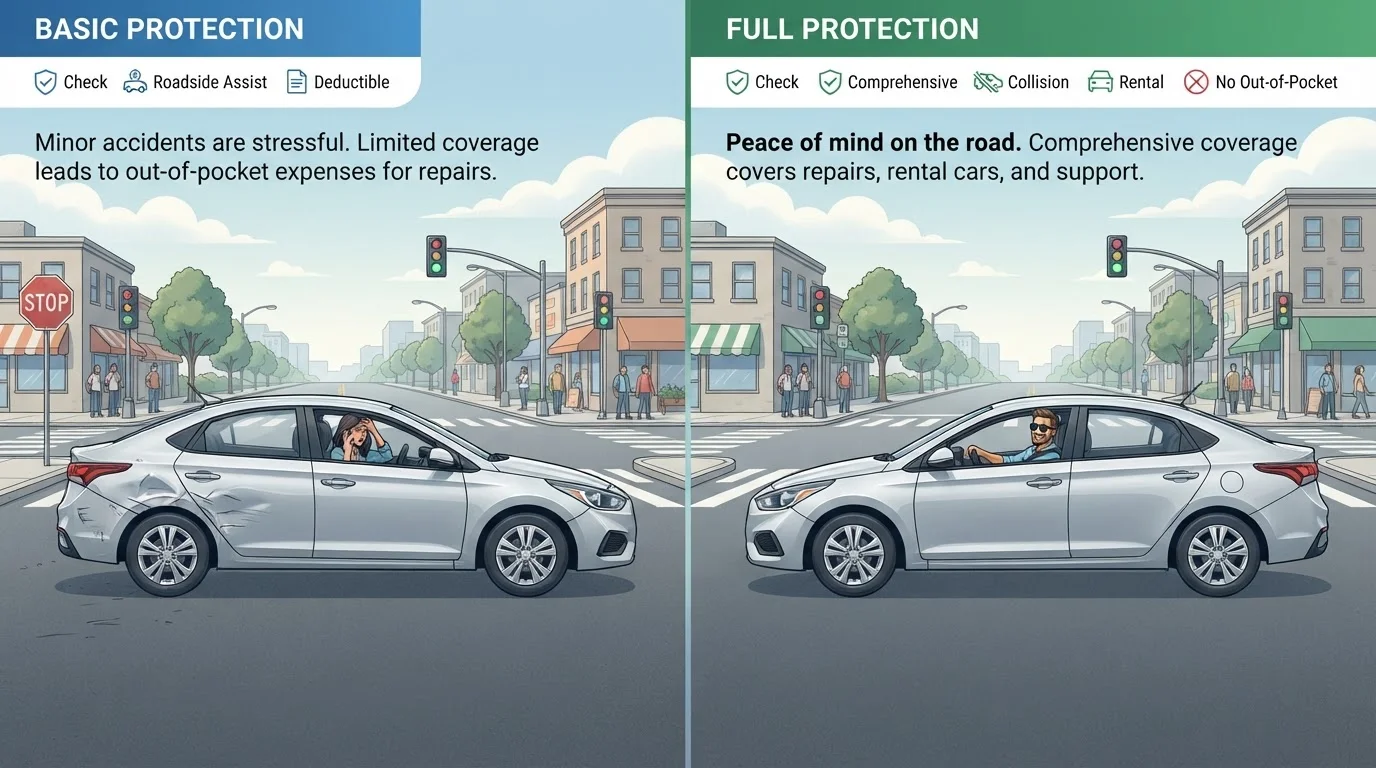
Auto insurance follows similar logic. Comprehensive coverage is essentially open perils for non-collision damage, while collision coverage functions more like named perils - defined trigger, defined payout. See how that interacts with overall protection in our look at liability vs. full coverage auto insurance.
What to Check Before You Assume You're Covered
Most policyholders don't know which type of policy they hold until they file a claim. By then, it's too late to change the outcome.
- Find the declarations page. It names your policy form (e.g., HO-3, HO-5). That form number tells you the coverage structure.
- Read the perils section. Named perils policies list covered events explicitly. Open perils policies list exclusions. Knowing which format your document uses tells you exactly where to look.
- Check property sub-sections separately. As noted above, your structure and your personal property may be covered differently within the same policy.
- Look at exclusions regardless of policy type. Even open perils policies have meaningful gaps - flood and earthquake exclusions catch many homeowners off guard. This is especially relevant alongside underinsurance risks that affect payout even when coverage exists.
If your policy language isn't clear, a licensed insurance agent or a public adjuster can help you interpret it. This article provides general educational information about policy structures - it is not personalized insurance or legal advice. Coverage terms, exclusions, and availability vary by insurer and state.
Don't Assume 'All-Risk' Means All Losses
The term 'all-risk' or 'open perils' sounds comprehensive, but it does not mean every possible loss is covered. Flood, earthquake, mold, and wear-and-tear are commonly excluded even in broad policies. Always read the exclusions section of any policy you hold - those carve-outs define the real limits of your protection.