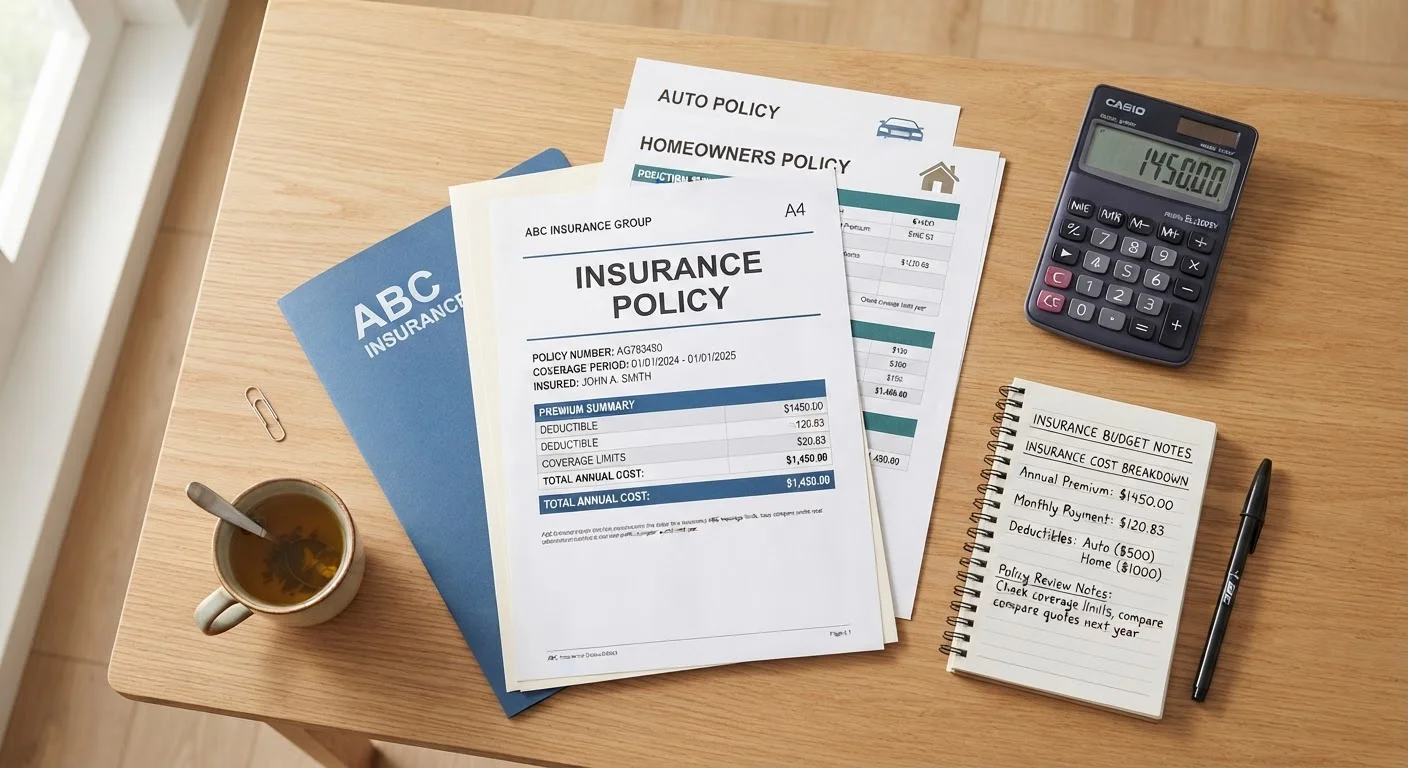

Why Overpaying Happens Gradually
Insurance costs rarely spike overnight. Instead, overpaying tends to build slowly - a modest renewal increase here, an outdated coverage level there - until you're paying noticeably more than your actual risk warrants. The good news is that the patterns behind this creep are recognizable once you know what to look for.
This article is general educational information, not personalized insurance or financial advice. Coverage terms, pricing, and eligibility vary by provider, policy, and state. For decisions specific to your situation, review your actual policy documents and consult a licensed insurance agent or adviser. If you'd like to understand the core cost terms first, our plain-language breakdown of premiums, deductibles, and copays is a useful starting point.
Your premium rises at renewal without a claims history
If your premium increased at renewal and you haven't filed a claim, it's worth understanding why. Some increases reflect legitimate factors - regional risk trends, inflation in repair or medical costs - but others are simply a test of whether you'll notice. Insurers may apply small annual increases knowing most policyholders auto-renew without reviewing the new amount. Comparing your current rate with quotes from other carriers using identical coverage details is a straightforward check.
Small annual increases often go unnoticed because most policyholders auto-renew without reviewing the new amount.
You're carrying duplicate coverage from multiple sources
Duplicate coverage is more common than most people realize. Roadside assistance may be included in both your auto policy and a separate membership program. Travel insurance protections sometimes overlap with benefits built into certain credit cards. Health-related riders on a life policy can duplicate what your employer's group plan already covers. Paying twice for the same protection doesn't double your benefit - it just doubles the cost. Review your full coverage picture across all sources, not just one policy at a time.
Paying twice for the same protection doesn't double your benefit - it just doubles the cost.
Your deductible is set lower than you'd realistically ever claim
A lower deductible means a higher premium. That trade-off makes sense when you'd genuinely struggle to cover a large out-of-pocket expense. But if you have savings that could comfortably absorb a moderate claim, carrying a very low deductible means you're essentially prepaying for coverage you're unlikely to use. Understanding how deductibles and premiums work together can help you evaluate whether your current balance actually fits your financial situation.
If your savings could absorb a moderate claim, a very low deductible may just be an expensive premium you're prepaying.
Your coverage limits haven't changed despite major life changes
Insurance needs shift when your life does. Paying off a car loan removes the lender's requirement for comprehensive and collision coverage - keeping both at the same levels afterward may not be necessary for an older vehicle with a low market value. Similarly, moving from a densely populated area to a rural one, or retiring and driving significantly fewer miles, can all affect how much coverage makes sense. When coverage levels are set once and never revisited, they often drift out of alignment with current circumstances.
Coverage set once and never revisited tends to drift out of alignment with your current circumstances.
You've been a loyal customer for years without re-shopping
Loyalty doesn't always translate to savings. Some insurers offer more competitive rates to attract new customers than they extend to existing ones - a practice sometimes called "price optimization" or "renewal pricing drift." This doesn't mean switching is always the right move; factors like claims history portability and relationship discounts matter too. But if you haven't compared rates in several years, you may be paying a loyalty premium that no one officially advertised. For more on the beliefs that quietly inflate costs, see our piece on insurance pricing myths that lead consumers to overpay.
Some insurers offer more competitive rates to new customers than to long-term policyholders - a gap worth checking.
You're paying for add-ons you selected years ago and no longer need
Optional riders and endorsements - rental car reimbursement, equipment breakdown coverage, scheduled personal property floaters - are easy to add and easy to forget. Over time, the items or situations they were meant to cover may no longer apply. A floater for an expensive piece of jewelry you no longer own, or rental reimbursement on a vehicle you rarely drive, are both examples of coverage costs with no current benefit. A line-by-line review of your declarations page once a year can surface these quickly.
Optional add-ons are easy to forget - and easy to keep paying for long after the original reason for adding them is gone.
What to Do When You Spot These Patterns
Finding one of these signals doesn't automatically mean you're overpaying - it means you have a reason to take a closer look. Start by pulling your current declarations page (the summary sheet every policy includes) and comparing your coverage limits, deductibles, and add-ons against what you actually own and what risks you actually face today.
Use Renewal Season as Your Annual Check-In
The 30-day window before your renewal date is the ideal time to review your policy. Request your declarations page, list any life changes from the past year, and note any coverage or add-ons that no longer match your situation. Even a 20-minute review can surface adjustments worth making - and gives you time to ask your insurer questions or consult a licensed agent before the new term begins.
Keep in mind that cost isn't the only variable. Cutting coverage too aggressively can expose you to real financial risk - a concern explored in depth in our article on what happens when policy limits fall short of a real loss. Likewise, before trimming anything, check for coverage blind spots that often go unnoticed until a claim - because underpaying and underprotection often travel together.
This article is for general informational and educational purposes only and does not constitute personalized insurance, financial, or legal advice. Always read your actual policy documents carefully and speak with a licensed insurance professional before making coverage decisions.