What Each Framework Actually Does
Both zero-based budgeting and the 50/30/20 rule are tools for directing your money intentionally - but they approach the job very differently.
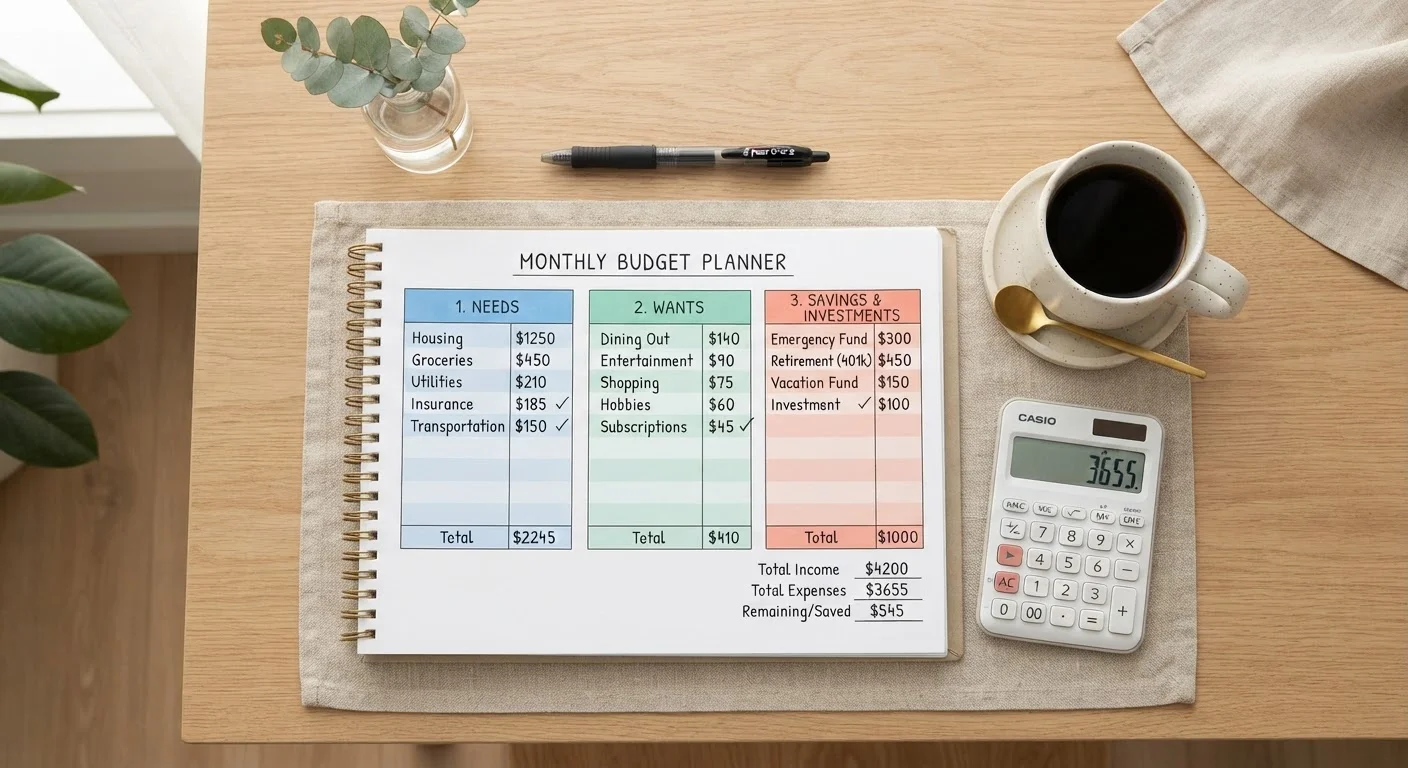
Zero-based budgeting (ZBB) starts from scratch each month. You take your total income and assign every dollar to a category - rent, groceries, savings, streaming subscriptions - until the math reaches zero. "Zero" doesn't mean you spend everything; it means every dollar has a designated purpose, including dollars earmarked for savings or an emergency fund. Nothing floats unaccounted.
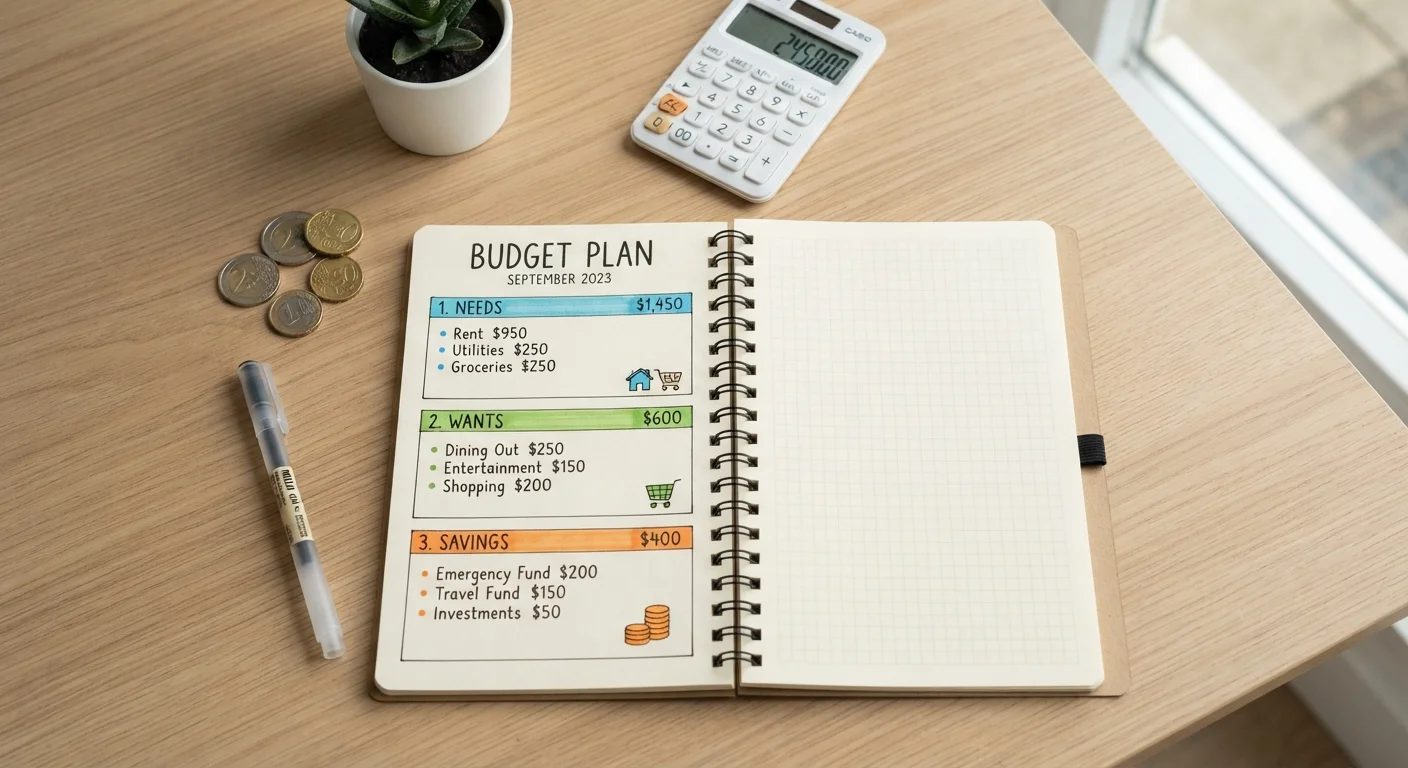
The 50/30/20 rule divides take-home pay into three broad buckets: roughly 50% toward needs (housing, utilities, food, transportation), 30% toward wants (dining out, entertainment, hobbies), and 20% toward savings and debt repayment. You don't itemize every purchase - you simply monitor whether your spending stays within each bucket. For a plain-language breakdown of how those percentages work in practice, see The 50/30/20 Rule Explained.
How They Compare Across Key Factors
Choosing between these two methods comes down to a handful of practical trade-offs. The table below maps both frameworks against the criteria that matter most for everyday budgeters.
| Zero-Based Budgeting | 50/30/20 Rule | |
|---|---|---|
| Setup time | 30-60 min per month | 15-20 min per month |
| Tracking detail | Every dollar categorized | Three broad buckets only |
| Best income type | Variable or irregular | Stable and predictable |
| Learning curve | Moderate to high | Low |
| Flexibility | Rebuilt fresh each month | Percentages stay fixed |
| Debt payoff focus | High - dollars directed precisely | Moderate - 20% bucket covers it |
| Ideal for | Detail-oriented planners | Beginners and busy households |
One nuance worth noting: neither method requires special software. A spreadsheet or even pencil and paper works for both. What differs is the amount of upfront effort and ongoing maintenance each demands.
Who Benefits Most From Zero-Based Budgeting
Zero-based budgeting tends to shine in specific situations:
- Irregular income. Freelancers, gig workers, and anyone whose paycheck varies month to month benefit from rebuilding their budget from scratch each cycle rather than relying on fixed percentages that may not reflect reality.
- Active debt payoff. When you're trying to eliminate credit card balances or a personal loan quickly, ZBB lets you redirect every surplus dollar with precision.
- Overspending in specific categories. If you consistently overspend on dining or subscriptions without realizing it, naming every dollar forces you to confront those habits head-on.
Start With One Month as a Trial
Before committing fully to zero-based budgeting, try it for a single month alongside your normal habits. Use your last two or three bank statements to pre-populate categories so you're not guessing. This reveals whether the level of detail feels motivating or overwhelming - both are valid signals about which method actually fits your life.
The trade-off is time. Expect to spend 30-60 minutes at the start of each month setting up your budget, plus brief weekly check-ins to compare planned spending against actual spending. For a structured process that makes those check-ins manageable, the Monthly Budget Reset walkthrough offers a repeatable framework.
Who Benefits Most From the 50/30/20 Rule
The 50/30/20 framework is often the better entry point for budgeting beginners, and it remains useful long after the basics feel comfortable:
- Steady, predictable income. Salaried employees whose take-home pay changes little month to month can apply fixed percentages without constant recalculation.
- Broad financial goals. If your aim is simply to save more and avoid overspending - rather than eliminate a specific debt on a tight timeline - the rule's simplicity reduces friction.
- Low tolerance for detailed tracking. Some people find granular category tracking exhausting or anxiety-inducing. The 50/30/20 rule gives structure without demanding a line item for every cup of coffee.
Keep in mind that the 50% needs threshold can be difficult to hit in high cost-of-living areas. Housing alone can consume 40-50% of take-home pay in many cities. Does the 50/30/20 rule actually work for most Americans? explores when the percentages realistically fit - and when they don't.
Making Either Method Stick
The most effective budget is the one you revisit regularly. Both methods fail the same way: people set them up once, then stop checking in. A few habits that apply regardless of which framework you choose:
- Schedule a weekly 10-minute review. Compare what you planned to spend against what you actually spent. Catching drift early prevents bigger surprises at month's end.
- Adjust categories when life changes. A new job, a move, or a new subscription means your budget needs updating - not abandoning.
- Track spending in real time. Whether you use an app or a notebook, logging purchases the same day they happen is more accurate than reconstructing a week's worth of transactions from memory.
For a deeper look at the habits that separate short-term experiments from lasting routines, see Habits That Keep a Budget Working. If you're just getting started and want a broader foundation for smarter spending decisions, Smarter Spending From the Ground Up is a useful next step.
This article is for general informational and educational purposes only. It does not constitute personalized financial or investment advice. For decisions specific to your financial situation, consider consulting a licensed financial professional.