What 'Minimal' Actually Means in Skincare
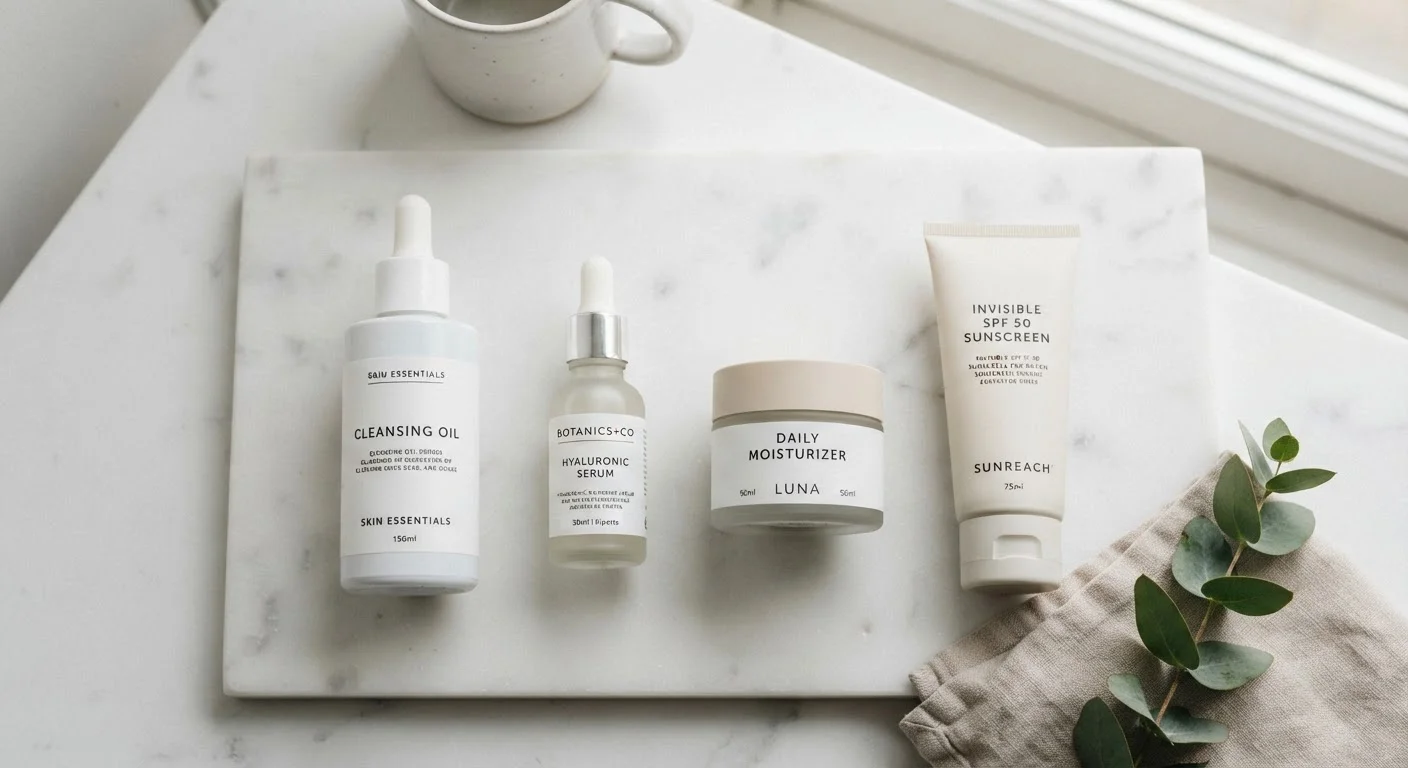
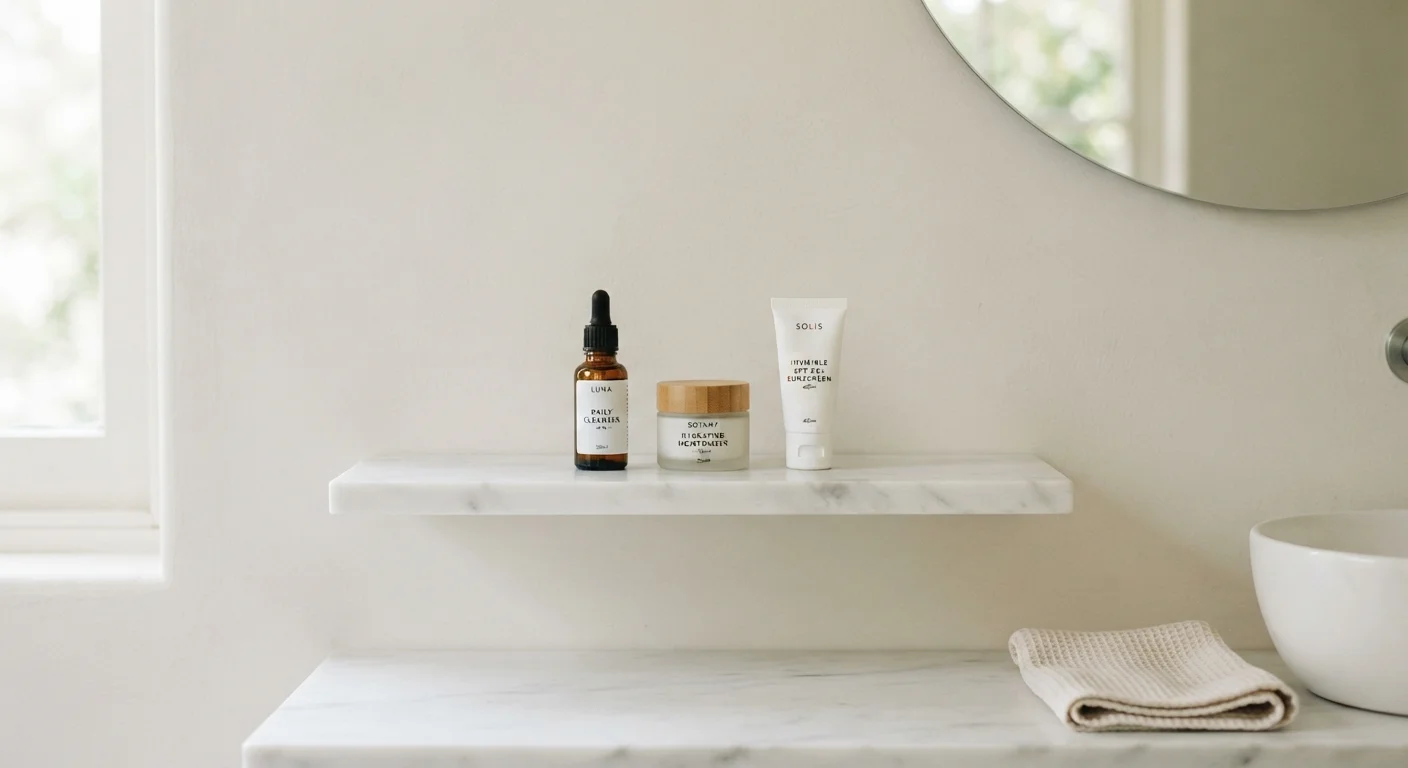
A minimal skincare routine isn't a trend - it's a return to fundamentals. At its core, it means using only the products that perform essential functions: a gentle cleanser to remove dirt and oil, a moisturizer to maintain the skin barrier, and a broad-spectrum sunscreen to prevent UV damage. That's it. Three steps, morning and night (skip SPF at night).
This approach contrasts sharply with the 7-, 10-, or even 12-step routines that became popular through social media over the past decade. Those routines often include essences, ampoules, serums layered back-to-back, facial mists, and multiple treatment acids - products that can genuinely confuse your skin when introduced all at once. If you're starting from scratch, a minimal framework is often the most sensible place to begin.
Minimal Doesn't Mean Identical for Everyone
A minimal routine looks slightly different depending on your skin type. Someone with dry skin may need a richer moisturizer; someone with oily skin might skip morning moisturizer entirely if their SPF is sufficiently hydrating. The principle is to use only what your skin genuinely needs - not to follow a single universal formula. When in doubt about which steps are right for your skin, a consultation with a dermatologist is always worthwhile.
This article is for general informational purposes only and does not constitute medical or dermatological advice. If you have a skin condition or concern, consult a qualified healthcare professional or board-certified dermatologist.
The Real Advantages of Cutting Back
Scaling down your routine has measurable, practical benefits that go beyond just saving shelf space.
Easier to stay consistent every single day
Short routines remove the friction that causes people to skip steps. When a routine takes under five minutes, it's much more likely to become a lasting habit.
Reduces risk of product-related skin irritation
Using fewer products means fewer active ingredients, fragrances, and preservatives in contact with your skin simultaneously, which lowers the likelihood of sensitization or breakouts.
Easier to identify what's working - or not
When you add many products at once, any positive or negative changes are hard to attribute. A minimal routine makes cause-and-effect much clearer.
Meaningfully reduces skincare spending
Even mid-range products add up quickly when you're buying six or more at a time. A three-product routine can cut monthly skincare costs substantially.
Supports a healthier skin barrier
Over-cleansing and over-exfoliating - common in elaborate routines - can disrupt the skin's natural protective barrier. Fewer steps often means less inadvertent damage.
3-5
Products in a functional minimal routine
Dermatologists generally agree that a cleanser, moisturizer, and SPF cover the core needs of most skin types without additional steps.
~60%
Of US adults who feel overwhelmed by skincare choices
Consumer surveys in the beauty space consistently find that product overload is a leading reason people abandon skincare routines altogether.
One often-overlooked benefit is financial. A focused routine with a handful of multi-tasking products costs significantly less over time than rotating through a dozen single-purpose items. This connects directly to smarter spending habits - every product you eliminate is money redirected elsewhere.
Fewer products also means fewer ingredients in contact with your skin at once, which lowers the chance of a sensitizing reaction. If irritation does occur, it's far easier to pinpoint the culprit when your routine is simple. For those exploring gentler formulas, our guide to fragrance-free vs. unscented products explains why ingredient labels deserve closer attention.
Where a Minimal Routine Falls Short
Minimalism has real limits, and it's worth being honest about them.
May not address specific skin concerns adequately
Conditions like acne, melasma, or rosacea often require targeted treatments beyond a basic cleanser-moisturizer-SPF setup. A dermatologist's input is valuable here.
Active ingredients require deliberate reintroduction
If you want the benefits of retinoids, exfoliating acids, or antioxidants, a purely minimal routine won't deliver them. These require careful, considered addition.
Adjustment period can mimic a setback
Skin often takes several weeks to recalibrate after you remove products it's become accustomed to, which can temporarily affect how your skin looks or feels.
SPF must remain non-negotiable
Minimalism never justifies removing sun protection. Daily broad-spectrum SPF is one step that experts consistently identify as essential regardless of how simple the rest of the routine is.
Specific skin concerns - persistent acne, significant hyperpigmentation, or the desire to incorporate retinoids - often require targeted active ingredients that a basic three-step routine simply doesn't include. Niacinamide, vitamin C, AHAs, and retinol each address distinct concerns that a moisturizer alone won't cover. Our article on retinol and its alternatives is a useful reference if you're weighing whether to add an active back in.
There's also the sunscreen question. A minimal routine must include daily SPF - no exceptions. Skipping it in the name of simplicity is one shortcut that experts consistently caution against. Why dermatologists won't skip daily SPF explains the reasoning in plain terms.
Finally, if you're used to a richer routine, the adjustment period can feel stark. Skin sometimes takes several weeks to recalibrate after product removal, which can be mistaken for the minimal routine not working.
Making the Switch Without Overcorrecting
The goal isn't to strip your routine to the point of neglect - it's to strip it to what's actually earning its place. A useful audit: look at every product you currently use and ask what job it does. If two products perform the same function, keep one. If a product has been sitting mostly unused, it can go.
Think about your mornings too. A short skincare routine pairs naturally with an efficient overall morning, and the same logic applies to makeup - our five-minute makeup guide shows how a focused approach translates across your whole getting-ready routine.
Once you've landed on your simplified lineup, the real power comes from sticking with it. Consistency - even with a modest routine - delivers better results over time than an elaborate one applied sporadically. If you later want to reintroduce an active ingredient, our guide on layering products in the right order walks through how to do so without disrupting what's already working.