Why Your Skin Type Is the Starting Point
Before you buy a single product, it helps to have a rough sense of your skin type - not because skincare is rigid, but because it narrows down the formulas that will genuinely work for you rather than against you.
Skin barrier
The outermost layer of skin that keeps moisture in and irritants out. When it's compromised, skin becomes dry, sensitive, or reactive.
Non-comedogenic
A product label indicating the formula is designed not to clog pores - particularly useful for oily or acne-prone skin types.
Broad-spectrum sunscreen
A sunscreen that protects against both UVA rays (which cause aging) and UVB rays (which cause burning). Both types can damage skin.
Hyaluronic acid
A naturally occurring substance found in skin that holds moisture. In skincare, it's used as a hydrating ingredient that draws water to the skin's surface.
T-zone
The forehead, nose, and chin area of the face, which tend to produce more oil than the cheeks in people with combination skin.
Active ingredient
An ingredient in a skincare product that has a specific, intended effect on the skin - such as exfoliation, brightening, or reducing the appearance of fine lines.
The most common categories are dry (tight, flaky, or dull), oily (shiny, prone to enlarged pores), combination (oily through the T-zone, drier on the cheeks), sensitive (reacts easily to fragrance, heat, or new products), and normal (relatively balanced with few concerns). You don't need a dermatologist to make this call - paying attention to how your skin feels an hour after cleansing, without any products on, is a reasonable starting point.
Keep in mind that skin type can shift with seasons, hormonal changes, age, and climate. Think of your skin type as a useful starting guide, not a permanent label.
The Core Four: Steps Every Routine Needs
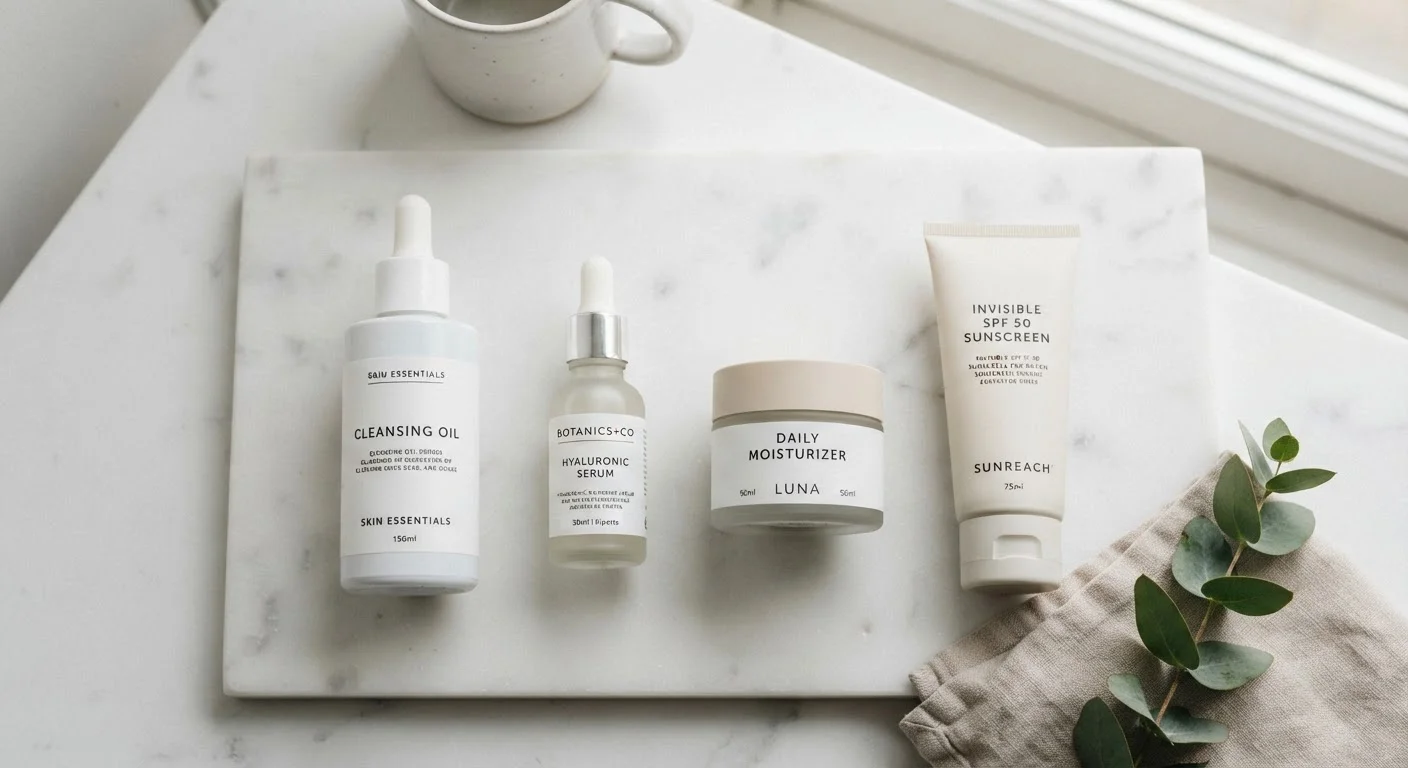
A solid beginner routine doesn't require a shelf full of products. These four steps address what nearly every skin type needs:
- Cleanse: Removes dirt, excess oil, and environmental residue without stripping natural moisture. Gel formulas tend to suit oily skin; cream or oil-based cleansers work well for dry or sensitive skin.
- Treat: This optional-but-useful step is where targeted ingredients go - think a hydrating serum with hyaluronic acid or a vitamin C serum for uneven tone. Beginners can skip this initially and add it once the base routine feels solid.
- Moisturize: Locks in hydration and supports the skin's natural barrier. Even oily skin types benefit from a lightweight, non-comedogenic moisturizer - skipping it can actually prompt your skin to produce more oil.
- Protect (AM only): Broad-spectrum sunscreen is non-negotiable in the morning. It's one of the most evidence-backed tools for preserving long-term skin health and preventing premature aging.
Patch Test Before Committing
Before applying any new product to your full face, test it on a small area - like behind your ear or on your inner wrist - for 24 to 48 hours. This simple step can save you from a full-face reaction and helps you identify sensitivities early.
If you're curious about what a stripped-back approach looks like long-term, see our guide to a minimal skincare routine for an honest look at the pros and trade-offs.
Morning vs. Night: What Changes and Why
Your skin has different needs depending on the time of day, and your routine should reflect that.
In the morning, your skin needs protection. After a night of cell renewal, the focus is on defending against UV rays, pollution, and environmental stressors. A light cleanse (or just a water rinse if your skin is dry), moisturizer, and sunscreen covers the essentials. This is also when antioxidant serums - like those containing vitamin C - work well, since they support your skin's defense against daytime damage.
At night, the priority shifts to repair and renewal. Skin cell turnover peaks while you sleep, making this the ideal window for active ingredients. A thorough cleanse to remove sunscreen and the day's buildup is important, followed by any treatment products and a slightly richer moisturizer if your skin needs it.
For a detailed look at how to evaluate your morning steps, our morning routine audit checklist walks through each moment where skin prep can succeed or fall short.
When and How to Add More Products
Once your core four feel natural and your skin is responding well - usually after four to six weeks - you can consider layering in additional steps. Common additions include exfoliants, targeted serums, eye creams, or face oils.
The golden rule: introduce one new product at a time, waiting at least two weeks before adding another. This makes it easy to identify what's helping and what might be causing irritation.
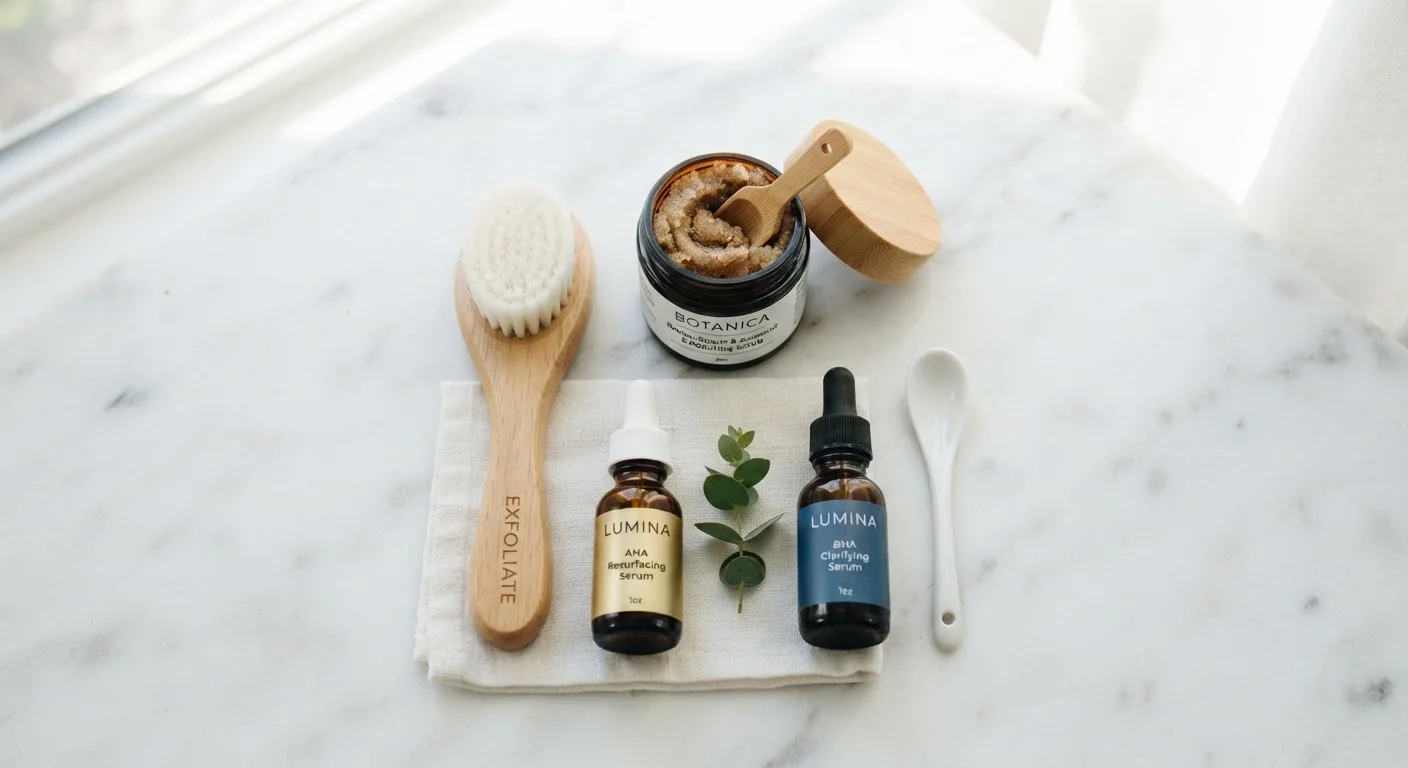
Exfoliation is often the first upgrade beginners consider. There are two broad approaches - physical scrubs and chemical exfoliants like AHAs and BHAs - and they work very differently. Our article on physical versus chemical exfoliation breaks down which approach suits which skin type. If you want to go deeper into how chemical exfoliants work, face acids decoded explains the science in plain language.
As your routine grows, ingredient compatibility becomes relevant. Some popular actives can cancel each other out or cause irritation when layered - our guide to ingredient clashes covers what the formulation research actually says.
More Products Isn't Always Better
A longer routine doesn't automatically mean better skin. More steps mean more opportunities for ingredient conflicts, irritation, and confusion about what's working. A focused four- to five-step routine practiced consistently often outperforms a complex ten-step lineup used haphazardly.
Common Beginner Mistakes to Sidestep
Skincare is forgiving, but a few habits consistently slow progress - especially for people just starting out.
- Switching products too fast: If something isn't producing dramatic results in a week, it doesn't mean it's not working. Most active ingredients need consistent use over weeks to show their effect.
- Skipping sunscreen on cloudy days: UV rays are present year-round and penetrate cloud cover. Making sunscreen a daily habit, regardless of weather, is one of the highest-impact choices you can make.
- Over-cleansing: Washing your face more than twice a day - or using a formula that's too harsh - can disrupt the skin's natural barrier and trigger more oil production or dryness.
- Using too many actives at once: Layering retinoids, acids, and vitamin C in the same routine without guidance can cause irritation. If you're exploring retinoids and prefer a gentler alternative, our comparison of retinol and bakuchiol is a useful starting point.
Don't Rush to Add Actives
Strong active ingredients - like retinoids, high-concentration acids, or vitamin C - can cause irritation if introduced before your skin barrier is balanced. Spend at least a month on your foundational routine before layering in any treatment actives, and always introduce them gradually.
This article is for general informational and educational purposes only and is not a substitute for professional medical or dermatological advice. If you experience persistent irritation, allergic reactions, or have a skin condition, please consult a qualified dermatologist.