Why Your Morning Routine Deserves a Second Look
Most of us built our morning skincare habits by trial and error - grabbing products we heard about, layering them in whatever order seemed logical, and hoping for the best. The result is often a routine full of small missteps that quietly undermine the results we're working toward.
This checklist is designed to help you audit what you're actually doing - not to overhaul everything or add a dozen new steps. Think of it as a quick quality check on the fundamentals. Whether you're new to skincare or have been at it for years, running through these items will show you where your routine is solid and where a small tweak could make a real difference.
If you're starting from scratch or want a broader framework, our beginner's guide to building a skincare routine is a great companion to this checklist. And if you want to understand exactly what each product category does before auditing, see our breakdown of what cleansers, toners, and moisturizers actually do.
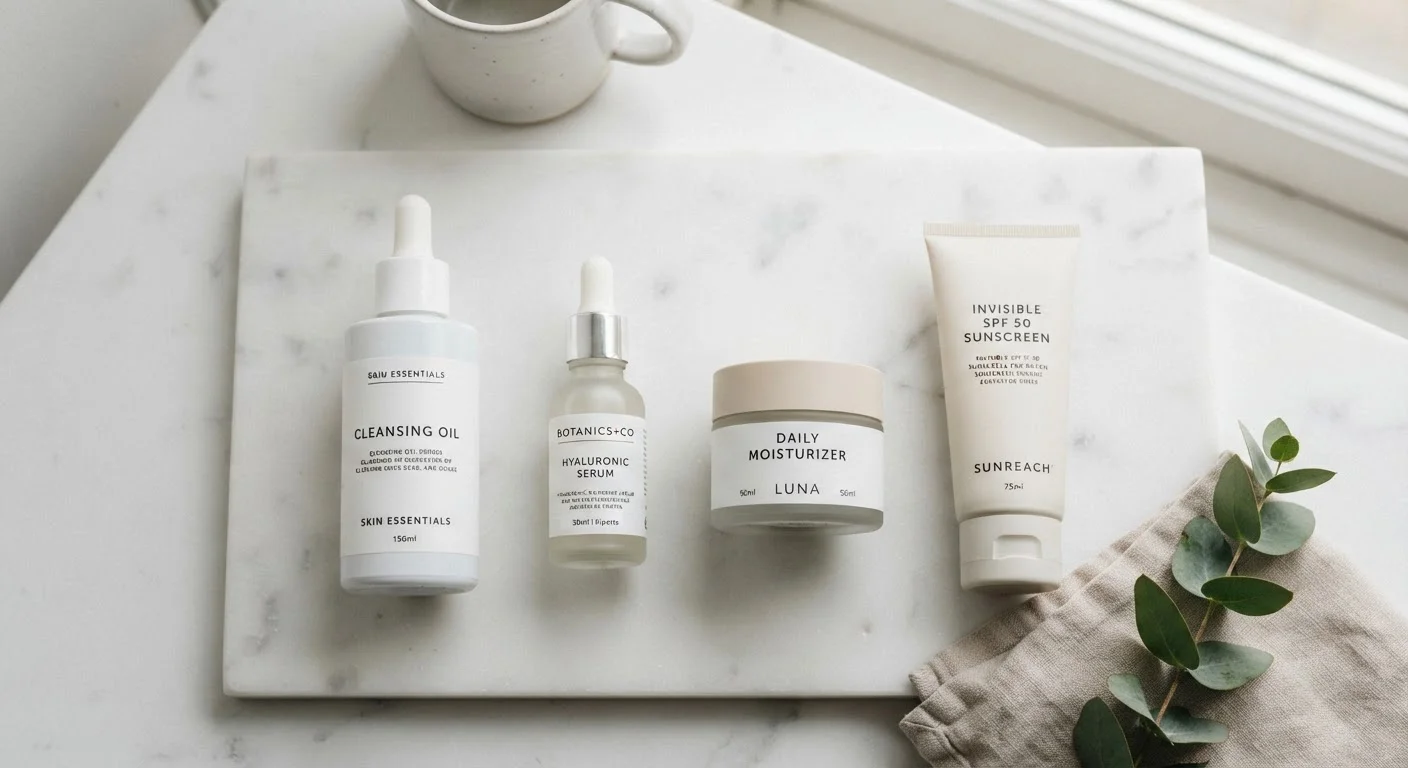
Gentle facial cleanser
Removes overnight buildup without stripping your skin's natural moisture barrier.
Hydrating toner or essence
Restores skin's moisture balance after cleansing and preps skin to absorb subsequent products.
Vitamin C or antioxidant serum
Provides targeted protection against environmental stressors applied before moisturizer.
Moisturizer
Seals in hydration and supports the skin barrier throughout the day.
Broad-spectrum sunscreen (SPF 30+)
Protects skin from UVA and UVB damage - the most essential step in a morning routine.
The Morning Routine Audit Checklist
Work through each group honestly. This isn't about having the most products - it's about making sure the ones you use are working together and applied correctly. Even fixing one or two items here can meaningfully improve how your skin looks and feels throughout the day.
Cleansing
Hydration & Toning
Treatment Serums
Moisturizing
Sun Protection
Product Order & Application
SPF Is Non-Negotiable in the Morning
Sunscreen is consistently cited by dermatologists as the most impactful product in a morning skincare routine. UV exposure occurs even through windows and on overcast days, contributing to premature aging and skin damage over time. If your current routine doesn't end with SPF 30 or higher, that's the one change worth prioritizing above everything else. For more context on why daily sun protection matters, see our article on why dermatologists recommend sunscreen every day.
For a deeper dive into getting your layering sequence right, our guide to layering skincare products in the correct order explains the sequencing logic behind every step. And if your current routine feels like too much, it's worth reading the case for a shorter skincare routine - sometimes less really is more.
Don't Layer Too Many Actives at Once
Using multiple strong actives - such as exfoliating acids, retinoids, and vitamin C - in the same morning routine can cause irritation, redness, or a compromised skin barrier, especially for sensitive skin types. If you're seeing increased sensitivity, redness, or unexpected breakouts, scaling back to a simpler routine is a reasonable first step. When in doubt about combining specific ingredients, consult a licensed dermatologist.
After the Audit: What to Do Next
If you discovered a few gaps, resist the urge to fix everything at once. Introducing multiple new products simultaneously makes it nearly impossible to identify what's helping or causing a reaction. Pick one area - hydration, sun protection, or product order - and give it two to three weeks before adjusting anything else.
Struggling with persistent dryness even after moisturizing? The issue may not be the product itself but how and when you apply it. Our article on why your moisturizer isn't fixing dry skin walks through the most common mistakes.
Once your skin prep is solid, making the rest of your morning routine faster becomes much easier - check out a five-minute makeup look for rushed mornings for a streamlined finish that works on well-prepped skin.
This article is for general informational and educational purposes only. It is not a substitute for professional dermatological or medical advice. If you have a skin condition, persistent irritation, or concerns about a specific product, consult a qualified dermatologist or healthcare provider.