Why These Three Steps Form the Core of Any Routine
Walk into any beauty aisle and the options are overwhelming - serums, essences, mists, masks. But underneath all the extras, virtually every effective skincare routine traces back to three steps: cleansing, toning, and moisturizing. Understanding what each one actually does (and doesn't do) is the fastest way to stop second-guessing your routine.
These three steps work in sequence for a reason. Each one sets up the next, and skipping or swapping the order can reduce effectiveness. If you're starting a routine from scratch, this reference is your foundation.
| Ideal cleansing water temperature | Lukewarm - not hot (General dermatological guidance) |
| Skin's natural surface pH | Approximately 4.5-5.5 (slightly acidic) (Journal of the European Academy of Dermatology and Venereology) |
| Is toner required? | No - optional, based on skin type and goals |
| Moisturizer's two core functions | Attract moisture (humectant) + slow water loss (occlusive/emollient) |
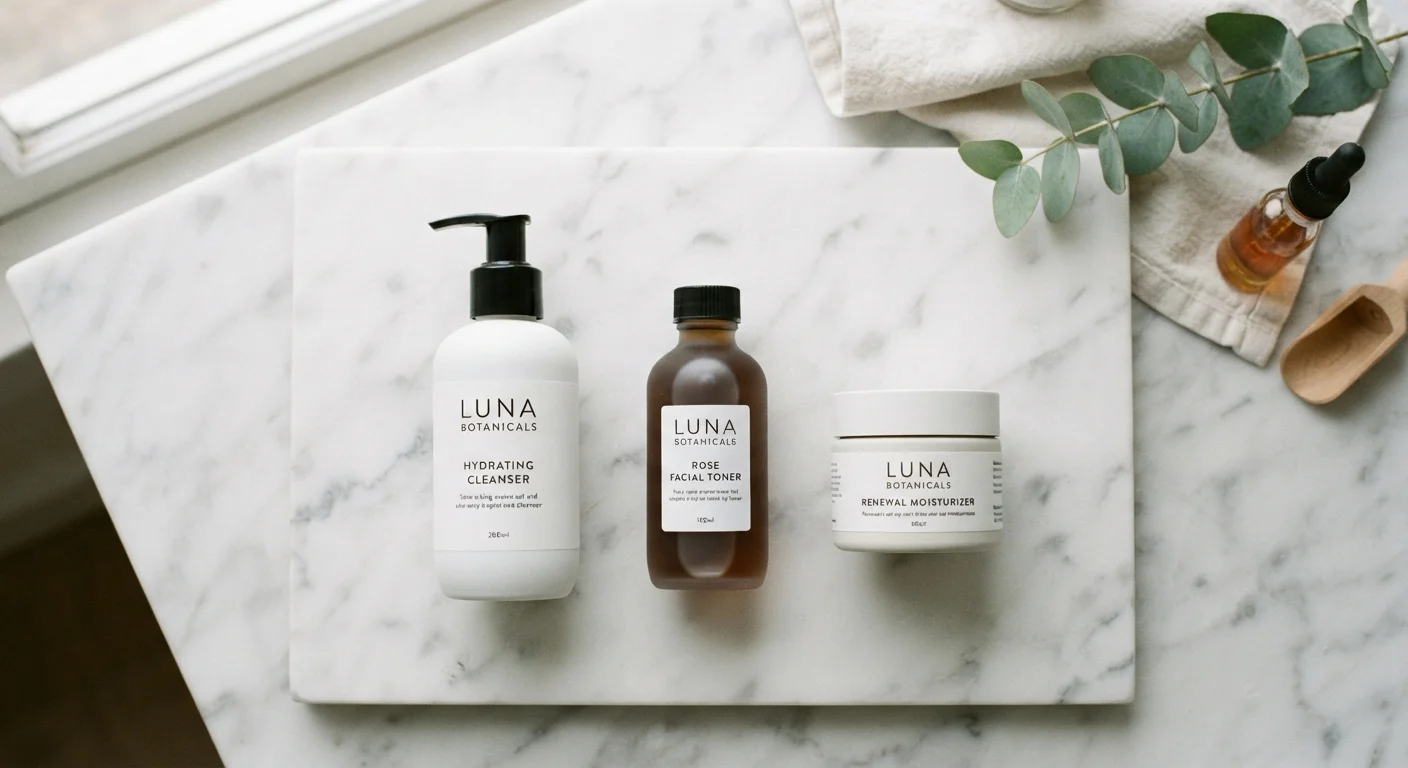
| Recommended order of these three steps | Cleanser → Toner → Moisturizer |
| Sunscreen placement in morning routine | After moisturizer - it is a separate, essential step |
Cleanser: The Reset Button
A cleanser's job is to remove what doesn't belong on your skin - dirt, excess oil, sunscreen, makeup residue, and environmental pollutants that accumulate throughout the day. This isn't glamorous work, but skipping it means every product you apply afterward sits on top of debris rather than reaching your skin.
Cleansing also lowers the skin's surface pH slightly, clearing the path for ingredients in later steps to absorb properly. Choose a formula matched to your skin type: gentle cream or milk cleansers suit dry or sensitive skin, while gel or foam formulas tend to work better for oily or acne-prone types. One often-overlooked rule: cleanse with lukewarm water, not hot - heat strips the skin's natural moisture barrier faster than most people realize.
Morning vs. night: A full cleanse is non-negotiable at night. In the morning, many people with dry or normal skin can rinse with water alone, since there's little to remove overnight. If you tend to sweat heavily overnight or have oily skin, a gentle morning cleanse still makes sense.
Humectant
An ingredient that draws water molecules toward the skin from the surrounding environment or deeper skin layers. Common humectants include glycerin, hyaluronic acid, and aloe vera.
Skin barrier
The outermost layer of skin that acts as a protective seal, keeping moisture in and irritants or pathogens out. A healthy barrier feels comfortable and looks balanced, not tight or flaky.
pH balance
Skin's surface is naturally slightly acidic (around pH 4.5-5.5). Cleansers and toners that are pH-appropriate help maintain this environment, which supports good barrier function and ingredient absorption.
Occlusive
An ingredient that forms a physical layer over the skin to slow water evaporation. Examples include petrolatum, shea butter, and certain silicones. Often found in richer moisturizer formulas.
Astringent
A substance that causes skin tissue to contract and tighten, often by reducing surface oil. Older alcohol-based toners were primarily astringents; many modern toners avoid this approach.
Toner: The Misunderstood Middle Step
Toner has a complicated reputation - largely because older formulas were alcohol-heavy astringents designed to strip oil aggressively. Modern toners are a different animal entirely. Today's formulas generally serve one (or more) of three purposes: rebalancing skin pH after cleansing, delivering a first layer of lightweight hydration, or introducing active ingredients like niacinamide or gentle exfoliating acids.
Do you need a toner? Honestly, not always. If your cleanser is well-formulated and your skin tolerates it well, your pH typically stabilizes on its own within minutes. But if your skin feels tight after washing, or you want to layer in extra hydration before your moisturizer, a hydrating toner can genuinely help. For anyone curious about active-ingredient toners, see our breakdown of AHAs, BHAs, and PHAs.
Apply toner to clean skin using clean hands or a soft cotton pad, and give it 20-30 seconds to absorb before moving on.
Moisturizer: The Seal That Holds It All Together
A moisturizer does two related things: it delivers water-binding ingredients (called humectants) to draw moisture into the skin, and it forms a light barrier that slows water loss back into the air. Without this final step, everything you applied before can evaporate more quickly - particularly in dry or air-conditioned environments.
Moisturizers are not one-size-fits-all. Lighter gel or lotion textures suit oily skin; richer creams serve dry or mature skin better. Ingredients like glycerin and hyaluronic acid pull moisture in; ceramides and shea butter help seal it. The order you layer products affects how well each ingredient can do its job - moisturizer generally goes on last among your non-SPF steps.
One important note: moisturizer is not a substitute for daily sunscreen. SPF is a separate, essential step for daytime routines. See why daily sunscreen matters for the full picture.
~5.0
Average healthy skin surface pH
Research published in dermatology literature consistently identifies slightly acidic pH as optimal for barrier function and microbiome balance.
30 sec
Minimum absorption time between steps
Allowing each product to partially absorb before layering the next helps prevent pilling and supports better ingredient delivery.
If you've been wondering whether you truly need all three steps, a minimal routine might suit you - but understanding what each step does helps you make that call intentionally rather than by guesswork.
This article is for general informational and educational purposes only. It is not a substitute for personalized advice from a licensed dermatologist or skincare professional.