Why 'Acid' Isn't a Scary Word in Skincare
The word "acid" conjures images of chemistry labs, but in skincare concentrations, these ingredients are carefully formulated to be skin-safe and effective. Chemical exfoliants have decades of use in dermatology, and understanding their differences takes the guesswork out of choosing the right one for your routine.
If you're building a skincare routine from scratch, exfoliation is typically introduced after you've established a solid cleanser-moisturizer-SPF foundation. Once you're ready, knowing the three acid families helps you pick purposefully rather than by trial and error.
A Note on 'Natural' vs. 'Synthetic' Acids
Many AHAs are marketed with their natural origins - glycolic from sugar cane, lactic from fermentation. However, whether an acid is derived from a natural source or synthesized in a lab has no bearing on its safety or effectiveness. What matters is the concentration, formulation pH, and how your individual skin responds. Both natural and synthetic versions can be irritating at too-high concentrations, and both can be gentle at appropriate ones.
AHAs: Surface Smoothers for Glow and Tone
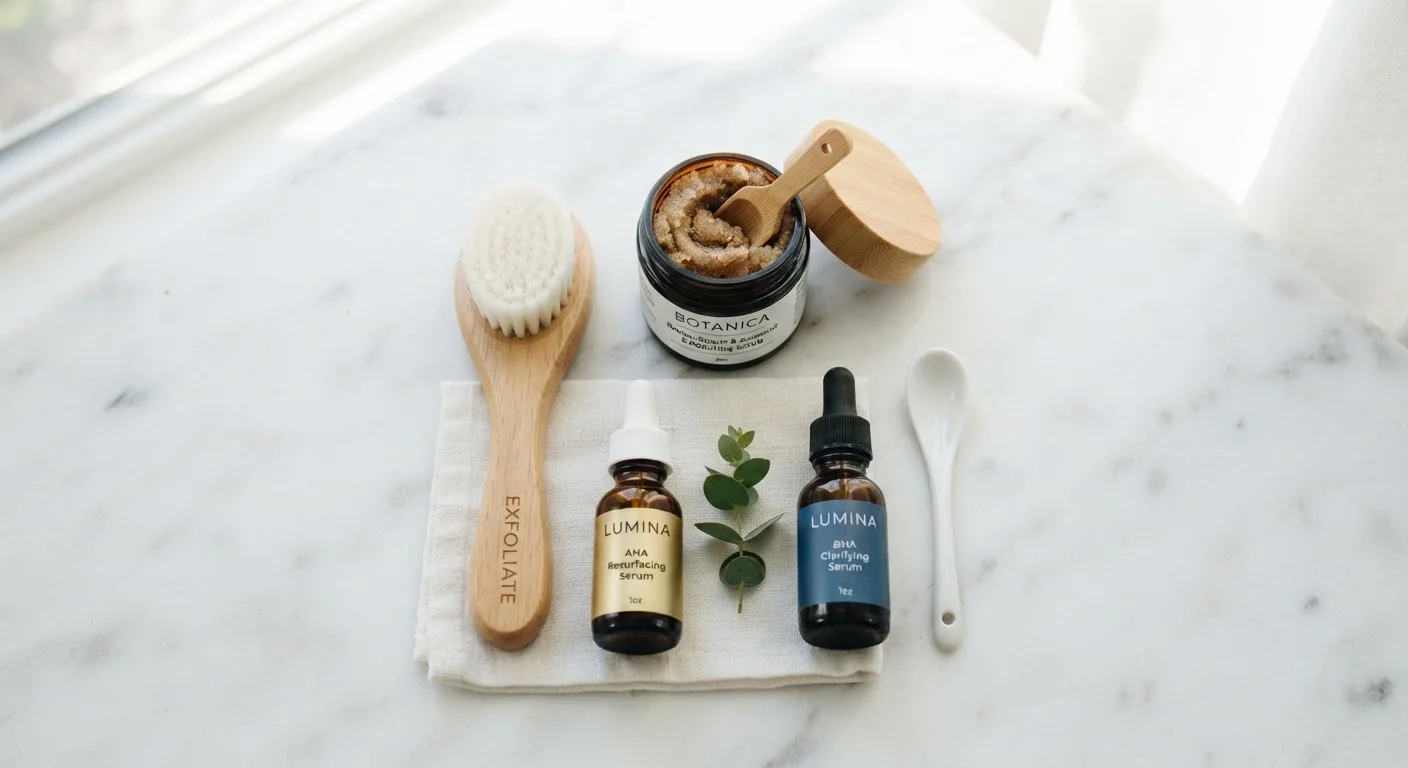
Alpha hydroxy acids (AHAs) are water-soluble acids derived primarily from natural sources - glycolic acid from sugar cane, lactic acid from milk, and mandelic acid from almonds are among the most common. Because they are water-soluble, they work on the outer layers of skin rather than penetrating into pores.
What they address: dullness, rough texture, uneven skin tone, fine lines, and dry or flaky patches. Glycolic acid has the smallest molecule size among AHAs, meaning it penetrates most readily and tends to produce the most noticeable results. Lactic acid is gentler and also functions as a humectant, drawing moisture into skin - making it a popular choice for dry skin types. Mandelic acid has a larger molecule size and works more slowly, which suits those with more reactive complexions.
8%
Common at-home AHA concentration ceiling
Dermatology guidelines generally suggest at-home leave-on AHA products stay at or below 10% to minimize irritation risk for unsupervised use.
2%
Maximum OTC salicylic acid concentration (US)
The U.S. FDA recognizes salicylic acid as a safe and effective over-the-counter acne-fighting ingredient at concentrations between 0.5% and 2%.
AHAs are generally used in leave-on products like serums, toners, and pads at concentrations between 5-10% for at-home use. Higher percentages exist in professional peel settings - a very different context.
BHAs: Pore-Clearing Power for Oily and Acne-Prone Skin
Beta hydroxy acids (BHAs) are oil-soluble, which is the key distinction that sets them apart from AHAs. That oil solubility lets them cut through sebum and work inside the pore lining rather than just on the skin's surface. Salicylic acid is by far the most common BHA used in skincare.
What they address: clogged pores, blackheads, whiteheads, oiliness, and acne-prone skin. Because salicylic acid can reach inside pores, it's particularly effective at preventing the buildup that leads to breakouts. It also has mild anti-inflammatory properties, which can help calm the redness associated with blemishes.
Typical at-home concentrations range from 0.5% to 2%. BHAs are available in cleansers, toners, spot treatments, and leave-on serums. If you're weighing your exfoliation options more broadly, comparing physical and chemical exfoliation is a useful next step.
Start Low, Go Slow With Any New Acid
If you're new to BHAs or any chemical exfoliant, begin with the lowest available concentration and use it just twice a week. This lets your skin build tolerance without the peeling or redness that can come from jumping in too aggressively. You can gradually increase frequency once your skin has adjusted over a few weeks.
PHAs: The Gentle Entry Point for Sensitive Skin
Polyhydroxy acids (PHAs) are the newest of the three families to gain widespread skincare attention. They share structural similarities with AHAs but have a significantly larger molecule size, which means they absorb more slowly and cause less irritation. Common PHAs include gluconolactone and lactobionic acid.
What they address: mild texture irregularities, dullness, and early signs of skin aging - all with a gentler touch. PHAs also have antioxidant and humectant properties, so they can help protect and hydrate while they exfoliate. This makes them a genuinely good starting point for those with sensitive, rosacea-prone, or eczema-adjacent skin who still want the benefits of chemical exfoliation.
How to Use Acids Safely and Effectively
Regardless of which acid family you choose, a few universal principles apply. Start at the lowest available concentration and limit use to two or three times per week. Give your skin at least four weeks before judging results - cell turnover takes time.
Layering multiple actives is where things can go sideways. Combining acids with retinoids or vitamin C in the same application step is a common source of irritation. Understanding which ingredients don't play well together can save your skin barrier a lot of unnecessary stress. Once you've found what works, layering products in the correct order ensures you're getting full efficacy from each step.
Finally, always patch test a new acid product on a small area - such as behind the ear or inside the wrist - before applying it to your full face. And remember: SPF every single morning is non-negotiable when you're using any exfoliant.
This article is for general informational and educational purposes only and does not constitute medical or dermatological advice. If you have a skin condition, persistent irritation, or concerns about a specific ingredient, consult a licensed dermatologist or healthcare professional.