What Each Method Actually Does
Exfoliation is the process of removing dead skin cells from the surface of your skin - and it's one of the most impactful steps you can add to a routine. But how you get there matters a lot. If you're building a skincare routine from scratch, understanding the difference between these two approaches will save you time, money, and irritation.
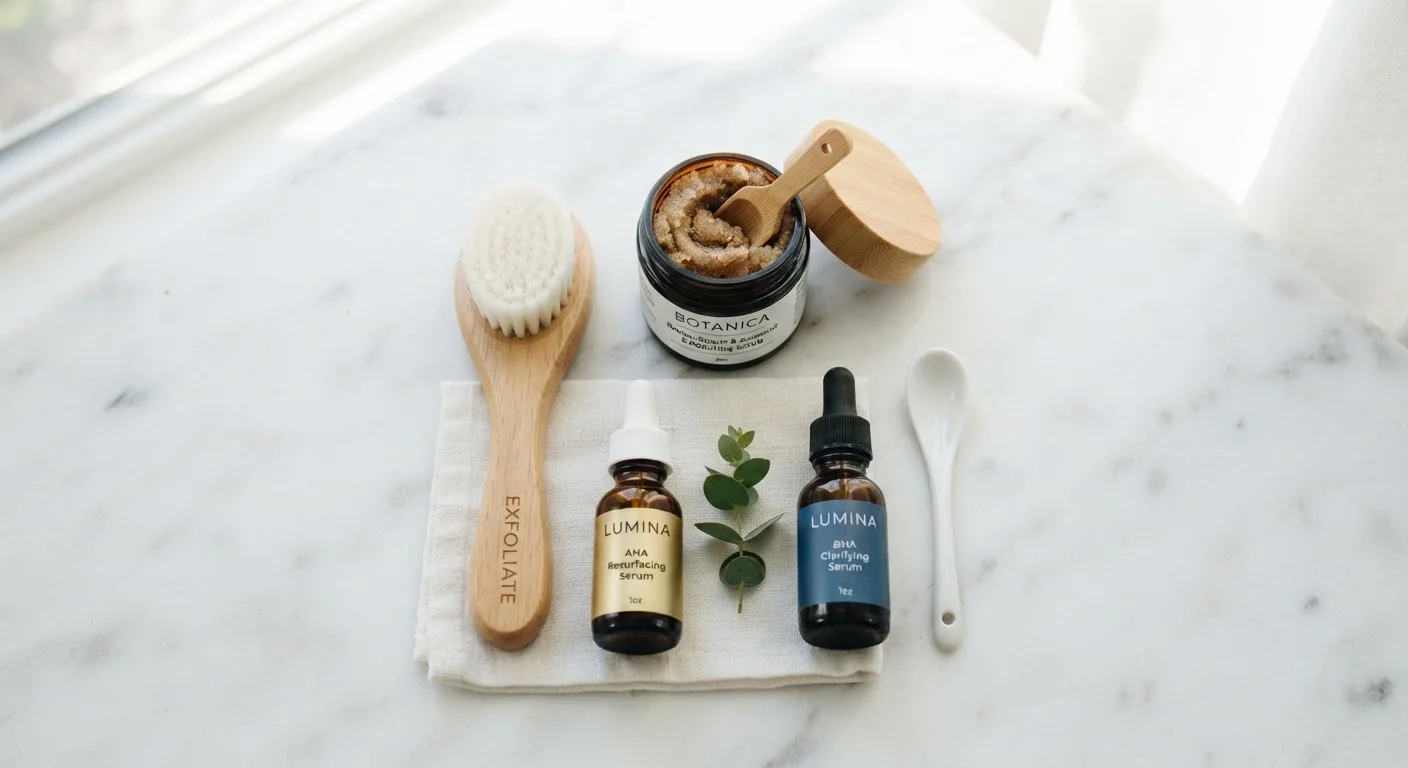
Physical exfoliation works mechanically: you apply a product or tool that manually scrubs away dead cells through friction. Think granular scrubs, facial brushes, or textured cloths. The results are immediate - skin feels smoother right after use - but the technique requires a gentle hand. Aggressive scrubbing can cause micro-tears, redness, and a compromised skin barrier.
Chemical exfoliation takes a different route entirely. Acids (like AHAs and BHAs) or enzymes penetrate the skin and dissolve the bonds that hold dead cells together, allowing them to shed naturally. There's no rubbing involved. Results can take a few uses to become noticeable, but the action is generally more even and controlled across the skin's surface.
Comparing the Two Approaches
Here's how physical and chemical exfoliation stack up across the criteria that matter most to everyday skincare routines.
| Physical Exfoliation | Chemical Exfoliation | |
|---|---|---|
| How it works | Manual friction removes surface cells | Acids/enzymes dissolve intercellular bonds |
| Speed of results | Immediate smoothness after use | Gradual improvement over several uses |
| Skin type suitability | Normal to combination; avoid on sensitive | Works across most types with right acid |
| Risk of irritation | Higher if pressure is excessive | Lower when concentration is appropriate |
| Penetration depth | Surface only | Surface and within pores (BHAs) |
| Learning curve | Minimal - intuitive to use | Moderate - requires selecting the right acid |
| Sun sensitivity after use | Minimal increase | Notable - SPF is essential |
For a deeper look at the acid options within chemical exfoliation, face acids decoded breaks down AHAs, BHAs, and PHAs so you know exactly what you're applying and why.
Which Skin Types Benefit Most From Each
Skin type is your most useful guide when choosing between these methods.
- Dry or dull skin: AHAs (alpha-hydroxy acids like glycolic or lactic acid) are well-suited here. They exfoliate the surface while also drawing moisture into the skin - a dual benefit physical scrubs can't replicate.
- Oily or acne-prone skin: BHAs (beta-hydroxy acids, primarily salicylic acid) are oil-soluble, meaning they can work inside pores to clear congestion. A physical scrub over active breakouts risks spreading bacteria and increasing inflammation.
- Sensitive or rosacea-prone skin: PHAs (polyhydroxy acids) exfoliate gently with larger molecules that don't penetrate as deeply, making them among the most tolerable options. Gentle physical tools - like a soft muslin cloth - can also work if pressure is kept very light.
- Normal to combination skin: This type has the most flexibility. A mild physical scrub a couple of times a week or a low-concentration chemical exfoliant both fit well.
Start With Once a Week
Whichever method you choose, begin with just once a week and observe how your skin responds over several days. If there's no redness, tightness, or flaking, you can cautiously increase to twice weekly. Consistency at a lower frequency outperforms aggressive daily use every time. And remember, what you do before and after exfoliating - cleansing and moisturizing - matters just as much.
Mistakes to Avoid With Either Method
Don't Mix Strong Actives Without Care
Combining a physical scrub with a chemical exfoliant in the same routine is rarely necessary and often counterproductive. Using both in one session can push skin into over-exfoliation territory quickly. Alternate them on different days if you want to incorporate both methods, and never use a facial scrub immediately after applying an acid - the already-sensitized surface is far more vulnerable to abrasion.
One of the most common exfoliation errors is doing too much, too often. Over-exfoliation - whether through daily scrubbing or layering multiple acids - strips the skin's natural barrier. Signs include persistent redness, tightness, flakiness, and increased sensitivity. If you notice these, scale back immediately and focus on gentle cleansing and moisturizing until skin recovers.
Also worth noting: chemical exfoliants increase photosensitivity. Always follow up with SPF during the day after using any acid-based product. And if you're already using a retinol - see how retinol compares to bakuchiol - be especially careful about layering exfoliants on top, as the combination can be too stimulating for many skin types.
For those looking to simplify, going minimal with your skincare routine is always a valid strategy - exfoliating less frequently with the right product beats overdoing it every time.
This article is for general informational and educational purposes only and is not a substitute for professional dermatological or medical advice. If you have a skin condition or concerns about a product's suitability for your skin, consult a qualified dermatologist.