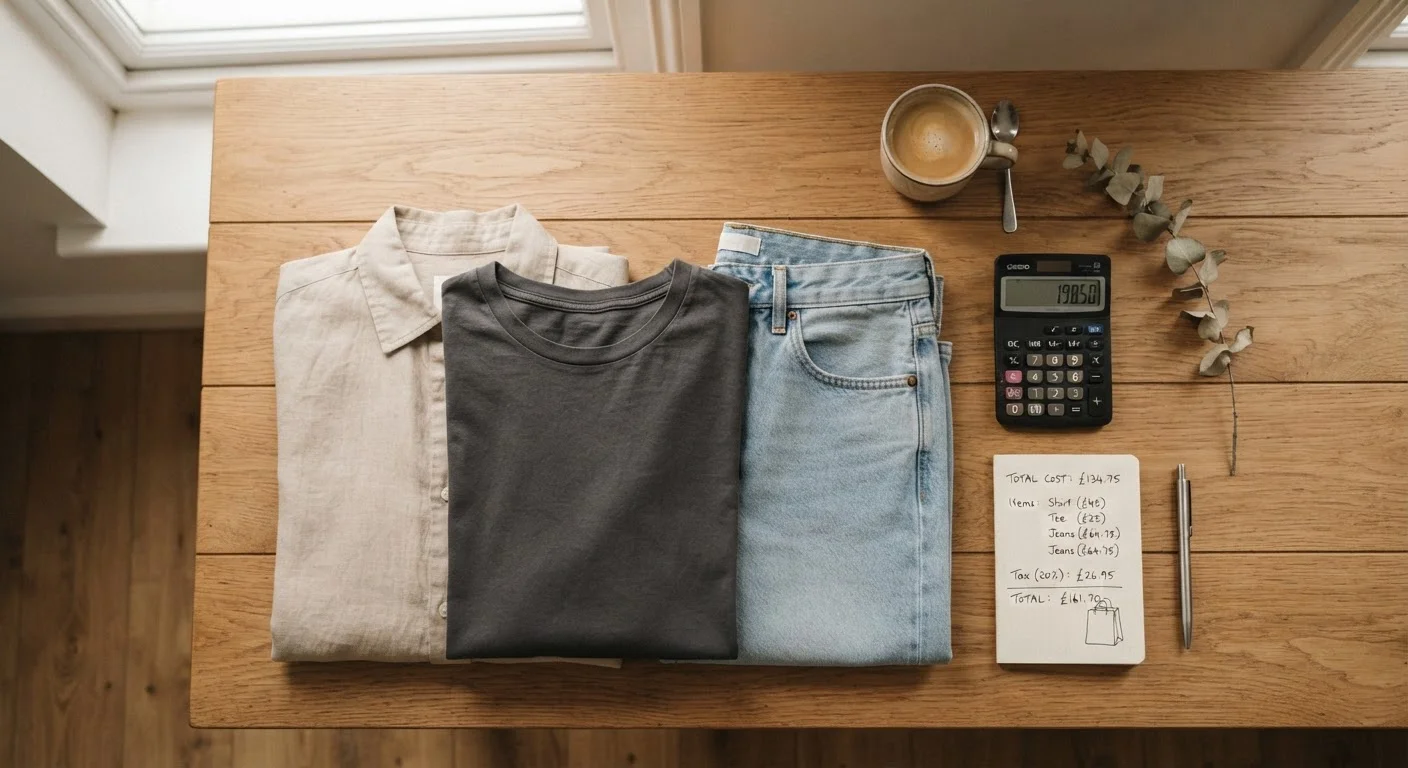

Why Fashion Myths Are Expensive
Clothing budgets quietly bleed out not from one big splurge, but from a dozen small decisions guided by rules that were never that solid to begin with. Many widely repeated style "laws" originated in mid-century fashion circles, department store marketing, or simply habit - and they've stuck around long past their usefulness.
The result? Closets stuffed with pieces that don't mix, wallets thinned by sales that weren't really deals, and the persistent feeling that you still have nothing to wear. Debunking these myths won't just free up mental space - it can genuinely save you money. For a complementary perspective on how myths distort spending in other areas, see how budgeting myths keep people from starting their financial plans.
Myth
Expensive clothes are always better quality and worth the investment.
Fact
Price is an unreliable proxy for quality. Construction, fabric, and stitching matter far more than the label.
High price points often reflect brand positioning, marketing costs, and retail markup - not necessarily superior materials or craftsmanship. Conversely, some lower-priced garments use durable fabrics and solid construction. Before buying, check seam allowances, stitching density, and fabric content rather than relying on the tag. A $40 cotton shirt with reinforced seams may outlast a $200 one with thin fabric and loose threading.
Myth
You must match your shoes, belt, and bag to the same color.
Fact
Coordinated tonal groupings - not identical matches - are the modern standard, and deliberate contrast often looks more intentional.
The rigid match-everything rule peaked in mid-century dress codes and has since been widely abandoned by stylists and everyday dressers alike. Today, mixing a tan leather belt with navy shoes and a cognac bag can look far more polished than forcing three identical black accessories together. The goal is visual harmony, not uniformity. Focusing on color families and undertones delivers a more sophisticated result.
Myth
Buying on sale always saves money.
Fact
A discounted item that doesn't fit your existing wardrobe or lifestyle isn't a saving - it's a different kind of overspending.
Sale shopping creates a psychological pull that can override practical judgment. If a blouse is 60% off but pairs with nothing you own, requires dry cleaning you won't pay for, or fits awkwardly, you've spent money rather than saved it. Before any sale purchase, ask: Does this work with at least three things I already own? Will I reach for it regularly? If the answer to either is no, the discount doesn't change the math.
Myth
A bigger wardrobe means more outfit options.
Fact
Wardrobe versatility comes from compatibility between pieces, not sheer volume.
A closet packed with 80 items that don't mix creates fewer workable outfits than 30 pieces chosen with coordination in mind. Stylists and wardrobe researchers have long noted that the "paradox of choice" applies to clothing - more options can actually make daily dressing harder and more stressful. Neutral anchor pieces that layer and mix across seasons reliably outperform a high volume of trend-specific buys that only work in narrow combinations.
Myth
Trendy pieces keep your wardrobe feeling fresh and current.
Fact
Most micro-trends cycle out within one to two seasons, making them among the lowest cost-per-wear purchases you can make.
Fast-moving trends are designed to feel urgent and then obsolete - that cycle benefits retailers, not shoppers. Pieces tied to a specific seasonal trend often feel dated quickly and get worn far less than classic basics. Fast fashion versus slow fashion is a useful lens here: a lower upfront cost on a trend piece can mean a much higher cost-per-wear compared to a timeless alternative worn for years.
Myth
Dry-clean-only clothes are higher quality and worth caring for at home.
Fact
"Dry-clean only" is a care instruction, not a quality indicator, and it adds ongoing cost to every wear.
Dry-cleaning costs accumulate steadily and are easy to underestimate at the point of purchase. A blazer that costs $80 but requires $15 in cleaning per month adds over $180 in annual upkeep. Before buying care-intensive items, factor the ongoing cost into your decision. Many fabrics labeled dry-clean only can also be hand-washed gently - always check fabric composition and manufacturer guidance before attempting this, but it's worth knowing your options.
Shopping Smarter, Not Just Less
Once you've cleared out the mental clutter of bad fashion rules, the next step is replacing them with a clearer framework for buying decisions. The concept of cost-per-wear - dividing what you pay by how many times you'll realistically wear something - is one of the most practical tools available to everyday shoppers. Learn how to apply it with our guide to cost-per-wear math for smarter clothing choices.
If you're looking for a structural approach to building a wardrobe that actually works, the capsule wardrobe concept offers a tested framework for choosing fewer, more versatile pieces. And if your outfits still aren't coming together despite your best efforts, common wardrobe mistakes may be the real culprit.
~$1,700
Average annual U.S. household spending on apparel and footwear
According to the U.S. Bureau of Labor Statistics Consumer Expenditure Survey, clothing and footwear represent a meaningful recurring budget category for most American households.
80%
Of clothes worn only 20% of the time
Wardrobe utilization research frequently cites the 80/20 pattern - most people regularly wear a small fraction of what they own, regardless of closet size.
Fashion myths aren't unique, either - similar misconceptions inflate costs in areas from auto ownership to insurance. The pattern of paying more due to bad conventional wisdom shows up across consumer categories, as detailed in pieces on car ownership myths and insurance pricing myths. Recognizing myth-driven spending in one area makes it easier to spot everywhere else.
Sale Pressure Can Override Good Judgment
Limited-time sale framing is designed to create urgency and reduce the time you spend evaluating a purchase critically. Before checking out, pause and ask whether you'd pay full price for the item - if the answer is no, reconsider. A purchase you regret at 40% off is still a purchase you regret. Building in a 24-hour wait on non-essential sale items is a simple habit that tends to reduce impulse buying significantly.