What the Sticker Is - and What It Isn't
The window sticker on a new vehicle is a federally mandated disclosure, not marketing copy. While dealerships may place promotional materials around it, the Monroney sticker itself is a standardized document regulated by the Federal Trade Commission. Its purpose is to give buyers a consistent, comparable snapshot of what they're considering - before signing anything.
Think of it as a nutritional label for your vehicle purchase. Just as food labels follow a required format so consumers can compare products, the Monroney sticker follows a federal template so you can compare one car to another on equal terms. Our guide on reading price tags like a savvy consumer covers similar literacy principles that apply here.
Sticker Removal Is Prohibited Before Sale
Federal law requires the Monroney sticker to remain on the vehicle until it is purchased by the first retail buyer. If a sticker is missing from a new vehicle on a dealer lot, you have the right to request a replacement copy. Dealers are required to provide one.
Breaking Down the Price Section
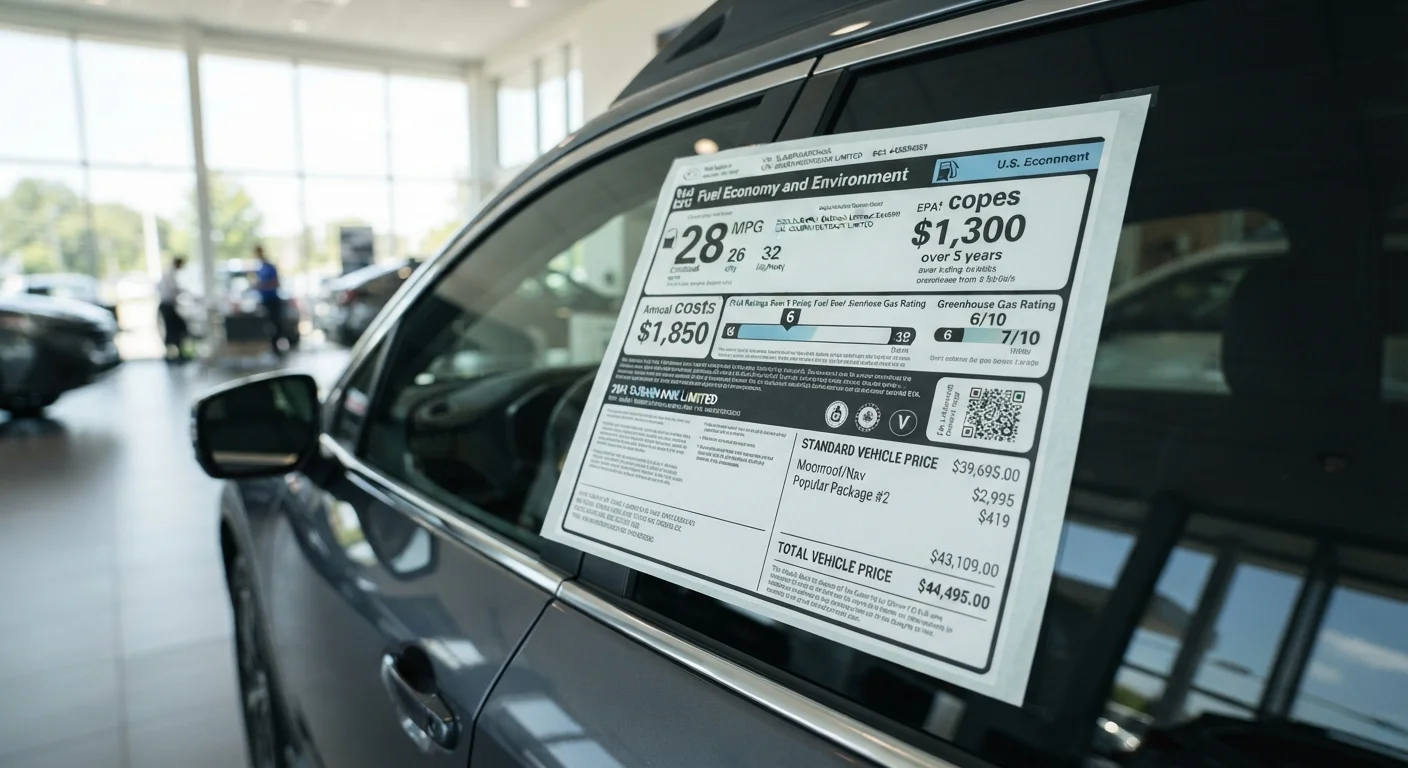
The pricing block is the section most buyers focus on - and often misread. Here's what each line actually means:
- Base MSRP: The manufacturer's suggested price for the vehicle in its standard trim, with no options added.
- Options and packages: Individually priced add-ons chosen at the factory. A technology package or premium audio system will each show a separate line item and cost.
- Destination and delivery charge: A flat fee the manufacturer charges to ship the car to the dealership. It is non-negotiable and uniform nationwide for that model.
- Total MSRP: The sum of base price, options, and destination charge.
What the sticker does not show: taxes, registration fees, dealer documentary fees, or any dealer-installed accessories. Those costs are added later and can meaningfully increase the out-the-door price.
Ask for a Breakdown of Dealer Add-Ons
If the sticker includes a separate dealer-installed accessories section - often on a secondary label - ask for an itemized list before agreeing to the price. These items, such as paint sealant, cargo mats, or window tinting, are frequently negotiable or removable from the deal. Compare the dealer's price against independent alternatives before deciding.
Fuel Economy: Reading the Numbers Correctly
The fuel economy section is produced by the U.S. Environmental Protection Agency and is one of the most practically useful parts of the sticker - if you understand what it measures.
You'll see three core numbers: city MPG, highway MPG, and combined MPG. The combined figure is a weighted average (55% city, 45% highway) and is the most commonly cited single metric for comparison purposes.
Below those figures, the sticker typically shows an estimated annual fuel cost based on a set number of miles per year and an assumed fuel price. This estimate changes year to year as fuel price assumptions are updated - so treat it as a relative comparison tool, not an exact forecast for your budget.
For electric and hybrid vehicles, you'll see MPGe (miles per gallon equivalent), which converts energy consumption into a gasoline-equivalent figure to allow side-by-side comparisons.
55% / 45%
City vs. highway weighting in EPA combined MPG
The EPA uses this split to calculate the combined fuel economy figure shown on every new vehicle's Monroney sticker.
1958
Year the Monroney sticker became federal law
The Automobile Information Disclosure Act, signed in 1958, first required manufacturers to affix standardized pricing information to new vehicles.
$800-$1,800
Typical destination charge range on new vehicles
Destination fees vary by vehicle size and factory location but are set uniformly by the manufacturer - they are not dealership markups.
Safety Ratings, Standard Equipment, and the Fine Print
Below pricing and fuel economy, the sticker lists standard safety features - items like automatic emergency braking or lane-keeping assist that come on every vehicle of that trim regardless of options selected. This section is easy to skip but valuable: it tells you what you're guaranteed to receive, not just what's possible to add.
NHTSA safety ratings appear as a five-star scale across categories including overall, frontal crash, side crash, and rollover resistance. A missing rating simply means testing wasn't complete at the time of printing - it doesn't indicate a poor result.
At the bottom of the sticker, look for a QR code or URL. Manufacturers are increasingly linking to additional data, including full specification sheets and updated safety test results, directly from the sticker.
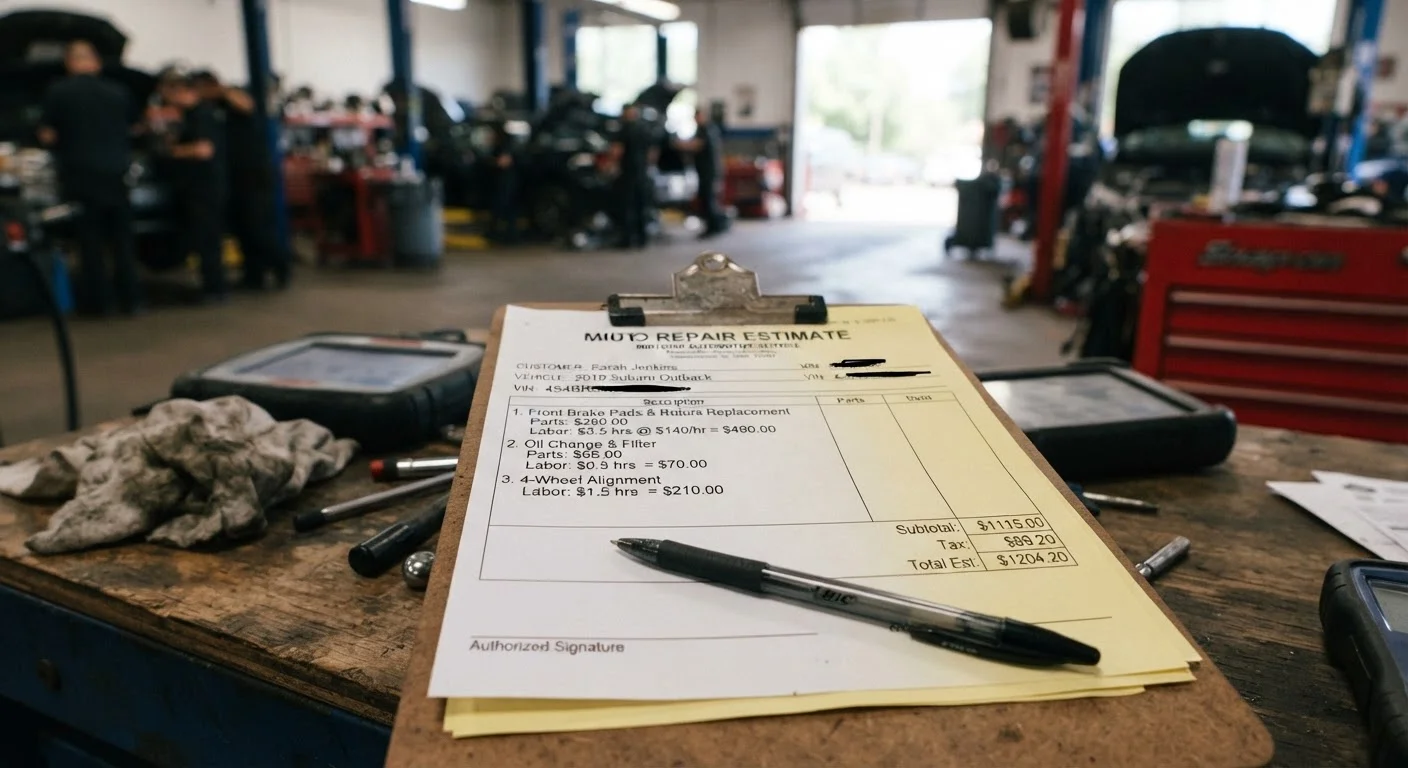
For comparison, the same transparency principles apply when reading a repair estimate from a mechanic - knowing what each line item means puts you in a much stronger position.