
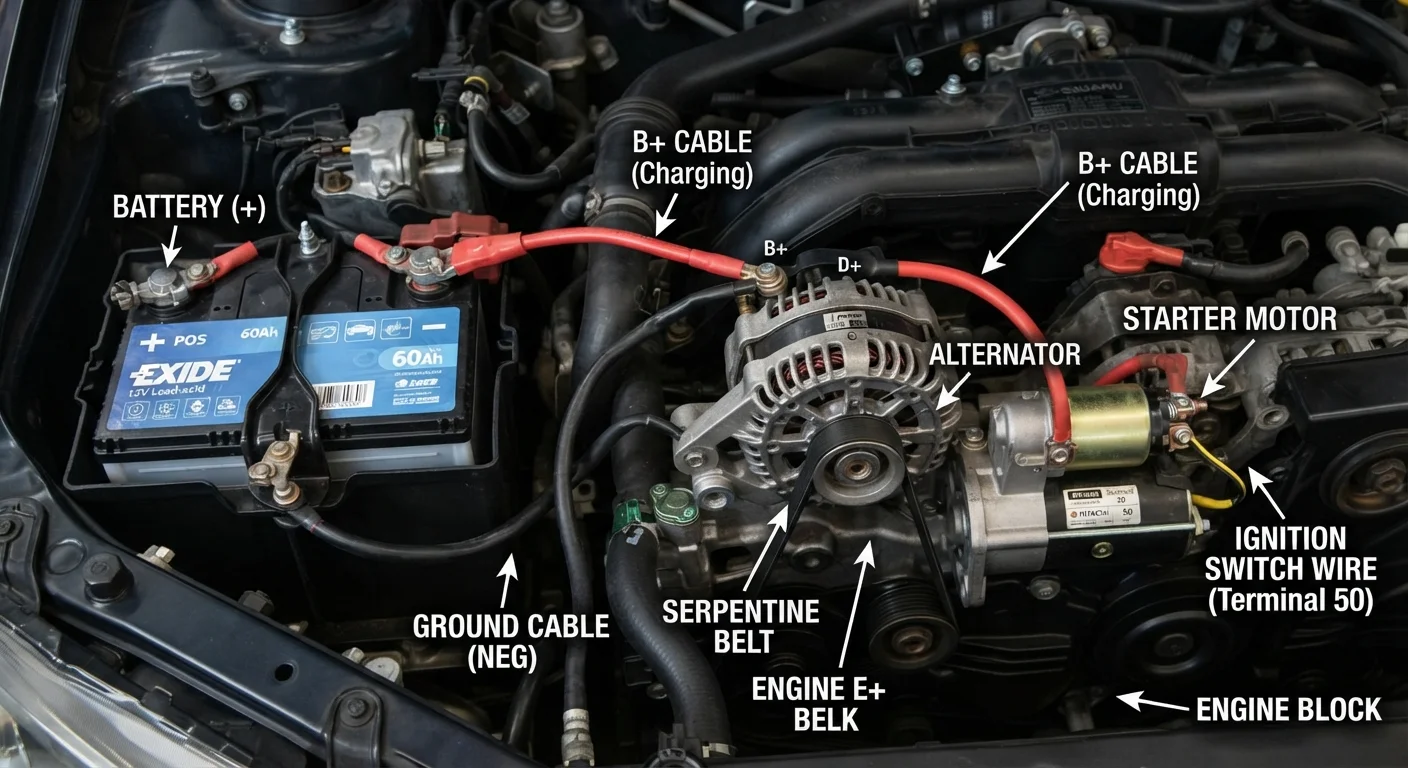
What Each Component Actually Does
Understanding these three parts individually is the key to diagnosing problems correctly. Many drivers assume a no-start situation means a dead battery - but the actual cause could be any one of the three components, or a combination.
The Battery
Your vehicle's 12-volt battery is an electrochemical storage device. It holds enough charge to power the starter, fire up the ignition system, and run accessories when the engine is off. It does not power the car while it's running - that's the alternator's job. Battery capacity degrades over time, particularly in extreme temperatures. Most batteries perform reliably for 3-5 years under normal conditions.
The Alternator
Once the engine is running, the alternator takes over. Driven by a belt connected to the engine, it generates electricity to run all onboard systems - lighting, climate control, infotainment - and simultaneously recharges the battery. A healthy alternator maintains roughly 13.5 to 14.8 volts across the electrical system. Drop below that range and the battery begins to drain while you drive.
The Starter Motor
The starter is an electric motor with one job: spin the engine fast enough for combustion to begin. When you turn the key or press the start button, the battery sends a high-amperage surge to the starter, which engages a small gear (the pinion) against the engine's flywheel. Once the engine fires, the starter disengages automatically. It's a brief but mechanically demanding operation performed every single time you start the car.
Test Before You're Stranded
Battery testing is inexpensive and widely available. Many repair shops will test your battery and charging system as part of a routine service visit. If your battery is approaching three years old, proactive testing - especially before winter - is far cheaper than an emergency roadside call. Ask your technician to perform a load test, not just a simple voltage check.
How to Read the Warning Signs
Because these components work in sequence, failure symptoms often overlap. Knowing what to listen and look for narrows the diagnosis considerably.
3-5 years
Typical car battery lifespan
Industry maintenance guidance generally places average 12-volt lead-acid battery life at 3 to 5 years depending on climate and usage patterns.
20-50%
Battery capacity lost in freezing temperatures
Cold weather significantly reduces the electrochemical output of a standard lead-acid battery, a well-documented effect in automotive engineering literature.
13.5-14.8V
Healthy alternator output range
A functioning alternator should maintain this voltage range across the vehicle's electrical system while the engine is running at normal speed.
Battery Warning Signs
- Slow, sluggish cranking when starting - especially in cold weather
- Lights and electronics work but the engine won't turn over
- Battery warning light illuminated on the dashboard
- Battery case visibly swollen or corroded terminals
Alternator Warning Signs
- Battery warning light appearing after the car is already running
- Headlights dimming at idle and brightening when you rev the engine
- Electrical accessories (windows, radio, HVAC) operating slowly or erratically
- Whining or grinding noise from the engine bay near the belt system
Starter Warning Signs
- A single loud click when turning the key, with no engine crank
- Grinding noise during startup (the pinion gear not engaging cleanly)
- Intermittent starting - works sometimes, fails others
- Engine cranks but very slowly even with a fully charged battery
Cold weather compounds all of these. Battery capacity can drop by 20-50% in freezing temperatures, and thickened engine oil forces the starter to work harder. Seasonal maintenance that includes battery testing before winter can prevent many cold-morning no-start situations.
When to Get a Professional Diagnosis
These components interact closely enough that misidentifying the faulty one is common - and costly. Replacing a battery when the alternator is actually draining it means you'll be back at the shop within days. A qualified mechanic can perform a charging system test that evaluates all three components together, rather than in isolation.
Symptoms Overlap - Don't Self-Diagnose Alone
A failing alternator and a failing battery can produce nearly identical symptoms: dim lights, slow cranking, and a battery warning light. Starter problems can also look like battery issues if voltage is borderline. A professional charging system test evaluates all three simultaneously and takes the guesswork out of the diagnosis.
For drivers building their overall maintenance literacy, this kind of electrical system knowledge fits alongside understanding your braking system components - both areas where a little background knowledge helps you have a more informed conversation with a technician. If you're newer to vehicle ownership, the fundamentals of vehicle maintenance offer a broader starting point.
A charging system test is inexpensive, often available at repair shops, and takes only a few minutes. It measures cranking voltage (battery under load), alternator output, and can flag a failing starter indirectly. If your vehicle is over three years old and hasn't had an electrical system check, adding one to your next service visit is straightforward preventive care - part of the same proactive mindset that covers car ownership basics from the start.