How the Two Technologies Actually Work
Understanding the real-world difference between OLED and QLED starts with a simple engineering fact: they produce light in fundamentally different ways.
OLED - which stands for Organic Light-Emitting Diode - uses a panel where every individual pixel generates its own light. When a pixel needs to show black, it simply turns off completely. There is no separate backlight involved. This is why OLED panels can display near-perfect blacks and achieve contrast ratios that backlit displays cannot approach.
QLED - Quantum Light-Emitting Diode - is not a self-emissive technology in the same way. It is an enhanced form of LCD: a conventional LED backlight illuminates the screen from behind, and a layer of quantum dots (tiny semiconductor particles) converts that light into a wider, more precise range of colors. The result is brighter, more vibrant color reproduction than standard LED-LCD, but the backlight is always on to some degree, which limits how dark blacks can truly appear.
This single structural difference - self-emissive vs. backlit - cascades into almost every performance characteristic worth comparing. To see how this plays out alongside other picture variables like resolution and HDR, see our guide to what 4K, 8K, and HDR actually mean.
| Criterion | OLED | QLED |
|---|---|---|
| Light source | Self-emissive pixels | LED backlight + quantum dots |
| Black level | True black (pixel off) | Dark grey (backlight always on) |
| Peak brightness | Moderate (capped to protect panel) | High - suited to bright rooms |
| Burn-in risk | Low but real with static content | Not a concern |
| Viewing angle | Wide, consistent color off-center | Narrower; color shifts off-axis |
| Response time | Under 0.1ms typical | 1-5ms typical |
| Large screen availability | Available but limited at 80"+ | Widely available at large sizes |
| Best room type | Dim or controlled-light rooms | Bright or mixed-light rooms |
Where Each Technology Wins - and Falls Short
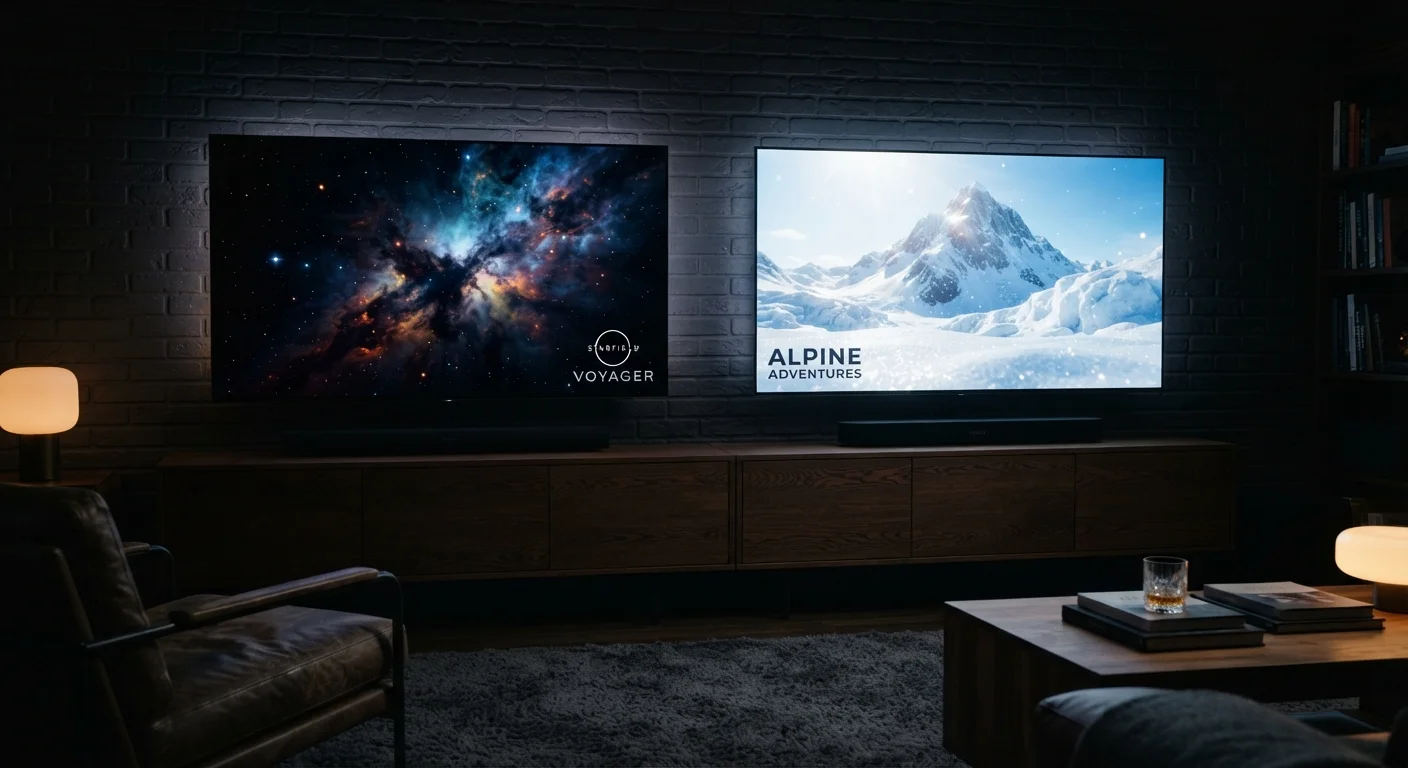
Contrast and black levels are OLED's strongest suit. In a dim viewing environment, the difference is immediately visible: shadows in films, space scenes, and night shots look genuinely deep rather than dark grey. QLED panels have improved significantly with local dimming zones - which let different sections of the backlight dim independently - but zone boundaries can still produce a faint glow around bright objects on dark backgrounds, sometimes called the "halo effect."
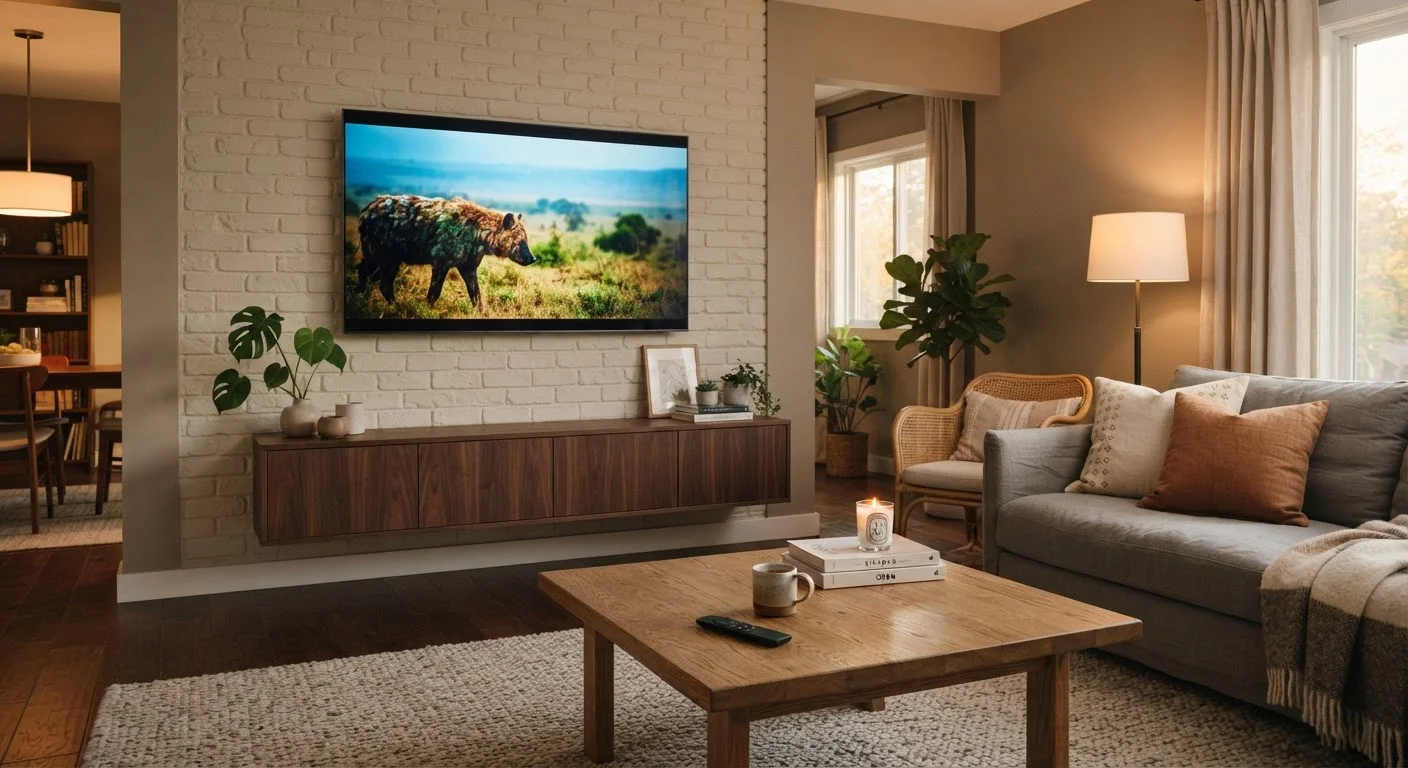
Peak brightness favors QLED. Because OLED relies on organic compounds that degrade with high luminance output, manufacturers cap peak brightness to protect panel longevity. QLED has no equivalent constraint, and high-end models can reach brightness levels that make HDR highlights genuinely pop in sunny rooms. If your TV faces a window wall or your family watches in the afternoon with lights on, this distinction matters more than any contrast spec.
Burn-in is a legitimate but often overstated concern for OLED. Organic pixels do degrade unevenly when the same image element sits in the same spot for thousands of hours - a news channel's logo or a video game's HUD, for example. For typical mixed-use viewing (streaming, films, occasional gaming), burn-in risk is low, and most modern OLED panels include screen-shift and pixel-refresh features to reduce it. Heavy static-content users should weigh this seriously, however.
Viewing angle is a practical consideration that often gets overlooked in spec comparisons. OLED panels maintain consistent color and brightness for viewers seated well off-center. Standard QLED panels can show noticeable color shift and brightness drop at oblique angles, though premium models with anti-reflective coatings and improved panel layers have narrowed this gap.
~0.1ms
Typical OLED pixel response time
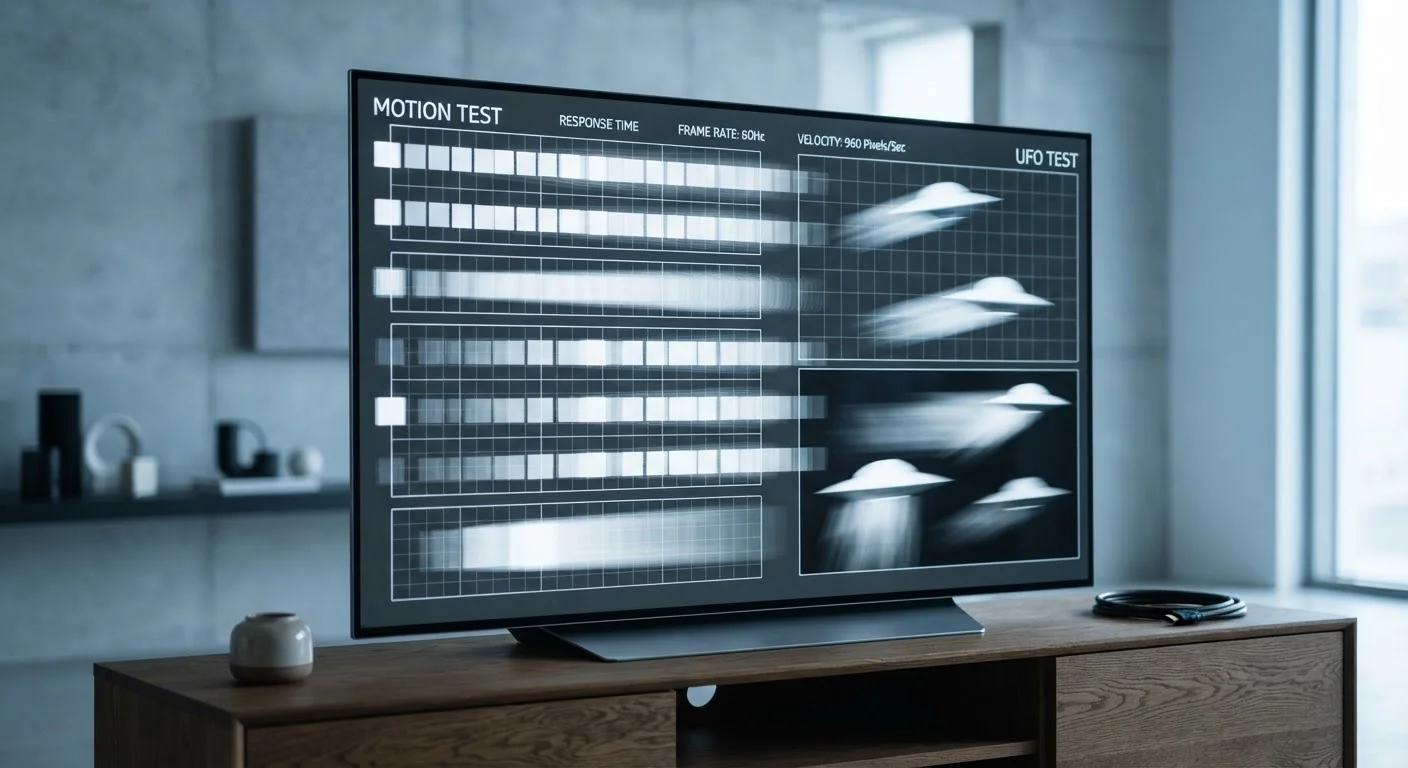
OLED's near-instantaneous pixel switching is measurably faster than most LCD-based panels, which matters most for fast-motion content and competitive gaming.
1,000-2,000+ nits
Peak brightness range for high-end QLED panels
Display measurement labs such as Rtings have documented peak brightness levels on premium QLED sets that significantly exceed what current OLED panels can sustain.
∞ : 1
Theoretical contrast ratio of OLED
Because individual OLED pixels switch fully off, the measured contrast ratio is effectively infinite - a benchmark backlit panels cannot replicate regardless of local dimming quality.
For gaming use, OLED's near-instantaneous pixel response time (often under 0.1ms) is a genuine advantage for fast-motion clarity - though this matters mainly for competitive gaming rather than casual play. QLED panels with high refresh rates are also capable performers for gaming. Our explainer on refresh rate myths breaks down what those numbers really mean in practice.
Making the Right Choice for Your Home
Choosing between OLED and QLED is less about which technology is objectively better and more about matching the display's strengths to your specific environment and habits.
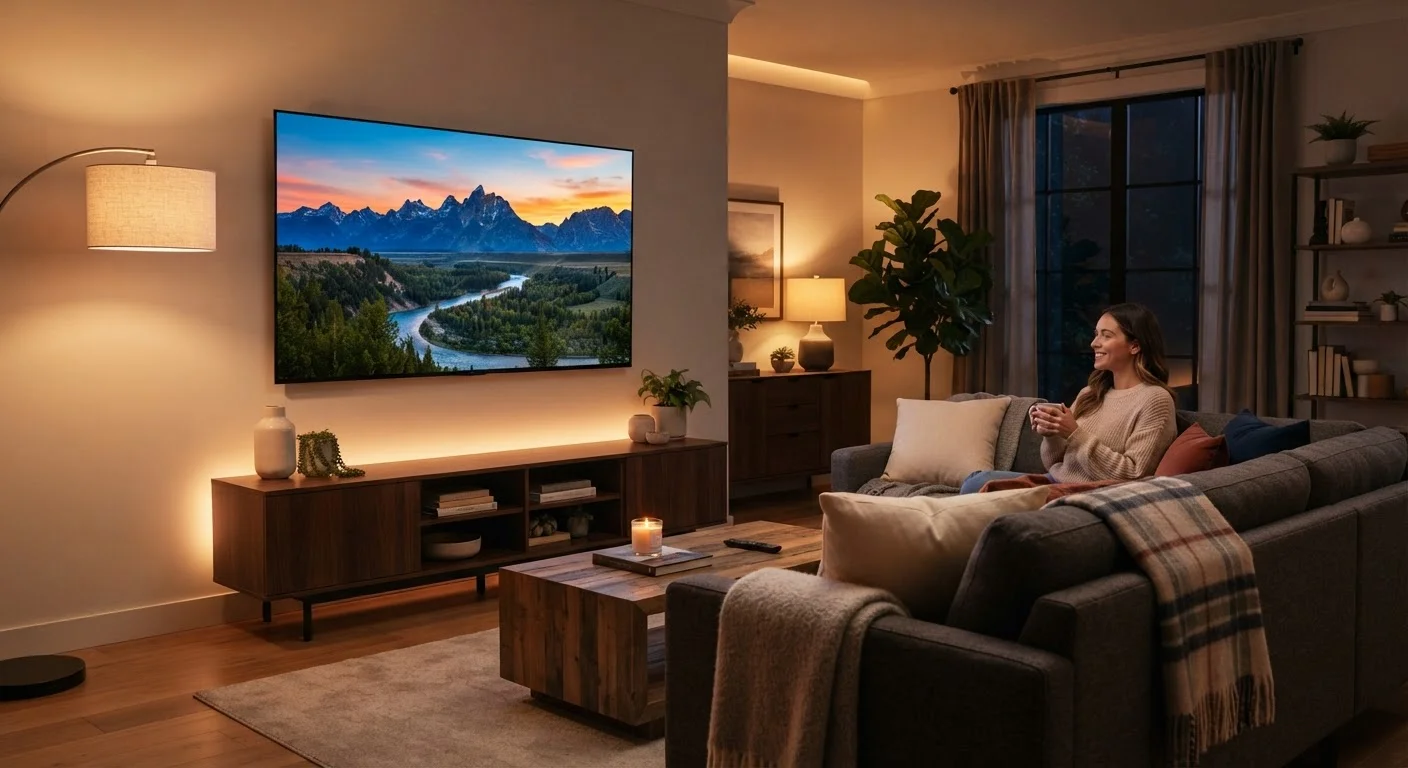
Start by assessing your room. A basement theater or bedroom with blackout curtains is an OLED-friendly environment. A sun-drenched family room with south-facing windows tips the balance toward QLED's brightness advantage. If your room falls somewhere in between, both technologies perform competently - and picture mode calibration can compensate for a lot. Our article on setting up a new TV without losing picture quality to default settings walks through the adjustments that matter most after any purchase.
Consider your content mix honestly. Dedicated film watchers and streamers lean toward OLED for cinematic contrast. Sports fans and gamers in bright rooms often prefer QLED's brightness punch. Households where a sports channel runs in the background most of the day should factor burn-in risk into their thinking.
Screen size ambitions also play a role. Large screen sizes - above 75 inches - have historically been more accessible with QLED. OLED has expanded into larger sizes, but availability and price dynamics at the extreme end of the size range differ from midsize panels.
QD-OLED: A Hybrid Worth Knowing
A newer panel type called QD-OLED layers quantum dot technology onto an OLED emitter, aiming to combine OLED's contrast with QLED's color volume and brightness. Early display measurements suggest meaningful improvements in color saturation and peak brightness compared with traditional OLED. This hybrid category is still maturing, and panels using this approach sit at the premium end of the market - but it signals that the OLED vs. QLED boundary is becoming less fixed over time.
Neither choice is permanent. Both technologies continue to evolve rapidly, with newer panel types such as QD-OLED (which combines quantum dots with an OLED emitter) blurring the traditional boundaries. The fundamentals described here remain useful for evaluating current panels, but it is worth reading updated independent display measurements when making a specific purchasing decision.