The Core Difference: How Each Format Delivers Sound
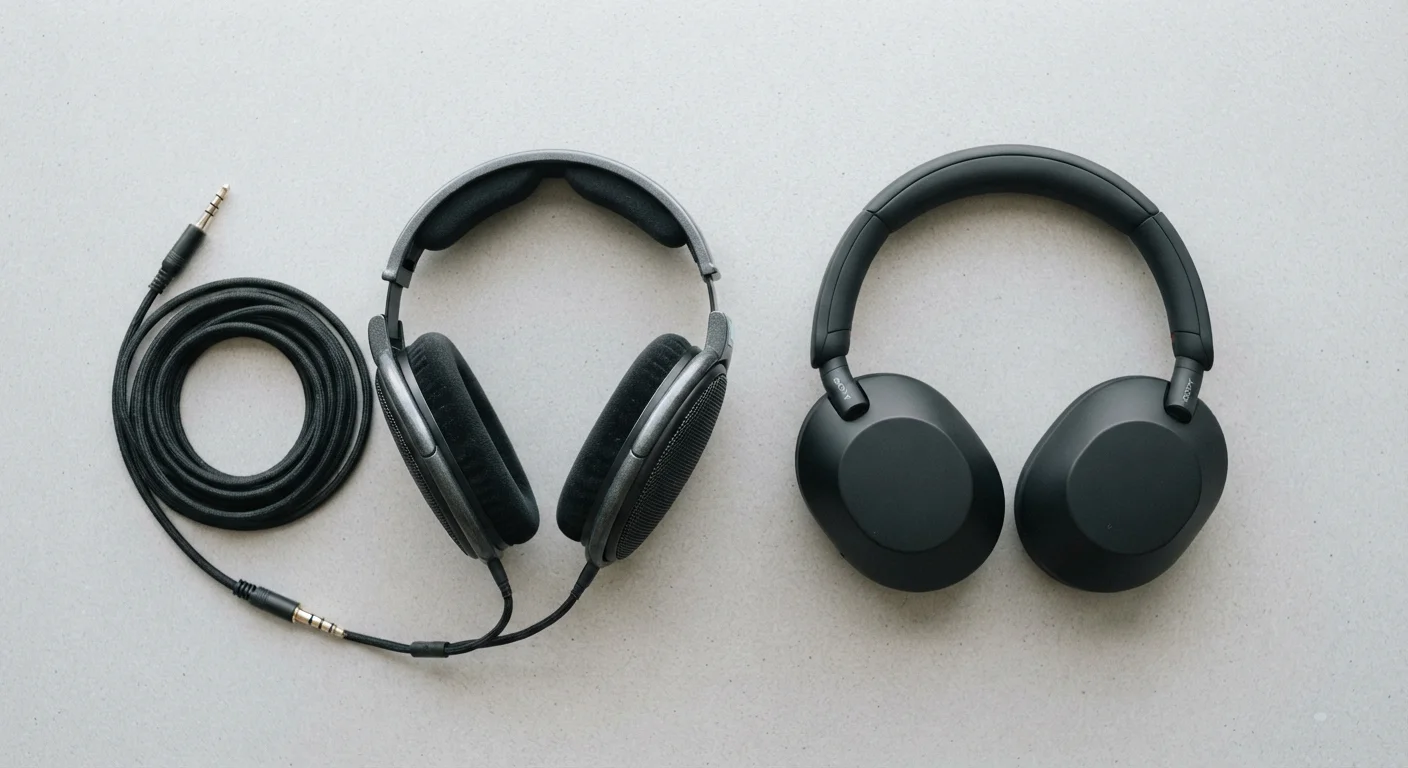
The fundamental distinction between wired and wireless headphones is how the audio signal travels from your device to your ears. With a wired connection, the signal moves directly through a physical cable - typically as an analog signal after conversion, or as a digital signal over USB-C - with no intermediate processing steps that affect fidelity.
Wireless headphones rely on Bluetooth, a short-range radio protocol. Your source device encodes the audio using a codec (a compression algorithm), transmits it wirelessly, and the headphones decode it before playback. Common codecs include SBC (the baseline), AAC (used widely on Apple devices), and higher-quality options like aptX, aptX HD, and Sony's LDAC, which approaches lossless quality at high bitrates.
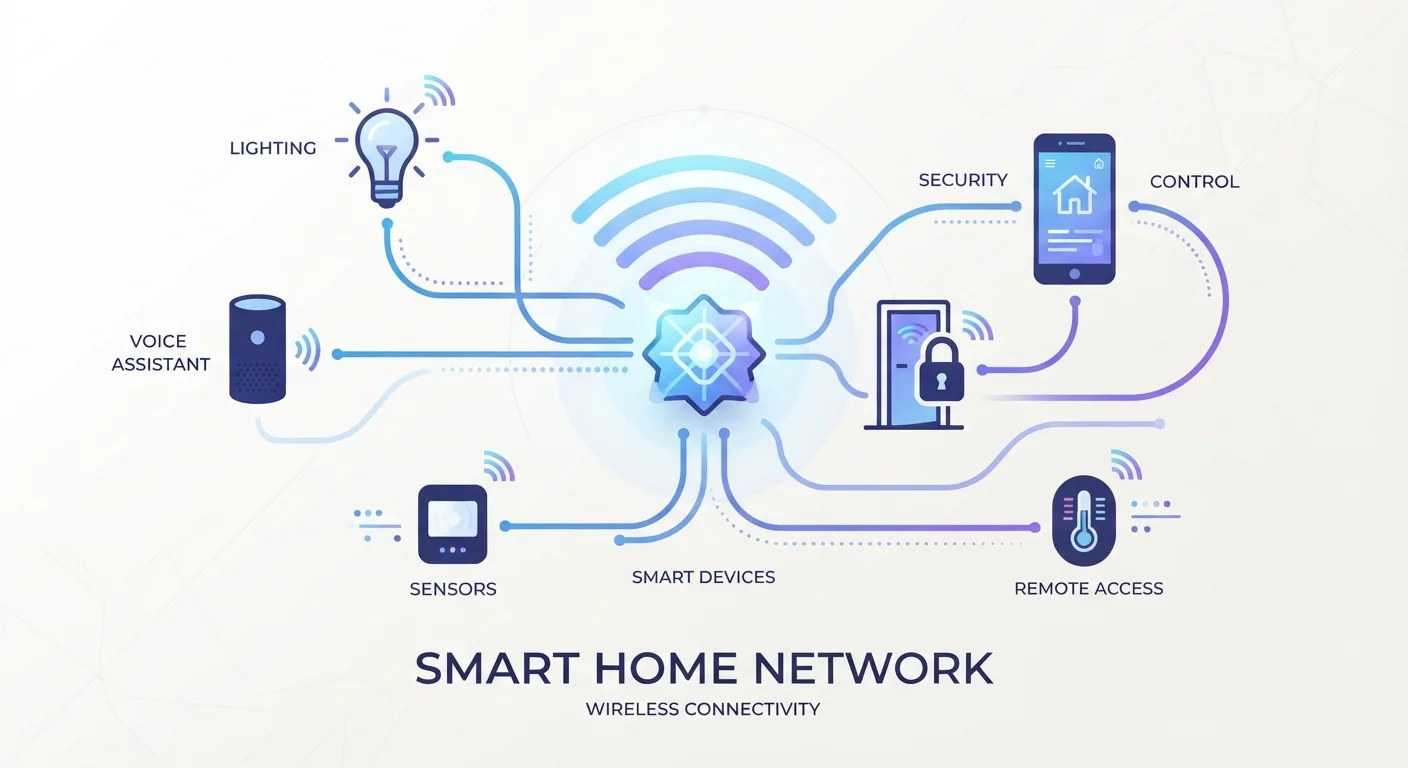
Understanding wireless protocols in general can be helpful here - our overview of how different wireless protocols work illustrates how encoding and transmission choices shape real-world performance across categories beyond just headphones.
| Criterion | Wired Headphones | Wireless Headphones |
|---|---|---|
| Signal path | Direct, uncompressed | Encoded via Bluetooth codec |
| Audio latency | Negligible | Low to moderate (codec-dependent) |
| Battery required | None | Yes, 20-40 hrs typical |
| Freedom of movement | Limited by cable length | Full mobility within ~30 ft |
| Device compatibility | Adapter may be needed | Bluetooth universal |
| Multi-device pairing | One device at a time | Simultaneous pairing available |
| Long-term durability | High (no battery degradation) | Battery degrades over years |
| Sound quality ceiling | Higher (lossless capable) | Near-lossless with LDAC/aptX HD |
Battery Life, Latency, and the Practical Day-to-Day
The most underappreciated cost of wireless ownership isn't the price tag - it's the ongoing attention battery management requires. Most wireless headphones offer between 20 and 40 hours of playback per charge, which is plenty for most people's weekly use. But the moment the battery is depleted mid-flight or mid-session, convenience evaporates.
Latency - the slight delay between a sound occurring on screen and reaching your ears - is another practical consideration. Modern codecs have reduced this significantly, but wireless headphones can still introduce enough lag to make video editing or gaming feel slightly off-sync, depending on the codec and device pairing. Wired headphones have no perceptible latency.
~30 ft
Typical Bluetooth range
Most Bluetooth 5.0 headphones maintain stable connection up to approximately 30 feet from the source device in open space.
990 kbps
Max LDAC bitrate
Sony's LDAC codec can transmit up to 990 kbps, approaching the bitrate needed for near-lossless wireless audio reproduction.
20-40 hrs
Average wireless battery life
Mid-to-high tier wireless headphones generally offer between 20 and 40 hours of playback per charge, varying by volume and codec used.
For most everyday listening - podcasts, streaming music, casual video - the latency difference is imperceptible. But if you're editing audio, playing rhythm games, or doing any work where visual and audio sync matters, wired remains the safer choice.
It's also worth thinking about the full cost of ownership over time. Wireless headphones eventually need battery replacement or full replacement as battery capacity degrades. Wired headphones, if well-built, can last for many years with minimal maintenance.
Sound Quality: What the Specs Actually Mean for Real Listening
Audiophiles and casual listeners often talk past each other on sound quality. In controlled tests with high-resolution audio files, trained listeners can identify differences between wired and high-bitrate wireless. In everyday use - streaming at standard quality on a commute - most people genuinely cannot.
The honest framing is this: wired headphones have a ceiling advantage for audio fidelity, but the practical gap depends heavily on your source quality, your hearing, and your environment. Ambient noise on a subway masks subtleties that matter in a quiet room. If you're not listening to lossless audio files through a dedicated amplifier, the theoretical advantage of wired may not translate into a noticeable experience.
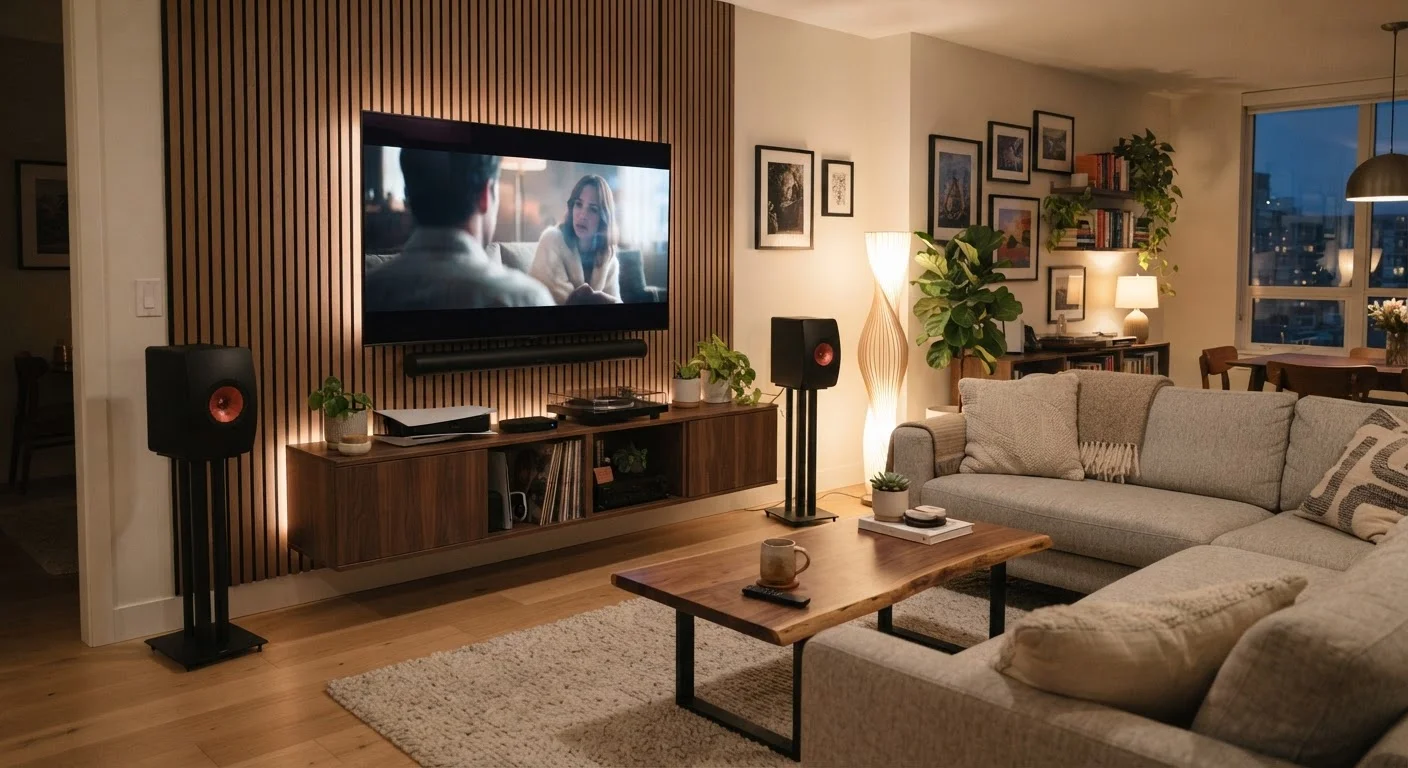
For home audio decisions more broadly - including how room acoustics shape what you actually hear - our guide to how speakers and sound systems differ is a useful companion read.
Source Quality Matters More Than Format
The format of your headphones is only one factor in audio quality. If your streaming service delivers compressed audio at 128 kbps, neither wired nor wireless headphones can recover detail that was never there. Lossless audio streaming - available on some platforms - makes a more meaningful difference than the cable versus Bluetooth question for most listeners.
The takeaway: if you're streaming standard-quality audio and not sitting in a quiet room focused on critical listening, wireless headphones at a mid-to-high tier will sound excellent to the vast majority of listeners.
Which Format Actually Fits Your Life?
Rather than asking which format is technically superior, the more useful question is: where and how do you actually listen? Someone who puts headphones on at a desk every morning and removes them at the same desk every evening will find wired simpler and more reliable. Someone who moves between the gym, subway, and office needs the flexibility that only wireless provides.
Consider also device compatibility. Many newer laptops and smartphones have eliminated the 3.5mm headphone jack, meaning wired headphones may require a USB-C or Lightning adapter. That's a small but real inconvenience worth factoring in. Wireless headphones sidestep this entirely, though they depend on Bluetooth availability and pairing reliability.
Applying a cost-per-use lens is a practical way to evaluate any headphone purchase. A well-built wired pair used daily for five years represents strong value. So does a wireless pair if you charge it consistently and it genuinely improves your daily routine. The smarter spending approach is always to match the product's strengths to your actual habits - not to what sounds impressive on a spec sheet.