Why Built-In TV Audio Falls Short
Modern televisions are remarkably thin - which is precisely the problem with their audio. Manufacturers have progressively reduced speaker size and internal cavity space to achieve slimmer profiles, leaving most flat-panel TVs with small drivers physically incapable of producing bass or wide soundstage. The result is audio that sounds thin, dialogue that gets muddy at higher volumes, and no real sense of spatial depth.
This isn't a matter of price tier. Even premium televisions often have mediocre built-in audio because the engineering priority is display quality, not acoustic performance. For casual background news or quick video clips, built-in speakers may be tolerable - but for movies, streaming series, or music, the gap between a TV's built-in sound and even a modest external system is immediately audible to most people. The question isn't whether to add external audio; it's which type fits your room and your habits. If you're also evaluating your TV's visual setup, calibrating your picture settings is a natural companion step.
Standalone Speakers: The Audiophile Baseline
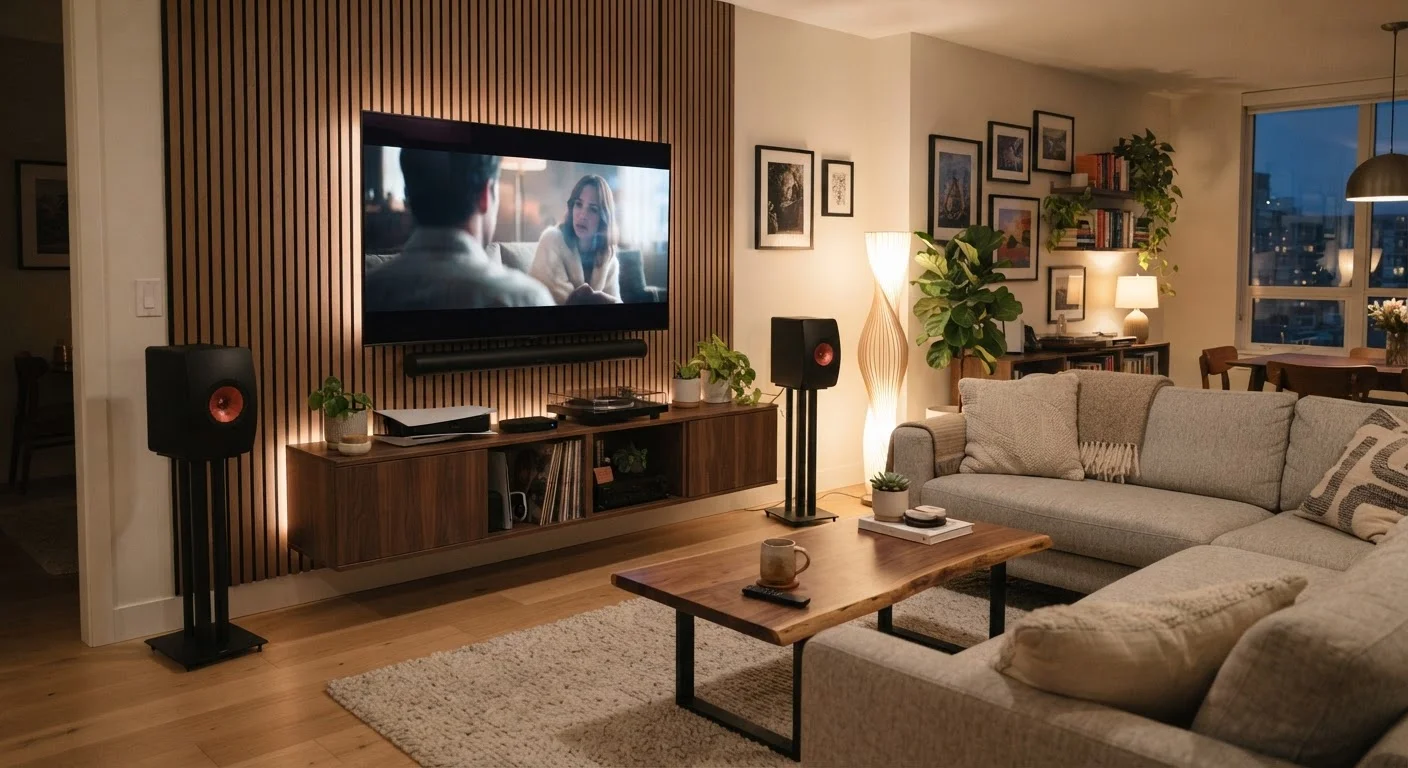
When people talk about "speakers" in the traditional sense, they usually mean a pair of dedicated enclosures - bookshelf or floor-standing - driven by a separate amplifier or receiver. This configuration gives users the most control over audio quality, placement, and expandability.
The core advantage is fidelity. A well-designed pair of passive speakers driven by a quality amplifier can reproduce music and film audio with more accuracy and dynamic range than most integrated solutions. The stereo imaging - the perception of instruments or voices occupying distinct positions in space - is also typically more convincing than what a sound bar can produce.
The tradeoffs are real, though. Standalone systems require more components (speakers, amplifier or receiver, cables), more physical space, and more setup time. Placement matters significantly: speakers should generally sit at ear level when seated, pulled a few feet from walls, and angled inward toward the listening position. If your room doesn't accommodate that, the advantages narrow considerably.
Start With How You Actually Use Your Room
Before comparing specifications, spend a week noting what you actually listen to and where you sit. If you consistently stream music while doing other things around the room, a stereo speaker setup may serve you better than a surround system optimized for a fixed sofa position. The most technically impressive setup is only valuable if it fits your actual habits.
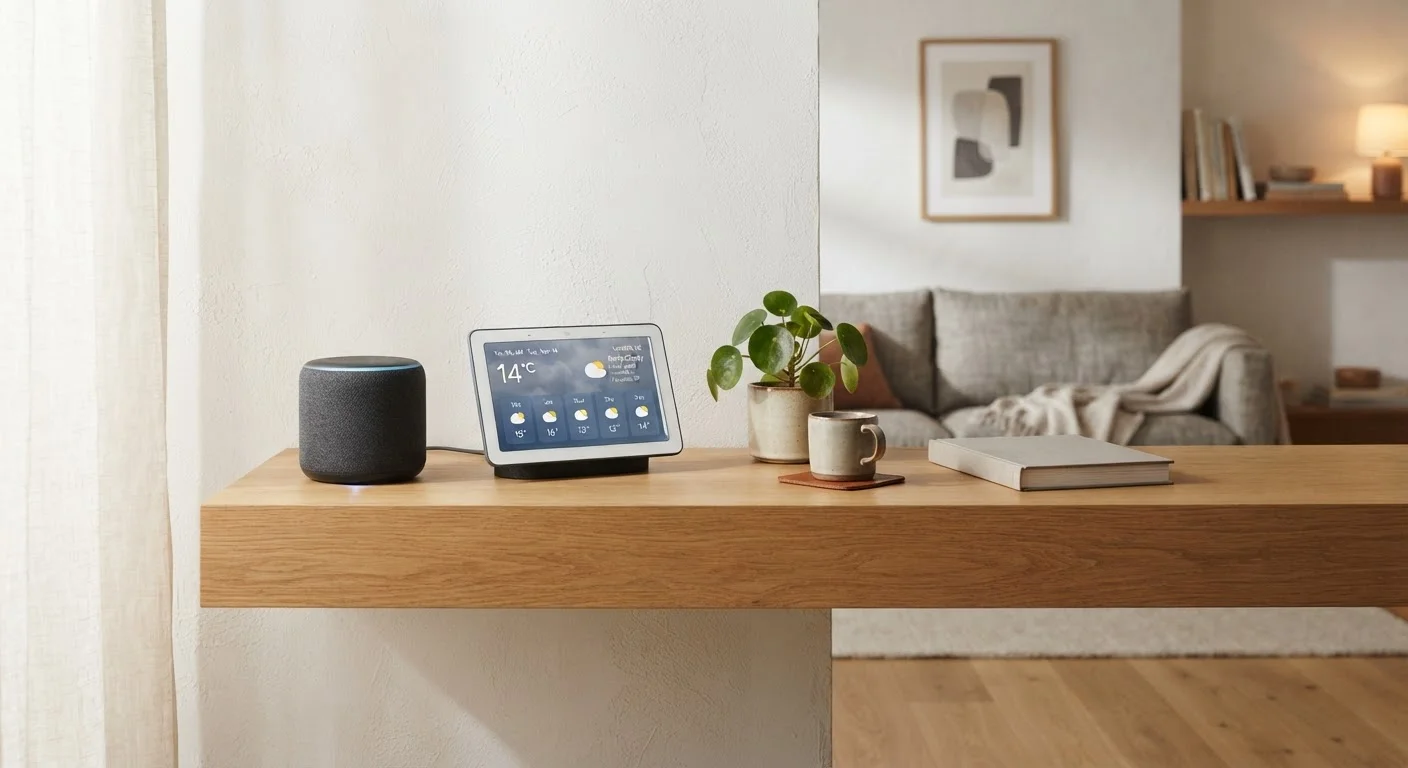
For those drawn to the smart home ecosystem side of audio, it's worth distinguishing standalone stereo speakers from smart speaker devices - the latter are covered separately in our smart speakers vs. smart displays comparison.
Sound Bars: The Practical Middle Ground
A sound bar is a single horizontal enclosure housing multiple drivers, designed to sit beneath or mount below a television. Many include a separate wireless subwoofer for low-frequency reinforcement. They solve the TV audio problem with minimal installation friction - typically just one cable to the TV and a power connection.
For the majority of households, a sound bar represents a genuine and immediately noticeable improvement over built-in TV speakers. Dialogue becomes clearer, explosions and musical scores gain body, and the overall listening experience feels fuller. Mid-tier sound bars with a subwoofer also produce bass response that standalone bookshelf speakers often can't match without a dedicated subwoofer of their own.
What sound bars can't fully replicate is true surround sound. Many use digital signal processing (DSP) to simulate spatial audio by bouncing sound off walls, and some support object-based audio formats like Dolby Atmos. These simulations are functional and can be impressive in the right room, but they don't produce the same localization precision as discrete physical speakers positioned around the listener.
| Standalone Speakers | Sound Bar | Surround System | |
|---|---|---|---|
| Installation complexity | Moderate - amp, wires, placement | Low - one or two cables | High - multiple speakers, receiver, wiring |
| Space required | Moderate - speaker stands or shelves | Minimal - single shelf or wall mount | Significant - dedicated room preferred |
| Music performance | Excellent stereo imaging | Adequate, varies by model | Good front-stage, weak surround for music |
| Movie/TV immersion | Good stereo, limited surround | Good with DSP simulation | Best-in-class spatial audio |
| Bass without subwoofer | Limited in bookshelf models | Weak - subwoofer usually needed | Handled by dedicated subwoofer |
| Best room size | Small to medium | Small to medium | Medium to large |
| Cable management | Two speaker cables minimum | Minimal | Extensive unless wireless rears |
Surround Systems: Immersion at a Cost
A traditional 5.1 surround system uses five speakers - two front, one center, two rear - plus a subwoofer. The center channel handles most dialogue, the front pair handles stereo music and effects, and the rear speakers place you inside the soundfield. Expanded configurations (7.1, 9.1, and Atmos-enabled setups with ceiling or upward-firing speakers) add more spatial layers.
The result, when properly calibrated and positioned, is genuinely different from any two-channel or simulated-surround alternative. The rear channels create the sense of being surrounded by a scene rather than watching it from outside. For action films, gaming, or concert recordings mixed for surround, this distinction is substantial.
The practical cost is significant: you need a room large enough for proper speaker placement, a receiver to manage multiple channels, and willingness to manage speaker cables across the space. Wireless rear speakers exist and reduce cable management concerns, but introduce their own latency and reliability considerations. Surround systems make the most sense in dedicated media rooms or larger open-plan spaces where rear speakers can be positioned at least several feet behind and to the sides of the seating area. If you're thinking broadly about which rooms in your home benefit most from tech upgrades, the room prioritization guide offers a useful framework.
5.1
Channels in a standard surround setup
The 5.1 configuration (five speakers plus one subwoofer) has been the home theater standard since the late 1990s, with 7.1 and Atmos variants adding channels for height and overhead effects.
~3 ft
Minimum rear speaker distance for surround effect
Acoustics guidelines generally recommend rear surround speakers be placed at least two to three feet behind and to the side of the primary listening position to produce a convincing spatial effect.
Matching the Setup to Your Room and Habits
The most important variables in choosing a home audio setup aren't technical specifications - they're practical constraints and use patterns.
- Room size: Small rooms with reflective surfaces can make surround systems sound chaotic. Large, acoustically dampened rooms may swallow a sound bar's output. Mid-size living rooms are the sweet spot for sound bars; larger dedicated spaces suit surround setups.
- Primary content: Music listeners generally benefit more from quality stereo speakers than from surround systems. Film and TV viewers get more from surround or a capable sound bar. Mixed-use households often find sound bars with subwoofers the most versatile.
- Cable tolerance: Running speaker wire to rear surround channels requires drilling, cable concealment, or visible wire management. If that's not acceptable, a sound bar or wireless-rear surround system is more realistic.
- Listening position: Surround systems require a relatively fixed sweet spot - they're optimized for a sofa, not a room people wander through. Sound bars and standalone stereo speakers are more forgiving of varied listening positions.
If you're building out a broader home entertainment setup, pairing good audio with a properly configured display makes a measurable difference - see our TV resolution explainer for context on matching visual and audio investments. And if personal listening is part of your routine, the wired vs. wireless headphone comparison addresses the individual-listening side of the equation.