What Fast Fashion and Slow Fashion Actually Mean
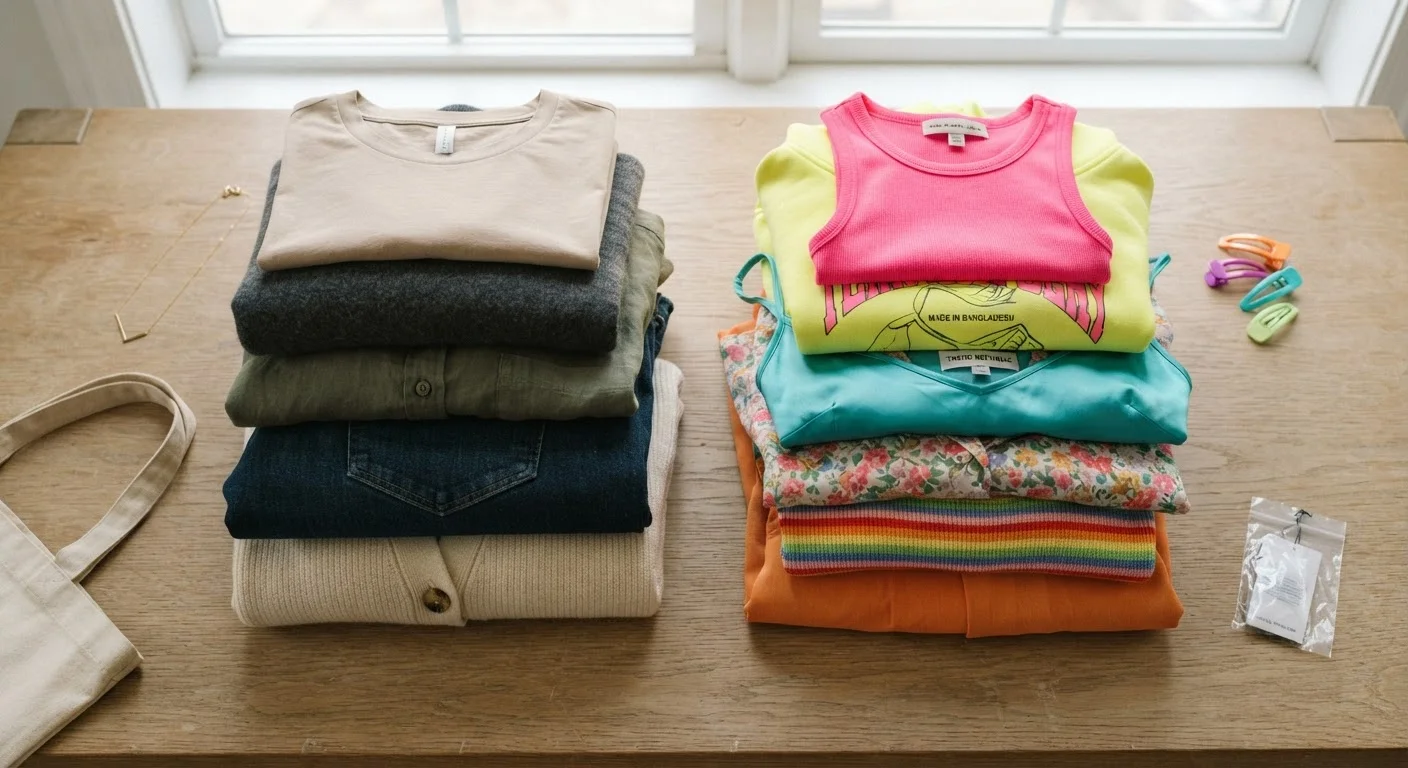
The term fast fashion describes a retail model built on rapid production cycles - translating runway or social media trends into affordable garments within weeks. The business model depends on high volume and low prices, which typically means lower-cost materials and simplified construction. Pieces are designed to move quickly off shelves, not to last for years.
Slow fashion is essentially the counterpoint: a deliberate approach that prioritizes quality materials, ethical production, and longevity over speed and trend cycles. Slow fashion pieces tend to carry higher price tags, but the premise is that they'll outlast several rounds of fast fashion alternatives - reducing how often you need to replace them.
It's worth noting that neither term refers to a specific brand or certification. They describe mindsets and production philosophies, not labels you can easily verify at a glance. Understanding the distinction helps you shop more intentionally, regardless of where you buy. For a broader look at how purchasing decisions ripple into long-term spending, smarter spending strategies can offer useful context.
The Real Cost Comparison: Upfront vs. Over Time
The core tension between fast and slow fashion comes down to when you feel the cost. A fast fashion top priced at $15 feels like a win at checkout. But if it fades, shrinks, or falls apart after a dozen washes, you may be replacing it two or three times a year - spending $30 to $45 annually on a single item. A sturdier version priced at $60 that holds up for three or four years can work out to significantly less per wearing.
This is the logic behind cost-per-wear, a straightforward calculation that divides what you paid by how many times you actually wear something. Cost-per-wear math makes the hidden economics of clothing visible - and often reframes which purchases were genuinely worth it.
| Criterion | Fast Fashion | Slow Fashion |
|---|---|---|
| Upfront price | Generally lower | Generally higher |
| Typical lifespan | Months to 1-2 years | 3-5+ years with care |
| Cost-per-wear potential | Higher if replaced often | Lower for frequently worn items |
| Material quality | Often synthetic or lightweight | Tends toward durable natural fabrics |
| Trend alignment | Closely follows trends | Favors classic, versatile styles |
| Replacement frequency | Higher | Lower |
| Best suited for | Trend pieces, one-time occasions | Everyday staples, core wardrobe |
That said, slow fashion is not a guaranteed financial win. A quality item you rarely wear still carries a high cost-per-wear. And not every expensive garment is durable - price and quality don't always move together, as research on brand names vs. store brands makes clear.
~60%
Increase in clothing purchased globally since 2000
According to estimates cited by the Ellen MacArthur Foundation, global clothing production roughly doubled between 2000 and 2015, with garments being kept for shorter periods.
~7-10 wears
Average times a garment is worn before being discarded
Research cited by sustainability organizations suggests many consumers discard clothing after only a handful of uses, compressing the cost-per-wear value significantly.
3-5x
Potential lifespan difference between quality and budget garments
Consumer testing and textile industry research generally suggest well-constructed garments can outlast lower-quality counterparts by a factor of three to five under similar care conditions.
How to Think About Quality Without Getting Overwhelmed
You don't need to become a textile expert to make smarter clothing decisions. A few practical indicators help identify whether a piece is likely to hold up:
- Fabric weight and hand feel: Heavier, denser fabrics generally wear better than thin or loosely woven ones.
- Seam quality: Tug gently on seams - well-constructed garments resist pulling and don't pucker.
- Stitching density: More stitches per inch typically means stronger construction.
- Care instructions: Pieces that require gentle or hand-washing may not hold up to real-world daily use.
There are also some persistent myths worth setting aside. The idea that matching every element of an outfit requires constant shopping, or that price always signals quality, quietly drains clothing budgets. Wardrobe myths that cost you money unpacks several of these assumptions with a practical lens.
A middle-ground strategy works well for many shoppers: invest in slow fashion principles for high-frequency items - the jeans you wear four times a week, the coat you reach for all winter - and accept lower-cost options for trend pieces or occasional-use items. Thrift shopping is another option that can blur the line between fast and slow, offering durability at lower prices when you find the right pieces.
This article is for informational purposes only. Individual results will vary based on personal spending habits, garment care, and specific products purchased.